Kalavasos Mountain Biking Basic

The route starts from the village of Kalavasos and heads north to the village of Asgata. It continues towards the north and enters a downhill dirt road. The dirt road leads almost down to the beach. Continue straight ahead from the main road. Turn left towards Tenta and the Archaeological Monument, the Settlement of the Neolithic Age. Then continue straight again and end the route at Kalavasos.

To download the route in gpx format click here

Distance: 30.2km
Elevation Gain: 453m
Highest point: 325m
Lowest point: 39m
Loop: YES
Terrain: Mixed
Section Distance (km) Total Distance (km)
Kalavasos 0.0 0.0
Asgada 6.3 6.3
Kalavasos Tenta 21.3 27.6
Kalavasos 2.6 30.2

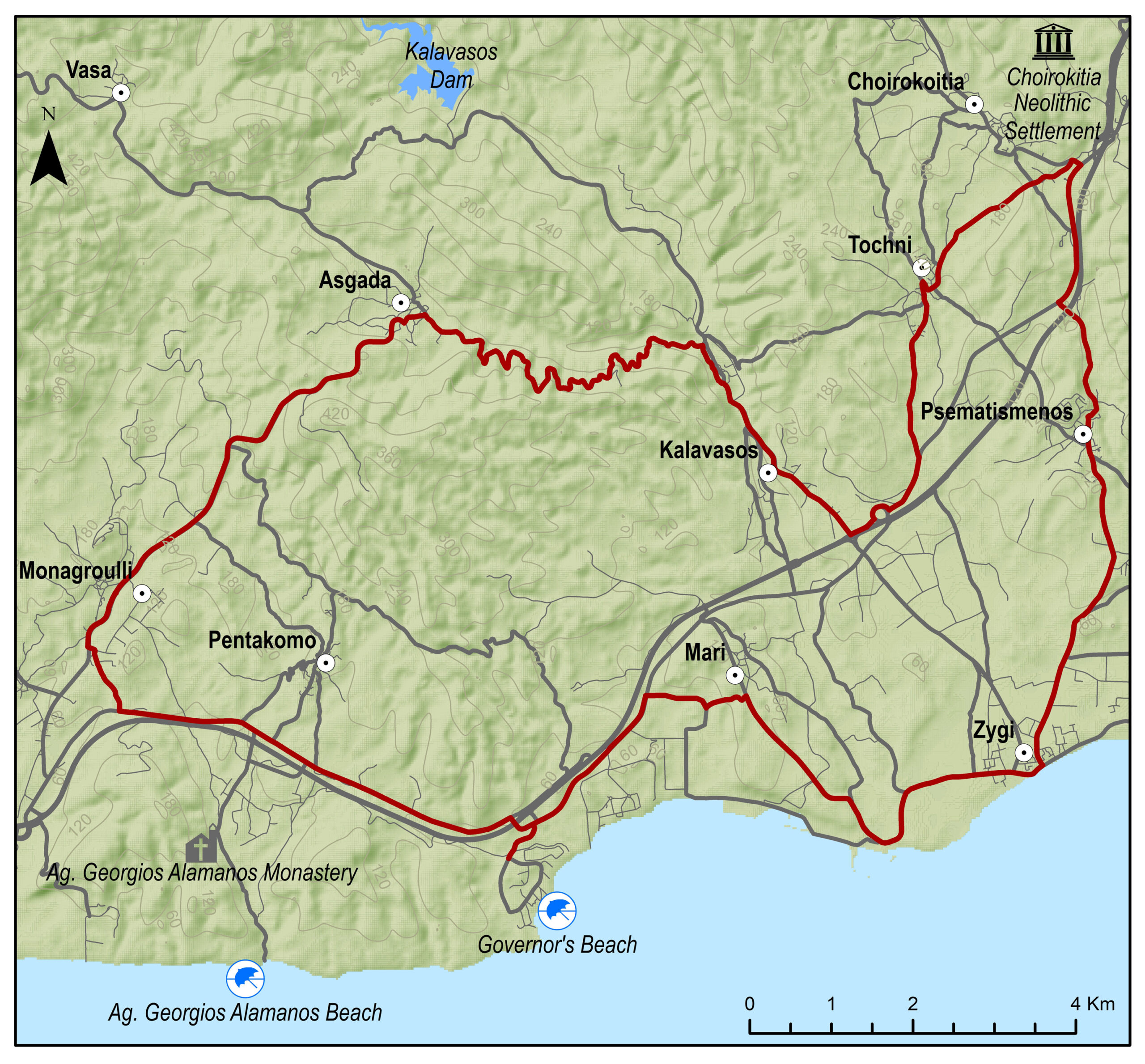
Tochni Mountain Biking Basic

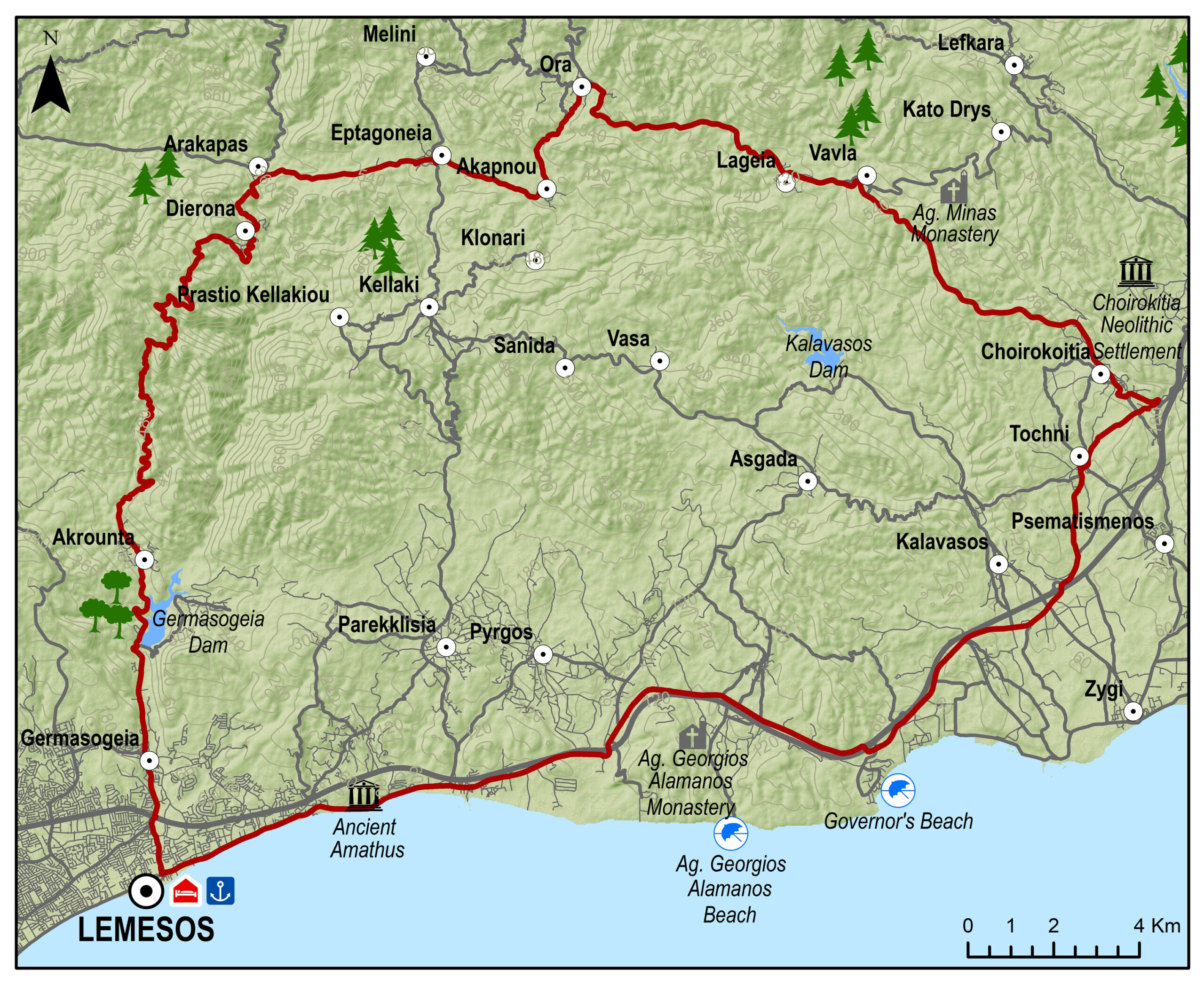
The route starts from beautiful Tochni and heads towards Kalavasos. At a short distance from Kalavasos lies the Tenta Neolithic Settlement dating back to 7000 BC. It is one of the most important Neolithic Settlements on the island and is sheltered by a distinctive cone-shaped roof, which is a contemporary architectural intervention in the landscape. Subsequently, the route ascends and descends again towards the Kalavasos Reservoir and then passes through Kalavasos again before ending in Tochni.

To download the route in gpx format click here

Distance: 33.8km
Elevation Gain: 779m
Highest point: 402m
Lowest point: 66m
Loop: YES
Terrain: Mixed
Section Distance (km) Total Distance (km)
Tochni 0.0 0.0
Kalavasos 7.9 7.9
Kalavasos Dam 12.9 20.8
Kalavasos 7.4 28.2
Tochni 5.6 33.8

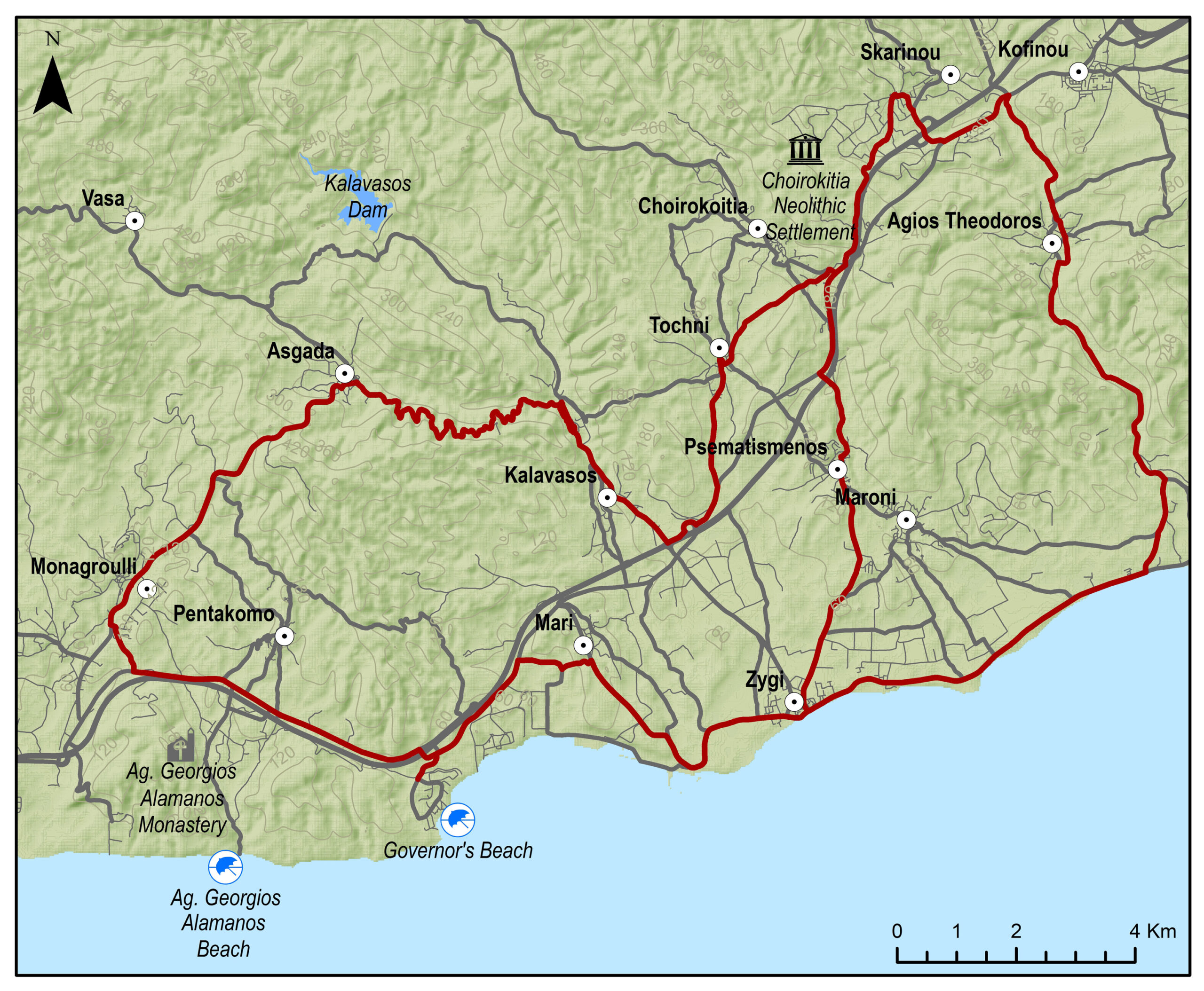
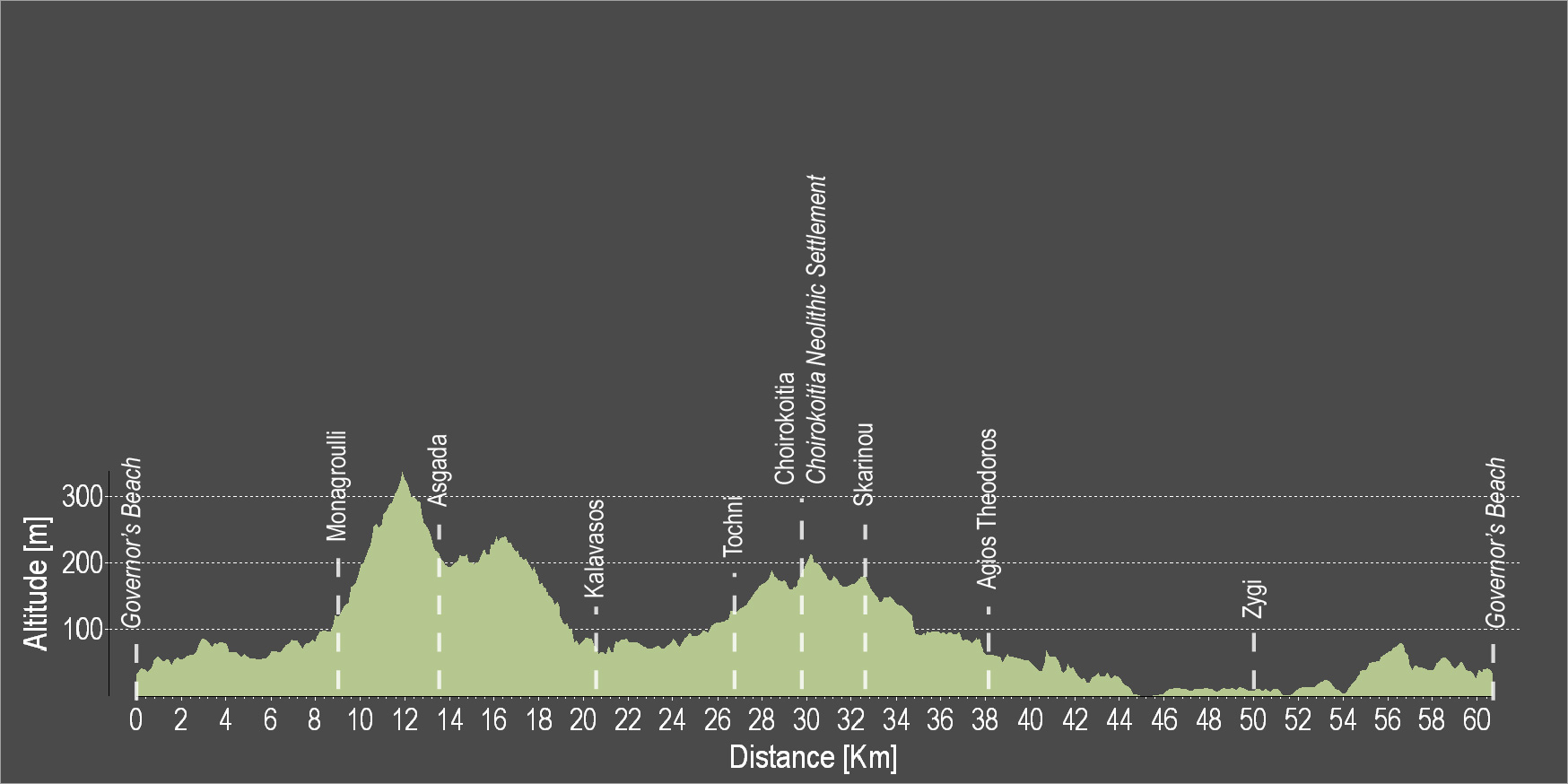
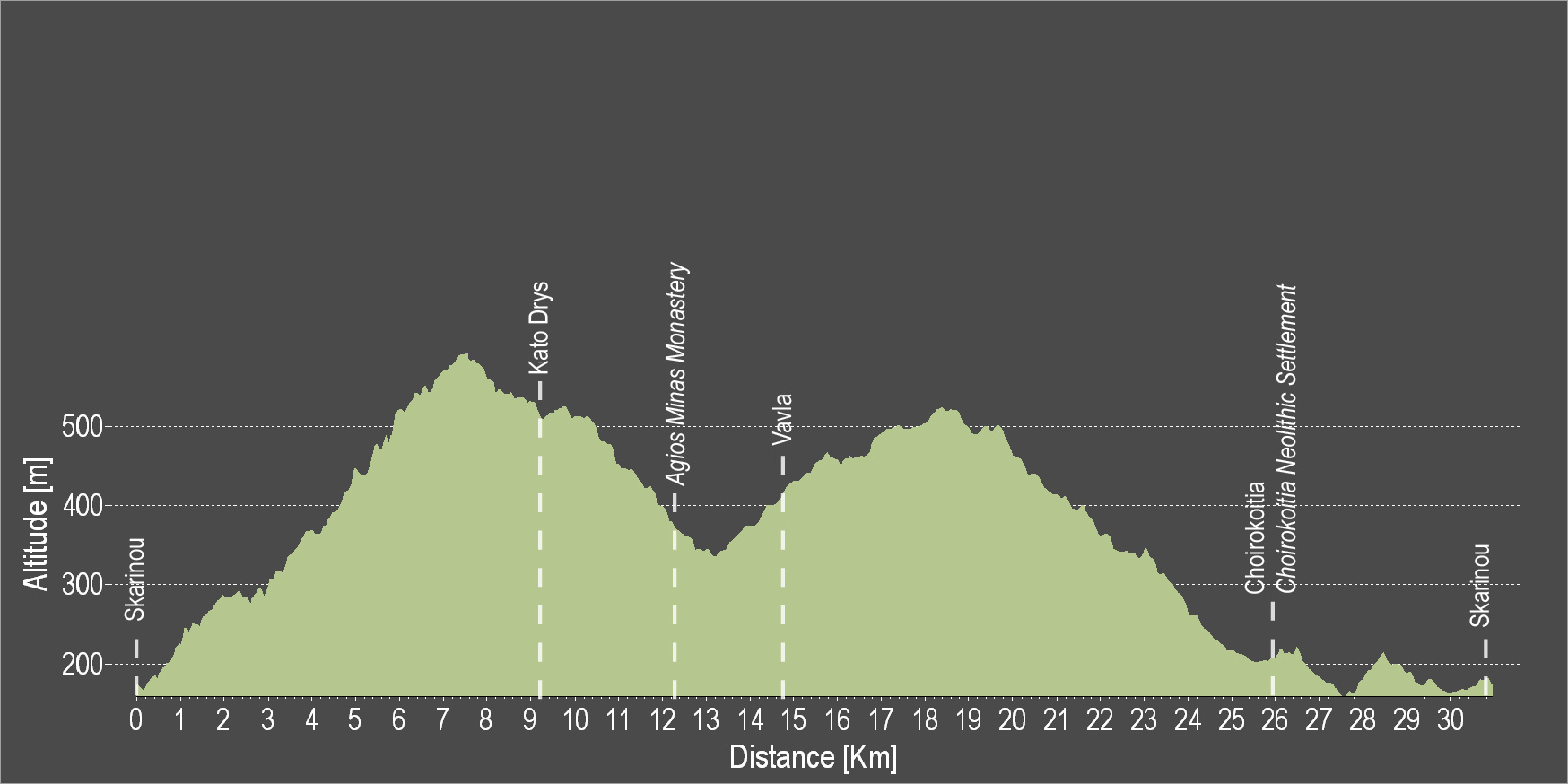
Skarinou Mountain Biking Basic South

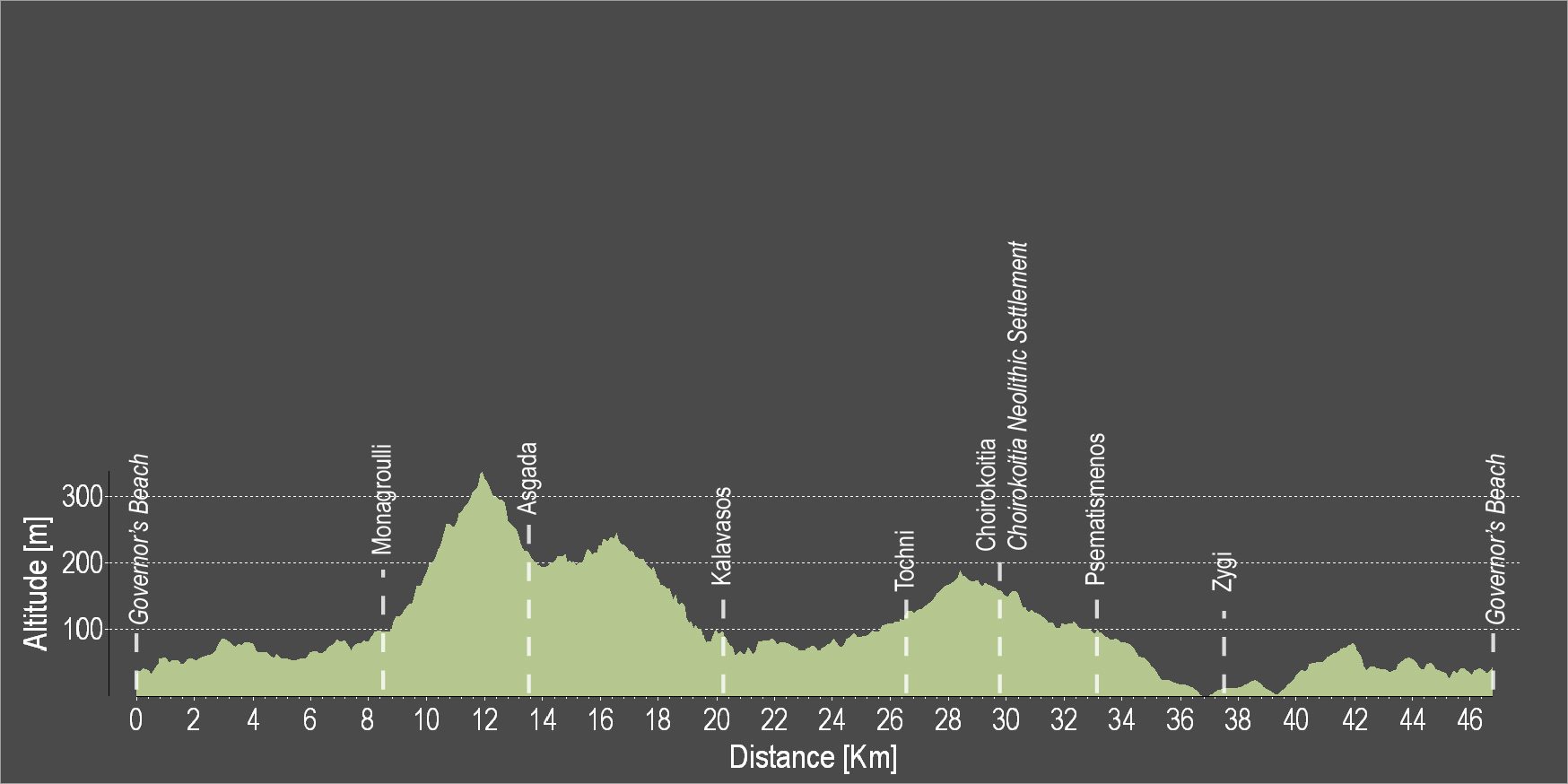
The route starts from the village of Skarinou and heads towards Choirokoitia, by passing by a donkey farm. At Choirokoitia, the Neolithic Settlement of Choirokoitia is located, which has been listed as a UNESCO World Heritage Site since 1998. The route then continues towards beautiful Tochni. Next follows the village of Psematismenos and then the route ascends and descends again towards Agios Theodoros and ends at the starting point in Skarinou.

To download the route in gpx format click here

Distance: 31.2km
Elevation Gain: 660m
Highest point: 330m
Lowest point: 59m
Loop: YES
Terrain: Mixed
Section Distance (km) Total Distance (km)
Skarinou 0.0 0.0
Golden Donkeys Farm 2.4 2.4
Choirokoitia 7.7 10.1
Choirokoitia Neolithic Settlement 2.7 12.8
Tochni 0.0 12.8
Psematismenos 3.1 15.9
Agios Theodoros 9.5 25.4
Skarinou 5.8 31.2

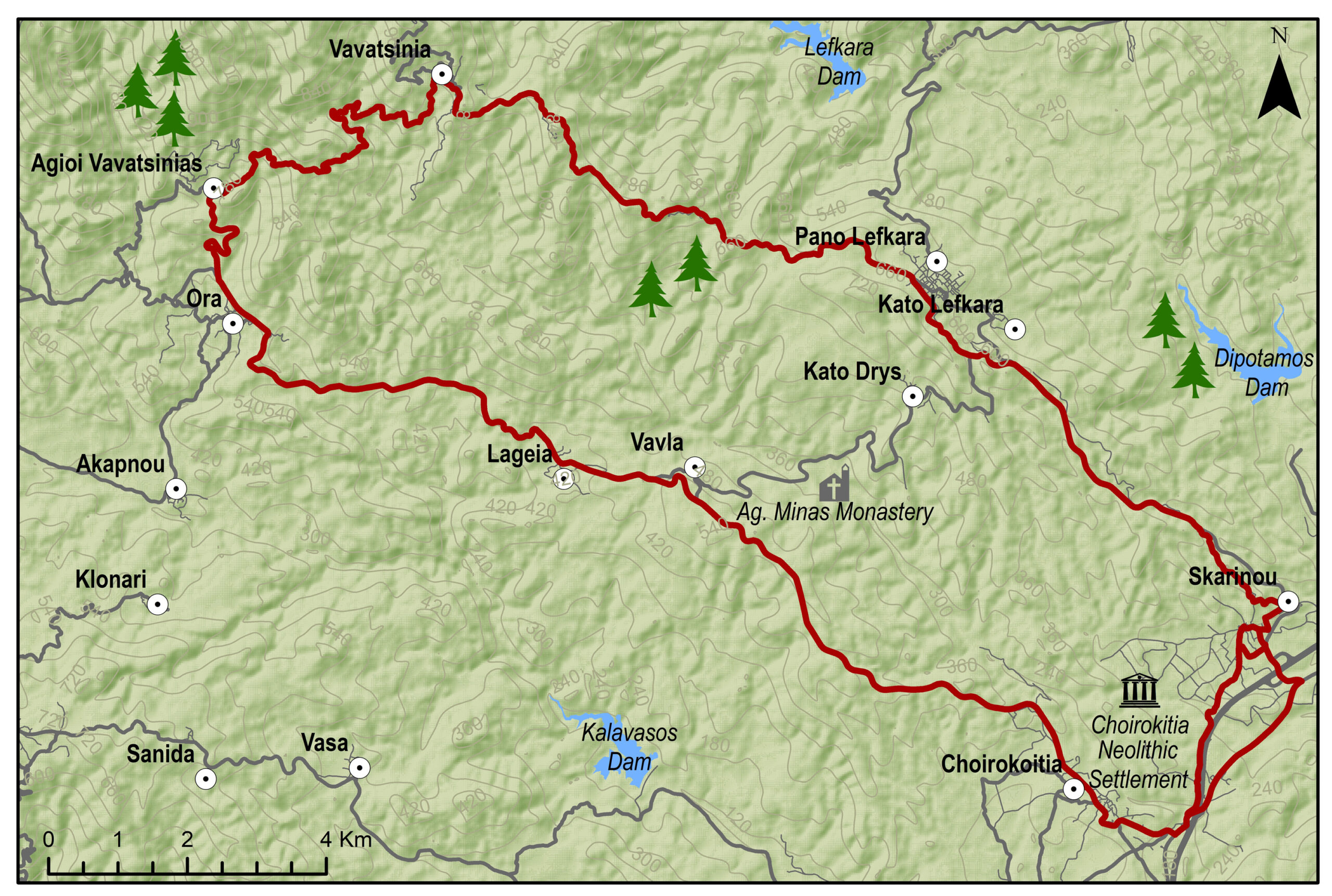
Skarinou Mountain Biking Basic North

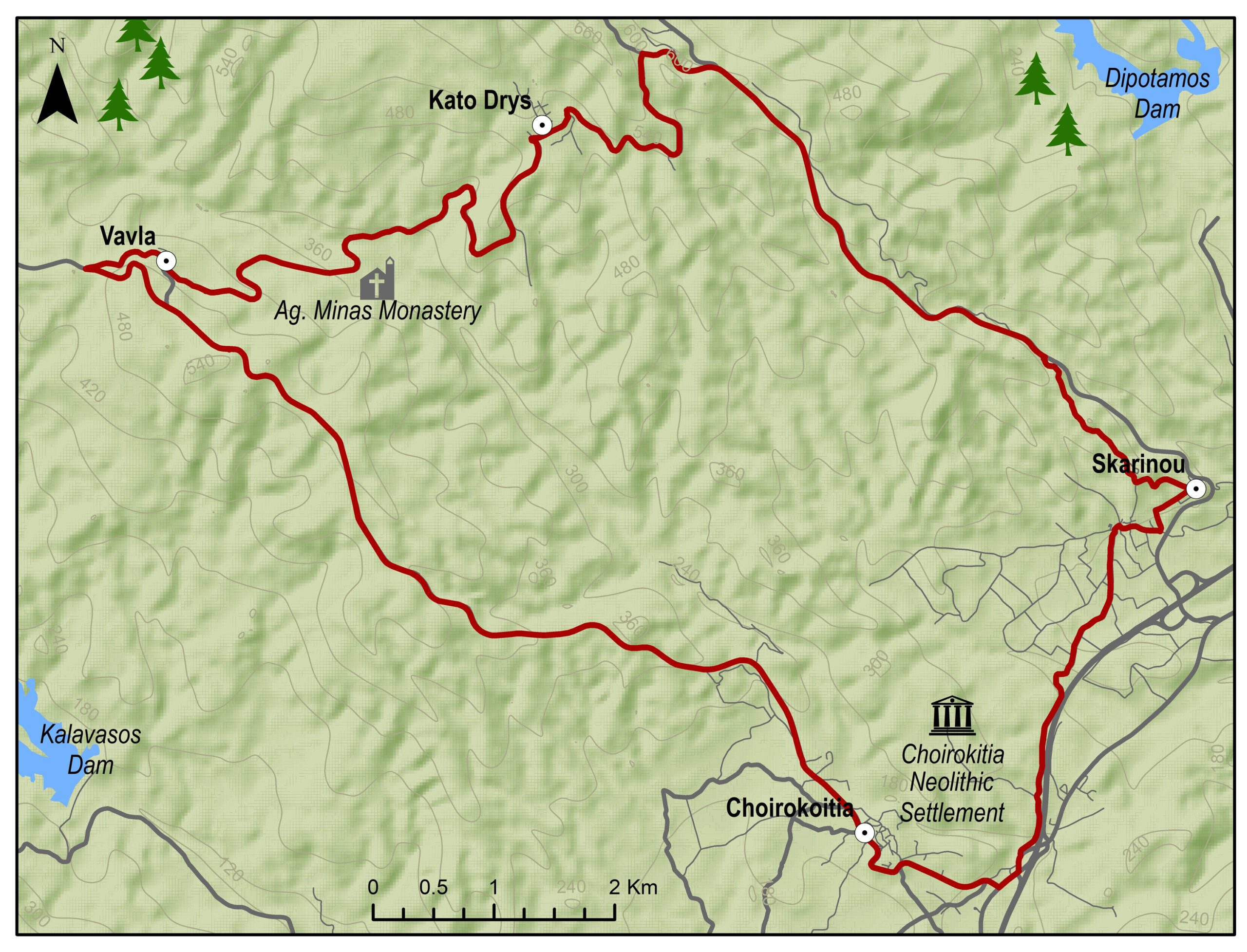
The route starts from Skarinou village and heads north, mostly uphill, towards the Delikipos village, through, for the most part, dirt roads. After reaching the main road of Delikipos-Kronos, the route turns left to re-enter the dirt road after a short distance and head to the Dipotamos Reservoir. Descending to the west side of the reservoir, the route ends at the starting point in Skarinou.

To download the route in gpx format click here

Distance: 36.3km
Elevation Gain: 722m
Highest point: 335m
Lowest point: 102m
Loop: YES
Terrain: Mixed
Section Distance (km) Total Distance (km)
Skarinou 0.0 0.0
Delikipos 17.4 17.4
Dimotapos Dam 12.6 30.0
Skarinou 6.3 36.3

Treis Elies village

Located in the Troodos mountain range, in the Marathasa valley of the Lemesos (Limassol) district, the village of Tries Elies sits at an altitude of 800 metres. It can be reached from Lemesos by following the B8 route, then the F802, followed by the F804, and finally the F811.

The tiny village has existed since Medieval times and was part of the royal estates during the Frankish period. It was also the birthplace of Chrysanthos (1767-1810), Archbishop of Cyprus under Turkish rule.

Its sights include interesting churches such as the small 17th or 18th century wooden-roofed structure of Archangelos Michael, and the small 17th century wooden-roofed church of Agia Paraskevi.

Other places to visit in the area include the Venetian bridges of Mylos and Agios Andronikos, whilst accommodation is available in beautiful, traditional houses.

Platres village

Located in the Troodos mountain range, in Lemesos (Limassol) district, the village of Platres sits at an altitude of 1.100 metres.

The layout of this picturesque village resembles that of a theatre, it is a very popular holiday destination and offers accommodation in quaint hotels.

Aside from its stunning nature trails, Platres has one of the highest waterfalls in Cyprus – Caledonia – believed to be named by English or Scottish visitors of the area in 1878. The village is also filled with charming old buildings and a winery in Kato Platres.

Visitors will also enjoy its unique attractions, which include a chocolate workshop, an adventure rope park, and an exhibition at its Cultural Centre which incorporates old photos of the village, and of the Greek poet Giorgos Seferis who mentions Platres in one of his most famous poems.

Polystypos village

Located in the Troodos mountain range, in the Pitsilia region of the Lefkosia (Nicosia) district, the village of Polystypos sits at an altitude of 1,150 metres. It can be reached from Lefkosia by following the E901 route, then the B9, followed by the E906, afterwards the E907, and finally the F915.  

Polystypos is one of the highest villages on the island and is dotted with springs and streams, vineyards, wild vegetation and colourful flowers. As such it is perfect for a tranquil stay at one of the beautiful, traditional houses.         

The traditional character of the village has been retained, and it is one of the most scenic on the island with a number of unique trees growing in the area, including a wild, evergreen oak bush and an ‘invisible’ tree of soft wood and strong fragrance that grows very slowly. During the winter season, the village sees heavy snowfall, which adds to its picturesque charm.

Visitors can enjoy walking through the designated nature trail, which takes you along an ancient footpath, cutting across a forest of hazelnut trees. The walk totals 1,300 metres, and has three different starting points.

Sights of interest include the church of Agios Nikolaos, which was built between 1908 and 1912 in a Franco Byzantine style.

Pedoulas village

Located in the Troodos mountains, in the Marathasa Valley of the Lefkosia (Nicosia) district, the village of Pedoulas sits at an altitude of 1.100 metres. It can be reached from Lefkosia by following the E901, then the B9, followed by the E908, and finally the F960.

Pedoulas sits amidst orchards and is particularly known for its cherries and the products made from the fruit.

The village is very significant in religious terms thanks to its important church of Archangelos Michael (1474), which ranks among the most impressive Byzantine churches in Cyprus with its amazing frescos. The church is part of the route of 10 Byzantine churches, which are included on the UNESCO World Heritage List. Close to the church is the Pedoulas Byzantine Museum, which was established in order to house and preserve icons and artefacts from churches in the region, with exhibits dating from the 12th century.

Its other interesting sites include the Folk Art Museum, which exhibits the villager’s daily way of life, customs and traditions of the past, and the natural spring, which is said to hold the key to longevity. Many visitors enjoy a refreshing drink of water from the spring when they pass through the village, or stay for a while at one of its quaint hotels.

Palaichori village

Located in the Troodos mountain range in the Pitsilia region of the Lefkosia (Nicosia) district, the village of Palaichori is just 40 km from Lefkosia and can be reached by following the E903 route, then the F915.

The tranquil village is separated in two by the Serrache River, which springs from the Papoutsa mountain, and offers accommodation in beautiful, traditional houses.

The village is home to vineyards, nut and fruit trees, and produces the spirit Zivania in the traditional way. The spirit also plays a role in important village traditions, such as sharing it with friends in the church courtyard on name days.

A number of old and interesting churches, including significant Byzantine churches are worth a visit, whilst other sights include the village square, a museum exhibiting Byzantine Heritage, the restored hideout of the Gregoris Afxentiou, and the statue of the Cypriot Mother.

Fishing enthusiasts will enjoy partaking in the leisurely hobby at Palaichori Dam, which is constructed on the river of Kampiou.

Lemythou village

Located in the Troodos mountain range, in the Marathasa Valley of the Lemesos (Limassol) district, the village of Lemythou sits at an altitude of 1.100 metres. It is 65 km from Lemesos and can be reached by following the B8 route, then the E802, and finally the F804.

Lemythou is one of the highest villages on the island, and is built in the shape of an amphitheatre, amidst leafy, natural surroundings. As such, it is perfect for agrotourism in its tranquil environs.

The village has existed since at least Frankish times, and was included among the royal estates. Its name is either derived from the ‘Lemithi’ bush grass that grows there, or the village’s first settler, called Lemithes, whose long, thin beard resembled the plant.

Its pretty surroundings are perfect for walking and cycling, whilst there is a ski centre just 8km from the village for the snowy winters.