Honey

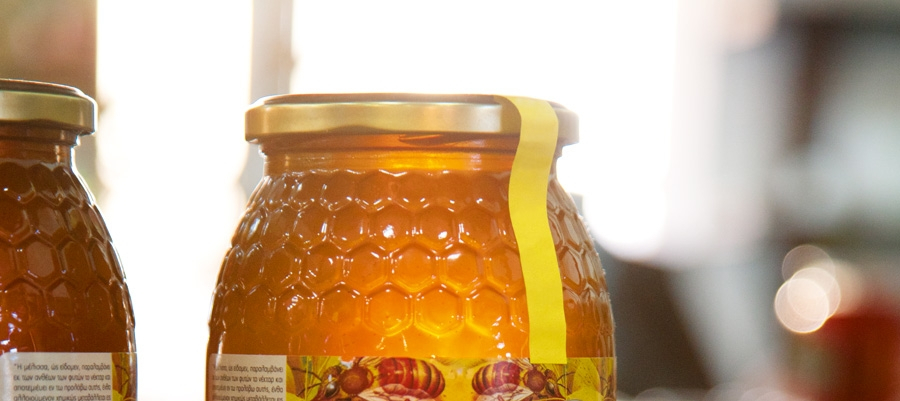
Cyprus has a long-standing tradition of honey making, producing a large number of high-quality and award-winning honeys that are known for their pureness.

The variety of honeys – ranging from clear and golden to thick and crunchy – take their distinct flavours from a bouquet of over 1,908 different flora including thyme, eucalyptus, orange blossom and polyflora. There are also many producers of raw honey that has not been heated, and therefore retains its super-nutritious and healing properties.

Honey is readily available to buy in shops and directly from villages where small producers bottle the most delectable kinds, perfect to take home as a souvenir or gift!

Glyka tou Koutaliou (Spoon Sweets – Preserves)

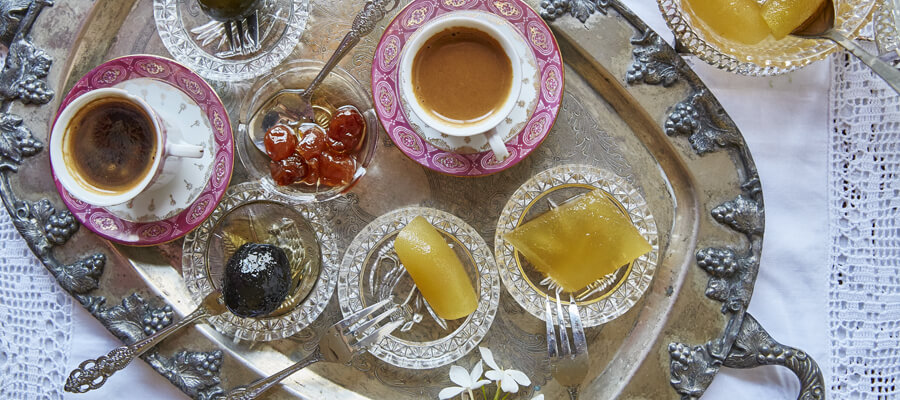
As their name indicates, the traditional glyka ‘spoon sweets’ are candied preserves that are typically served on a small spoon and offered to guests as a symbol of hospitality, always with a glass of cold water.

When visiting the island, you may find you are offered one at the end of a meal and although the portion may appear small, you won’t be able to manage a second serving as they are very sweet – and half the time you will be unable to identify exactly which fruit or vegetable has been candied!

Almost any fruit, vegetable, nut or peel can be preserved, and the sweets are often flavoured with vanilla, cinnamon or pelargonium (scented geranium leaves).

The more common sweets are made from figs, cherries, watermelon rind and citrus peel, walnuts, apricots, marrows, grapes, bergamot or almond stuffed baby aubergines. Some are made from fruit that is otherwise inedible, such as the ‘kitromilo’, the bitter Seville orange that cannot be eaten raw.

Preparation is similar to that of marmalade; the ingredient of choice is first soaked in water and cooking lime (calcium hydroxide) to become crispy, then in water and lemon juice to become shiny and preserve its colour, before it is gently boiled in sugar over several days.

In more traditional times, spoon sweets were given as wedding favours, whereby the guests would eat the sweet directly from the spoon, which was then washed for the next well-wisher. Almost every Cypriot home had specially-made delicate serving dishes and tiny silver forks and spoons with which they served the sweets to their guests. The family recipe for making the preserves was traditionally passed down to the daughters.

In today’s modern Cypriot society, it is more common to buy a jar, and you can find a number of different brands that make a lovely gift or a traditional souvenir to remind you of your visit to the island.

Carob Syrup

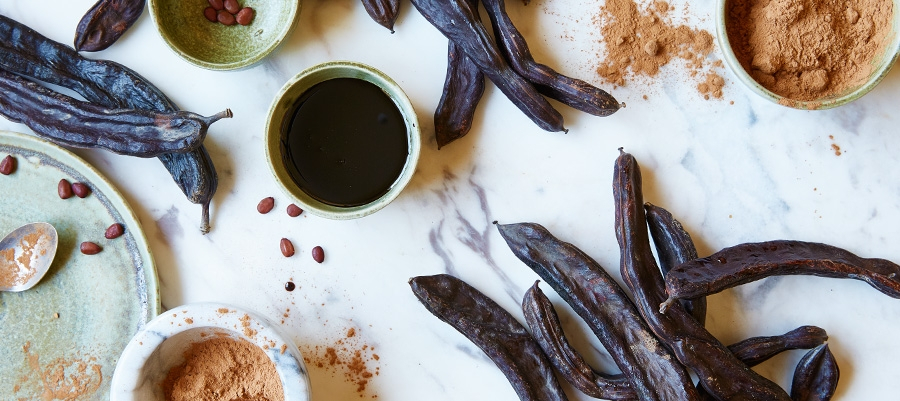
Delicious, sticky carob syrup may taste like it belongs in the dessert-section, but it is actually an extremely nutritious product made with locally grown carob pods that can be enjoyed in place of honey and other sweeteners.

Carob syrup is perfect for drizzling on yogurt or Anari cheese for a healthy but sweet snack. It can also be used in baked goods, salad dressings, marinades and sauces in place of honey or sugar. Traditionally, a carob toffee known as ‘Pastelli’ is made with the syrup.

The syrup is made by boiling carob pods in a large bronze container with water for around four hours. The pulp is then strained to leave the resulting golden-black syrup. Many other products are produced from carobs, including carob flour and chocolate.

The carob tree is an indigenous species of the island, cultivated for four thousand years. Once the island’s major export, the carob pods or ‘black gold’, were prized for their versatility, high nutritional value and hardiness that allowed them to be stored and transported across long distances.

Tsamarella

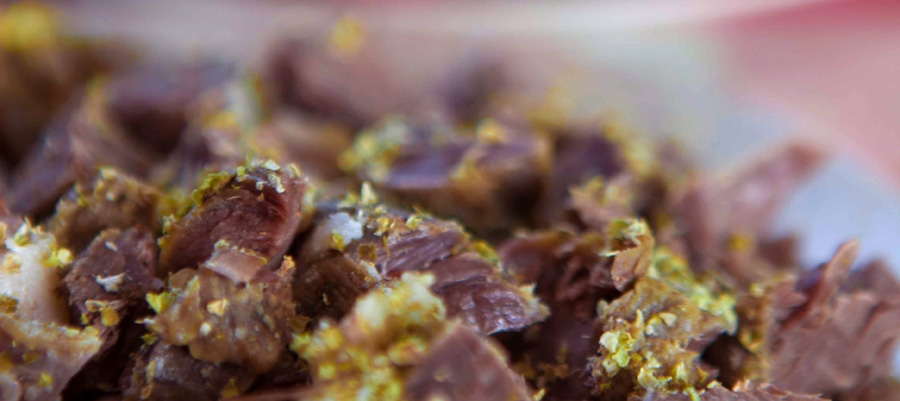
Tsamarella is a dish of goat meat that is considered to be a delicacy as part of the meze meal.

Large pieces of fatty goat meat are slit and salted with heavy weights placed on top of the meat, which is hung to dry in the sun for approximately 10 days. The meat is then soaked, covered in oregano and again, dried in the sun.

Like Hiromeri, Tsamarella is also an ideal accompaniment to Zivania (a strong local spirit).

Loukanika / Pastourma

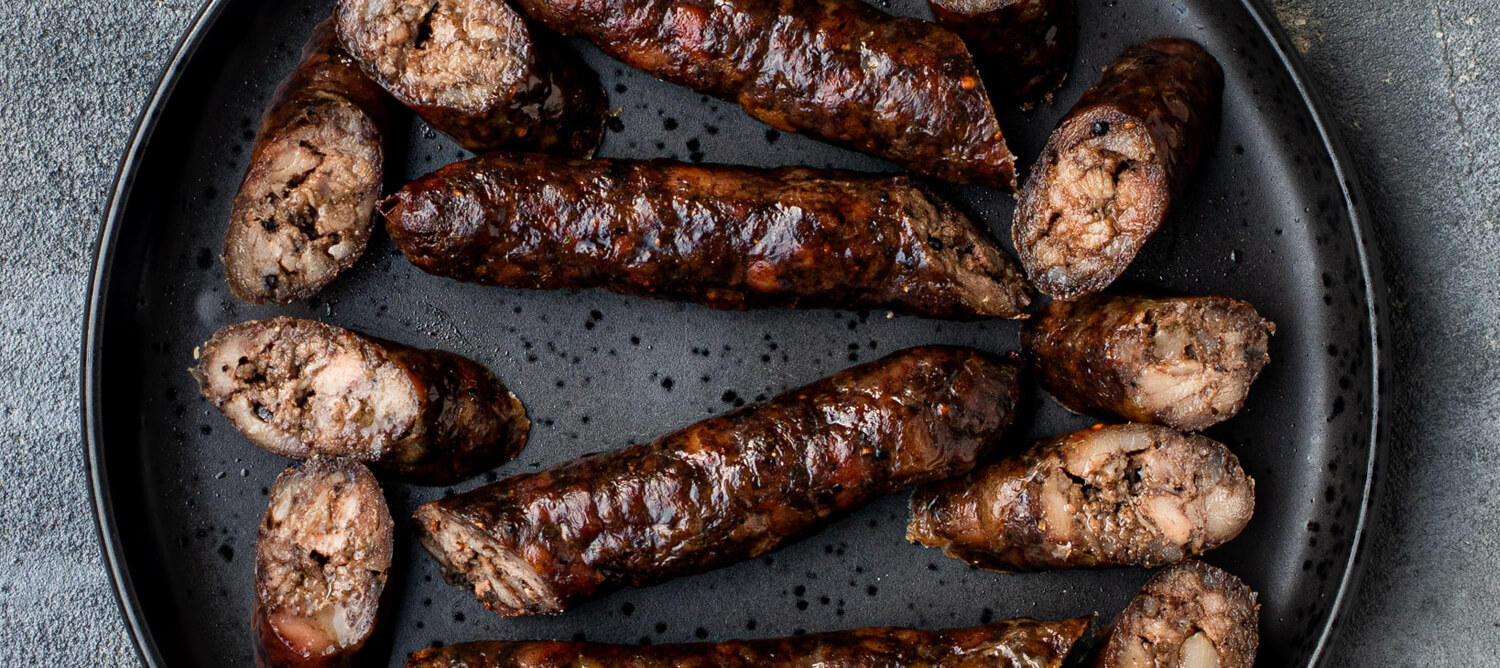
The traditional, spicy village sausages known as Loukanika and Pastourma are both cured in a similar fashion and both contain red dry wine, salt, garlic and spices, including coriander seeds and black pepper. Loukanika is made with pork meat whilst Pastourma is made with beef meat.

Locals love to eat them as part of a meze, as an accompaniment in a barbecue, or fried with Halloumi and eggs for a very Cypriot twist on the fried breakfast!

Some of the mountain villages produce these sausages and other cured meats as specialty products, and you can find them in the chiller section of most supermarkets, vacuum packed to withstand the flight home!

Lountza

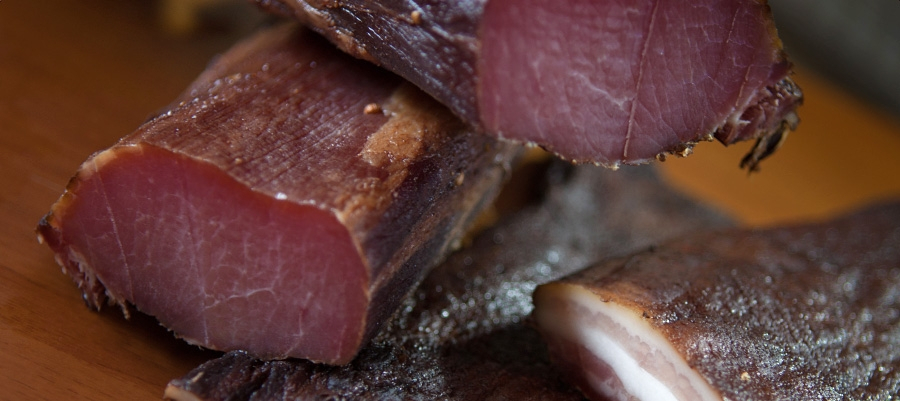
The traditional cured pork loin of Lountza is one of the island’s most popular cured meats and is often partnered with Halloumi cheese in sandwiches, or served with fried eggs.

The pork filets or loins are salted, marinated in red wine, dried in the sun, rolled in coriander seeds and finally smoked in a specially built chimney with wood from various aromatic bushes and trees. Lountza can be served cold, fried or grilled.

When vacuum-packed, the meat has a long shelf life and makes the perfect taste of Cyprus to take back with you to enjoy at home!

Hiromeri

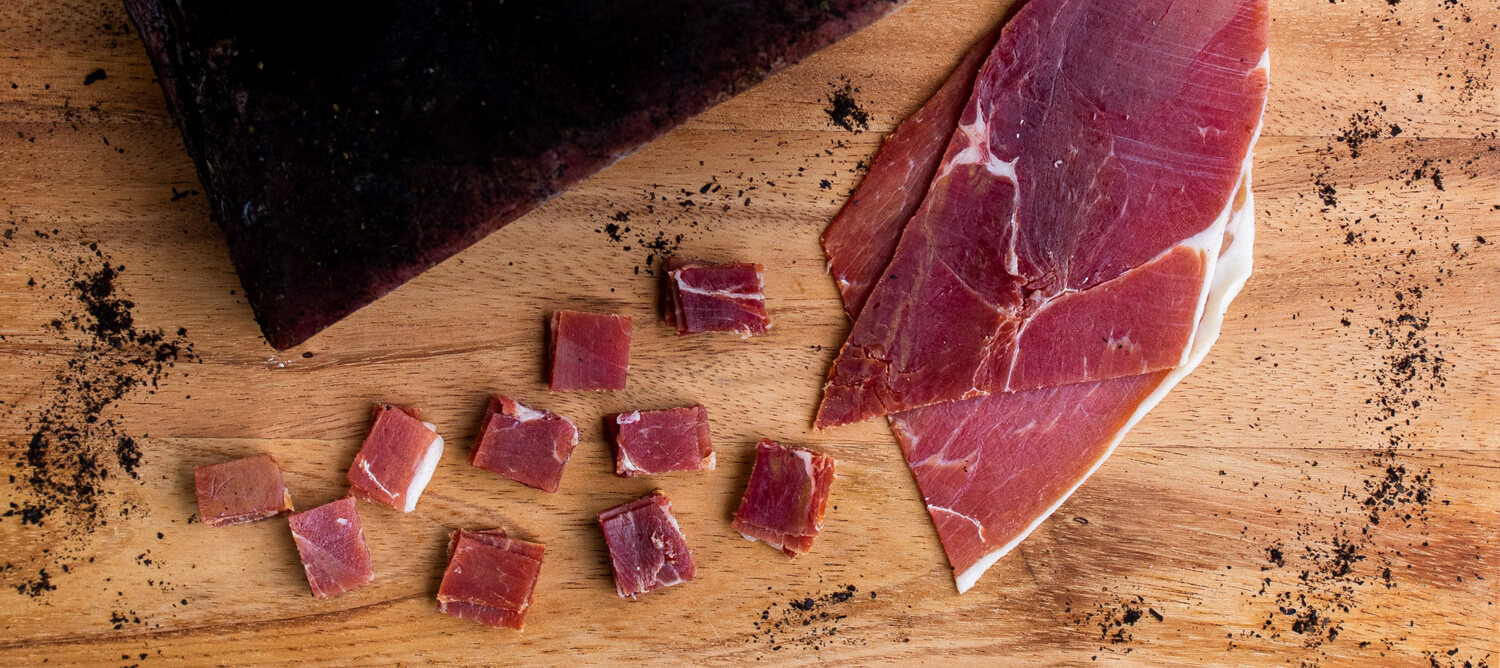
Hiromeri is a flavoursome delicacy of smoked pork ham. It is salted and marinated in red wine and seasoning before being pressed under heavy weights, then finally smoked. Hiromeri is served as a snack with drinks, particularly with wine and Zivania (a strong local spirit), cut into very small pieces and served alongside other nibbles.

Halloumi Cheese

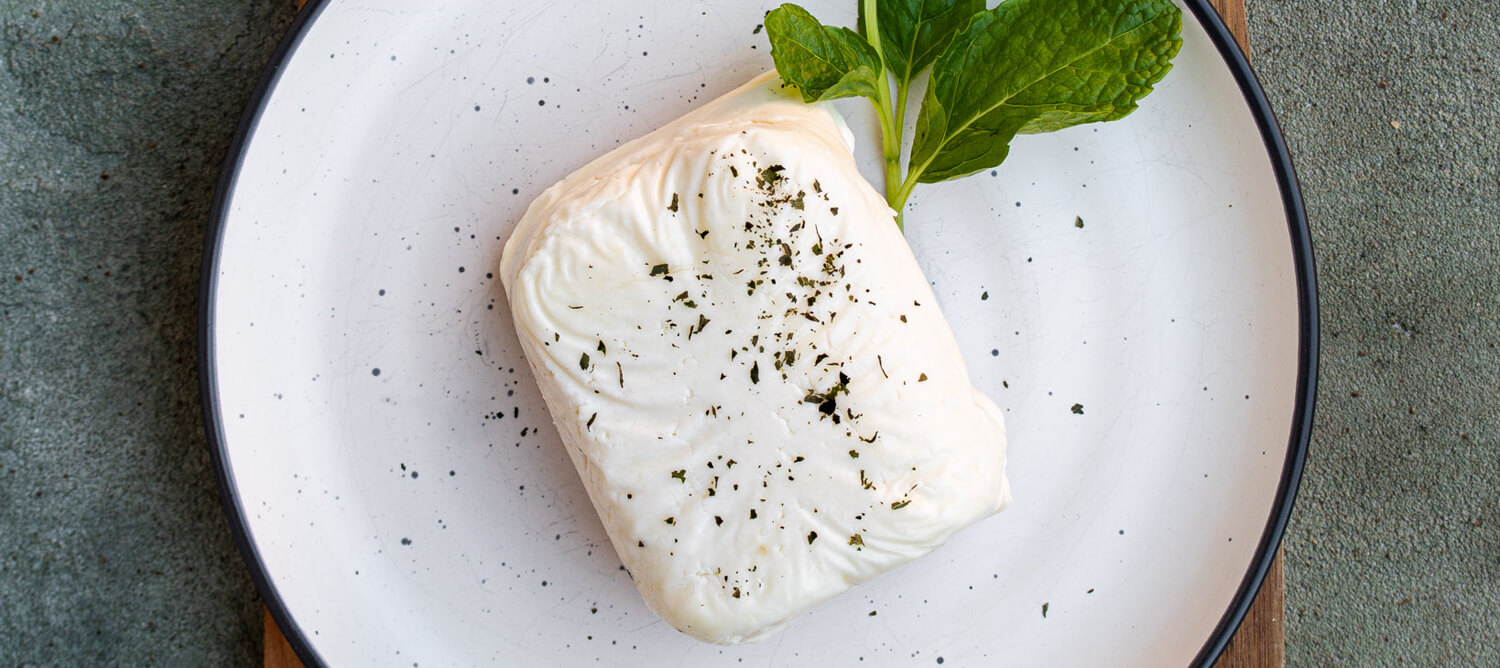
The island’s most famous cheese – Halloumi – is a delicious and versatile product that has a distinctive texture and is fantastic both cold and cooked (grilled or fried). In fact, it is unlikely that you will not encounter this cheese on your visit to the island, whether it is in a sandwich, as part of a traditional ‘meze’ or at breakfast!

This white, semi-hard cheese has been produced on the island for centuries and is traditionally prepared with a precise quantity of goat or sheep’s milk (mainly by the villages that produce it) in order to qualify as authentic Halloumi. It can also be made with cow’s milk (more commonly by the larger dairies), or even a mix of all three milks. Mint is often added to this salty cheese, and it has a long shelf life.

There are so many ways to enjoy Halloumi! When cold, it is traditionally eaten for breakfast with watermelon, or alongside village bread and olives. When grilled, it takes on the rubbery texture that is so popular in a Halloumi and Lountza (cured pork loin) sandwiches; as a barbequed dish in a meze meal; fried with eggs; stuffed in Cypriot ravioli; soft in ‘trahana’ or avgolemoni soups, or added to pasta dishes.

Halloumi is made in special large bronze containers where, after adding the rennet, the milk curds are removed from the heat, strained very well and then wrapped in a piece of cloth with a heavy object placed on top to squeeze out any remaining whey.

The cheese is then cut into pieces and submerged once again into hot whey until it rises to the surface. The pieces are then taken out of the container and placed in salt and mint, folded in two and left to cool. It is finally submerged once again into hot whey.

Mezedes

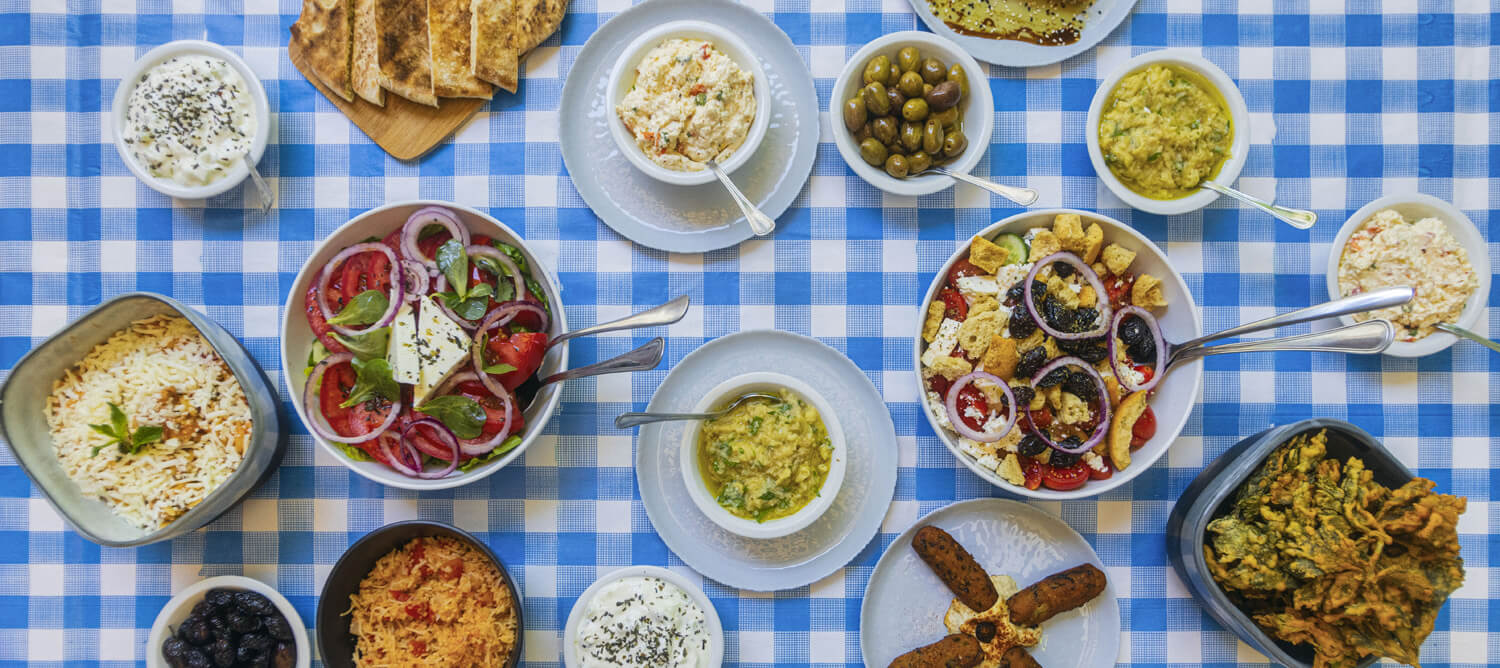
No visit to Cyprus is complete without enjoying the traditional meal of many small dishes known as ‘meze’.

This large feast, which has been a popular part of the Cypriot culture for many centuries, is more of a social event than a formal meal, with many dishes shared around the table with family and friends.

What is included in the meze varies widely from each restaurant and tavern, and largely depends on what is in season and whether you are ordering a meat meze, fish meze or a mixed meze. Typically there should be around 15-20 dishes, including the dips and bread, but some places may include up to 30 dishes.

Generally, the meal begins with olives and various dips, such as yoghurt, Tahini (sesame seed dip), Skordalia (potato and garlic dip), Taramosalata (fish roe dip), and Tsatziki (cucumber and mint dip), all served with a basket of fresh bread and a bowl of crisp village salad.

Thereafter, you might enjoy more common dishes such as grilled Halloumi cheese and Lountza (cured pork loin), or more unusual selections such as wild asparagus and other greens cooked with eggs.

If you are having a meat meze, then you can expect grilled meats such as pork chops and barbequed chicken and pork, alongside spicy Loukanika sausages, kleftiko and delicious stewed dishes such as Stifado and Tavas. In a fish meze, a variety of locally caught fish is served grilled and fried, including small-fry, sea bream with olive oil and lemon dressing, cuttlefish, calamari and octopus.

In the more traditional establishments, you may be offered watermelon, sweet pastries or preserved sweets (‘glyko’) to round off the meal.

So, ‘kopiaste ke kali orexi’, which means ‘welcome, and bon appetite’, you will soon fall in love with the social way of eating that the authentic Cypriot meze offers!