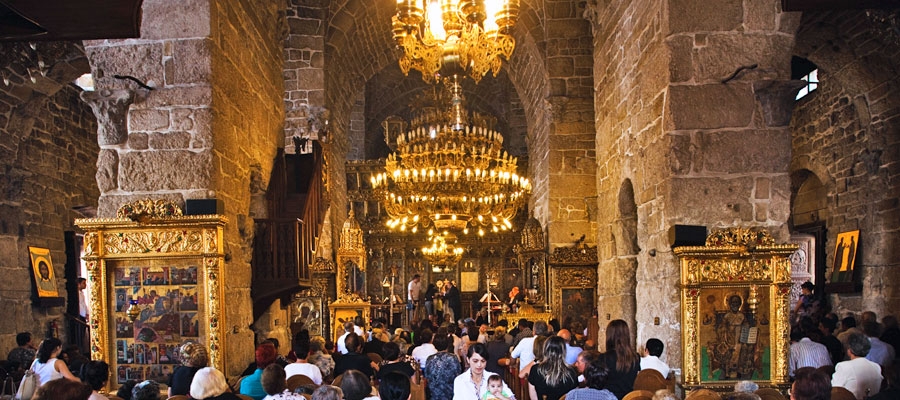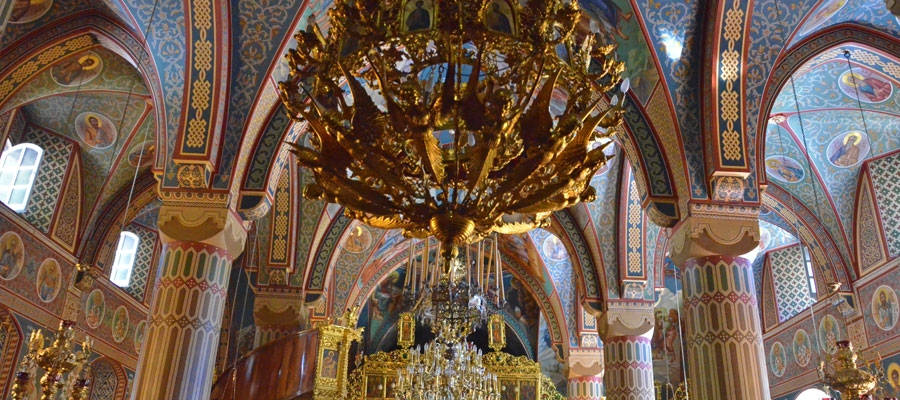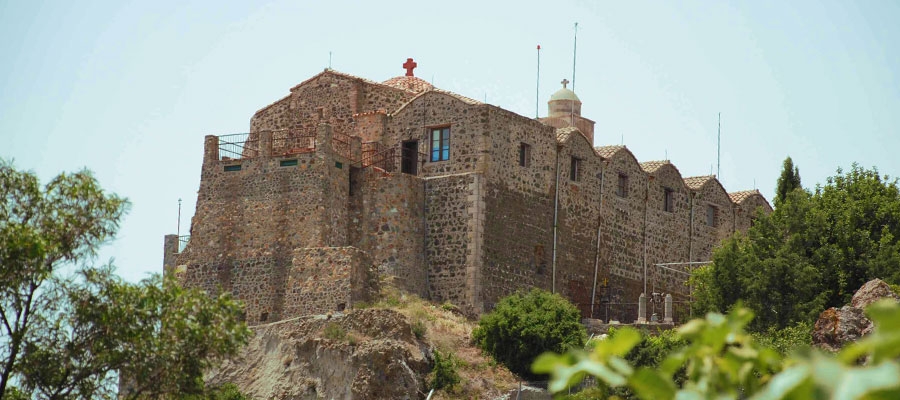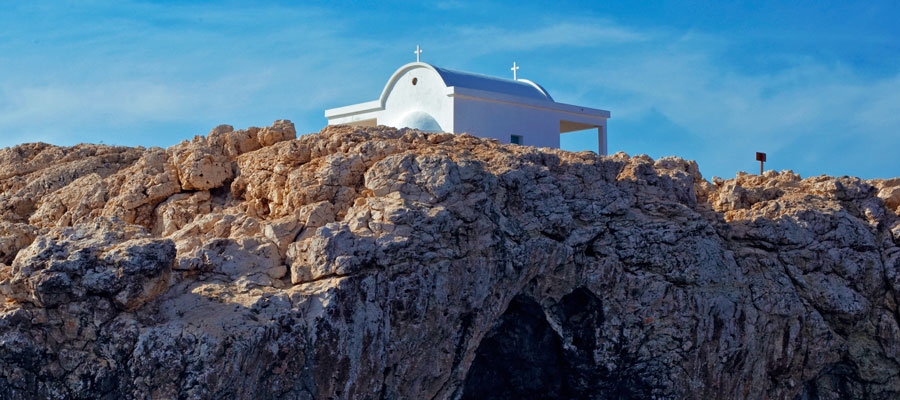
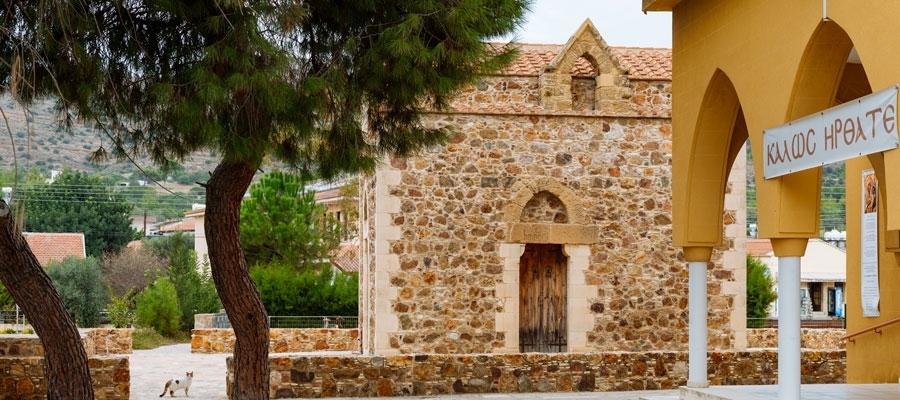
Multi-cultural Christian Cyprus Tolerant to Other Religions and Doctrines – Route B Religious Route

This route is very pleasant and covers half of the island.

The route: Lefkosia (Nicosia) – Pyrga – Monastery of Stavrovouni – Bishopric of Lemesos (Limassol) – Τimi – Pafos (Paphos), Ktima – Chrysochou – Poli Chrysochous – Pelathousa and Lysos.

Starting from Lefkosia, you reach Pyrga to visit the royal Latin chapel with Byzantine frescoes and then move on to Stavrovouni to visit the Monastery of Timios Stavros, where a piece of the cross on which Jesus Christ was crucified is kept. Thereafter, you pass Lemesos and Kourio to reach Timi, where you will visit a small church that was converted into a mosque under Turkish rule. In Ktima, you once again come across a mosque, which used to be an Orthodox church dedicated to Agia Sofia. During the entire route, you will come across many monuments, which relate to the multi-cultural side of Cyprus.

Monuments: Royal Chapel and Church of Agia Marina, Pyrga – Church / Mosque of Agios Georgios, Bishopric of Lemesos – Mosque / Church of Agia Sofia, Τimi – Church / Mosque of Agia Sofia, Κtima, Pafos- Mosque / Church of Agios Nikolaos, Chrysohou – Mosque / Church of Agios Andronikos, Polis Chrysochous – Mosque / Church of Agia Aikaterini and Church of Panagia Pelathousa Chortainis – Church of Panagia Chryseleousa, Lysos.

Total route length: 82 km.
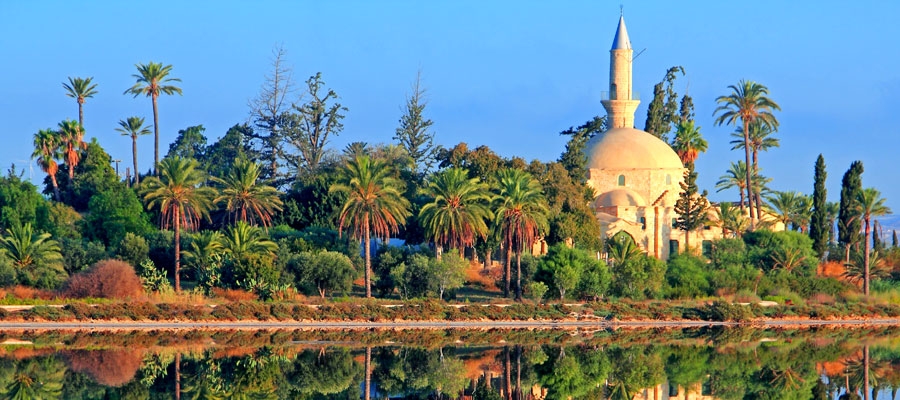
Multi-cultural Christian Cyprus Tolerant to other Religions and Doctrines – Route A Religious Route

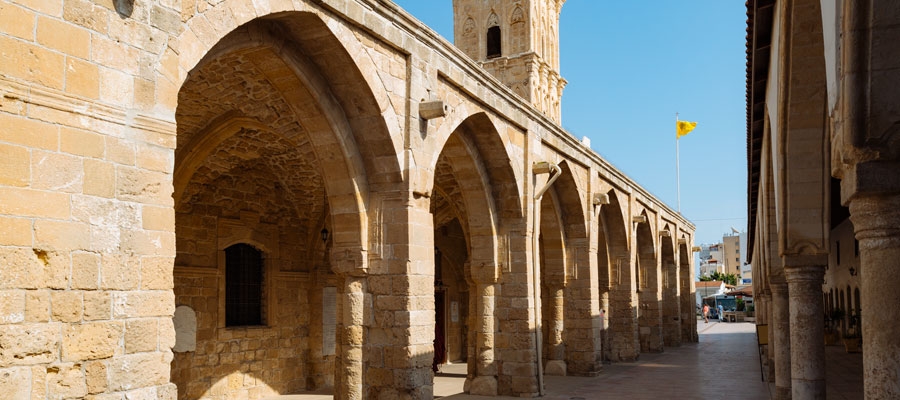
Having as a starting point the 9th century church of Agios Lazaros, one of the most remarkable examples of Byzantine architecture and where the sarcophagus (Larnax) of Saint Lazarus lies, we head south-east towards Dromolaxia (Artemidos Avenue leading to B4 road) to the Hala Sultan Tekke. According to the legend, Um Haram, who was related the Prophet Mohammed, died when she fell off her mule, during one of the first Arab raids on the island and was buried on the very spot where the mosque was built.

Not far away, in the same direction, is the village of Kiti and its main point of interest the church of Panagia Angeloktisti. According to local tradition, while building the church an army of angels was coming down at night to help build it; hence the name ‘Angeloktisti’ (‘built by Angels’). On the conch of the apse lays the famous mosaic of Panagia tis Aggeloktistis of the 6th c. A.D. This mosaic is considered to be one of the most significant and elaborate wall mosaics of Early Christian art, depicting the Virgin standing, holding baby Jesus in her left arm, with the Archangelos Michael and Gabriel on either side.

In a short distance to the west of Kiti (just of the B4 road) lies the Turkish Cypriot village of Kivisili. At the center of the village is the church of Panagia Eleousa, dedicated to the Virgin Mary.

Next stop in our visit is the church of St. Catherine in Klavdia, which was converted into a mosque during Ottoman Empire in Cyprus. Our route takes us to the ruined cloister of “Panagia Stazousa”. Today, only the church remains intact with its characteristic gothic ornaments and fragments of frescoes in the interior.

Further to the north towards Pyrga village, we will visit the Royal Chapel. Considered to be one of the most interesting surviving structures from the Frankish Period on the island, the Royal Chapel was built in 1421 by the Lusignan King Janus and its mural decoration includes a series of coats-of-arms of the Medieval Kingdom of Cyprus.

The route ends at the monastery of Stavrovouni which is perched on a synonymous rocky peak. Legend has it that it was founded in the 4th century by St. Helena, mother of Emperor Constantine the Great, who left a relic of the Holy Cross at the monastery.

Monuments: Church of Agios Lazaros in Larnaka (Larnaca), Hala Sultan Tekke at Dromolaxia, Church of Panagia Angeloktisti in Kiti, Church of Panagia in Kisivili, Church / Mosque of Agia Aikaterini in Klavdia, Gothic Church of Panagia Stazousa and Royal Chapel in Pyrga and Monastery of Stavrovouni.

Total route length: 70 km.

The Byzantine Art in Cyprus – Reminiscence of a glorious past (B)

In order to cover the entire island, the Byzantine Art Route was divided into two parts – the West Route and the East Route – to avoid a single long route, and allow time for people to visit all the monuments.

The East Route passes from: Lefkosia (Nicosia) – Pera Chrorio – Kellia – Sotira – Paralimni – Agia Napa – Larnaka (Larnaca) – Kiti – Kivisili – Monastery of Stavrovouni – Pyrga and Dali.

The route starts from Lefkosia and heads south with its first stop being at Pera Chorio for the Church of Agion Apostolon, where there are frescoes of the 12th century. In Kellia, the church of Agios Antonios houses wonderful frescoes of the 11th and 13th centuries. Another stop is made in Larnaka for the church of Agios Lazaros built in 900 AD and, of course, for all the proposed monuments, which represent Byzantine art in various periods. Some of the monuments are common in both routes.

Monuments: Church of Agios Antonios in Kellia, Church of Agios Mamas in Church of Metamorfosis in Sotira, Church of Panagia and Church of Agia Marina in Paralimni, Monastery of Agia Napa in Agia Napa, Church of Agios Lazaros in Larnaka, Church of Aggeloktisti in Kiti, Church of Panagia in Kivisili, Monastery of Timios Stavros in Stavrovouni and Royal Chapel in Pyrga.

Total route length: 214 km.


The Byzantine Art in Cyprus – Reminiscence of a glorious past (A)

Byzantine Art is found everywhere in Cyprus, and the especially good condition of these samples of art (mainly the frescoes) make Cyprus a centre of Byzantine Art study. The first Christian centuries and their art reached our days through the mosaics of three churches – two of which are in the Turkish occupied part of the island.

The basic West route is: Lefkosia (Nicosia) – Peristerona – Kalopanagiotis – Monastery of Panagia tou Kykkou – Panagia (Chrysorogiatissa) – Τala – Empa – Κato Pafos (Paphos) – Geroskipou – Τimi – Kouklia – Κourio – Κolossi – Lemesos (Limassol) – Pyrga – Pera Chorio and Lefkosia.

It is impressive that despite the fact that Cyprus was conquered by many peoples, not only did it preserve the monuments, but also continued to create more with only some influences from the conquerors. The Byzantine art was present on the island from 726-843 AD, although due to the iconoclasm, the most significant monument, which has been salvaged, is the ornament of the eastern dome of the five-domed church in Geroskipou. From the 10th century and up to this day, the Byzantine art both flourished and survived. All proposed monuments of the route are considered to be significant. In Peristerona you will also visit the other five-domed church (there are only two).

Monuments: the Church of Agion Varnava and Ilariona in Peristerona, Monastery of Agios Ioannis tou Lampadisti in Kalopanagiotis, Monastery of Chrysorogiatissa in Pano Panagia, Monastery of Agios Neophytos in Tala, Church of Panagia Chryseleousa in Empa, Church of Agia Kyriaki in Pafos, Church of Agia Paraskevi in Geroskipou, Church of Agia Sofia in Timi, Church of Panagia Katholiki in Kouklia, Church of Agios Efstathios in Kolossi, Monastery of Timios Stavros in Stavrovouni, Royal Chapel in Pyrga and Churches of Agios Georgios and Agios Dimitrianos in Dali.

Total route length: 280 km.

Worship of the Holy Cross in Cyprus Religious Route

Τhe fact that Cyprus is at the centre of Eastern Mediterranean, very close to the Middle East and Asia Minor, played a significant role as a stop on the way to and from the Holy Land. Tradition has it that Agia Eleni, the Mother of Constantine the Great, when transferring the Holy Cross from Palestine stopped in Cyprus, and followed a course along which churches dedicated to the Holy Cross were built.

Μoni Stavrovouniou – Tochni – Lefkara – Pelendri – Kouka – Omodos – Anogyra – Tsada.

The route starts from Moni Stavrovouniou, which has, however, the rule of ‘avato’ meaning that it is inaccessible to women. The church of Timios Stavros in Tochni is the only church built on a bridge, the church of Pelendri with the same name has magnificent frescoes of the 12th, 13th, 14th and 15th centuries. In Omodos, the visitor will see a piece of the rope used to tie Jesus on the cross.

Monuments: Monastery of Timios Stavros in Stavrovouni, Churches of Timios Stavros in Tochni, Lefkara, Pelendri, Kouka, Monasteries of Timios Stavros in Anogyra and Tsada and Monastery of Timios Stavros Minthis in Tsada.

Τhe total route length is not fixed.

Agia Napa and the Sea: A Different Dimension

The walk is postponed until further notice

This «walk» gives an insight to the historic connection of the area of Agia Napa with the sea and the recent growth of the small fishing village to a splendid modern resort.  All along, the tour gives one the opportunity to learn more about the area, and admire its natural beauties. The participants ride on a well-preserved vintage bustowards the outskirts of Agia Napa to visit the church of Agios Epifanios. Next on the programme is a visit to the National Park of Cape Gkreco. The participants will visit the breath-taking hilltop of Kavos, from where they can enjoy an unobstructed nature view on all the points of the horizon: to the east the tip of the cape (Pidalion) where the lighthouse and the facilities of a French radio station are located; to the west there is Agia Napa; to the north the main part of the National Forest Park, and to the south the pristine waters and rugged coastline. On the way back a short stop at asea cave (rocky bridge) and the nearby love bridge.After a coffee break the tourcontinues along the coast and the participants visit the Tombs of Makronisos that date back to the Hellinistic Period (323BC-30BC) and the Roman Period (30BC-324AD).
 
The guide’s commentary focuses on familiarising participants about the area and offers further information on various other sites that the visitor may wish to explore on his own or with an organised tour.
Walking tours operate on a first come, first served policy.
The tour is combined with a ride on a unique and well-preserved vintage bus! Book in advance, giving name and hotel. The vintage bus seats up to 30 passengers.
Guiding: By qualified licensed Guides
Duration: 3 hours, including a 20- minute break
Meeting point: Deputy Ministry of Tourism Information Office at 10:00 a.m
 

Start Point: Deputy Ministry of Tourism Information Office, 12, Leoforos Kryou Nerou, 5330 Agia Napa, Cyprus
End Point: Deputy Ministry of Tourism Information Office, 12, Leoforos Kryou Nerou, 5330 Agia Napa, Cyprus
Days / Times: Every other Thursday in English-German & English-Swedish
Operating Period: November 2022–March 2022
Not available on Public Holidays.
Estimated Duration: 3 hours, including a 20-minute break.
Booking: Advance booking is required.
Price: Offered free of charge by the Municipality of Ayia Napa in collaboration with the Deputy Ministry of Tourism and the Cyprus Tourist Guides Association
Bookings and further Tourist Information:
 
Deputy Ministry of Tourism, 12, Leoforos Kryou Nerou
CY 5330 Agia Napa, Cyprus
Tel: 23721796

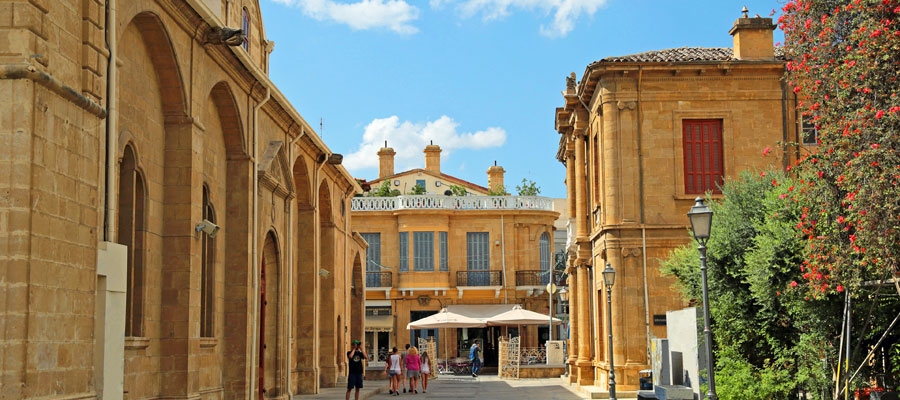
Discover the old Lefkosia (Nicosia) and its walls

Lefkosia, the only divided capital in the world, is situated practically in the centre of Cyprus and constitutes a rich cultural hub. The history of the city dates back to the Bronze Age. In antiquity and in early Christian times it was known as Ledra. It has been the capital of Cyprus since the Late Byzantine period (11th century). The Lusignans transformed it into a splendid city, with royal palaces and churches. The city centre, the old “Chora”, surrounded by 16th century walls, with museums, old churches and medieval buildings, maintains the leisurely atmosphere of yesteryear.

This guided tour offers a walk with reference to the most noteworthy sights within the walled city of Lefkosia.

For the programme (dates/time) click here

Start Point: Old Town Hall, Eleftheria Square, Lefkosia
End Point: Old Town Hall, Eleftheria Square, Lefkosia
Days / Times: Click here
Estimated Duration: 2:45 hours
Booking: Tour language: English
Price: Free
Organised by: Lefkosia Municipality, DMT and Nicosia Tourism Board
Information: Deputy Ministry of Tourism Information Office
Aristokyprou 11, Laiki Yeitonia, CY-1011,
Tel. +357 22674264, email: [email protected]

Larnaka Walking Tour

The Guided Tour (City Route) passes by the 1919 colonial buildings and continues along the famous Foinikoudes (palm tree promenade),a popular and bustling coastal strip.

Participants will then walk through the streets with the landmark buildings towards the craftsmen area.  Then they will visit the magnificent church of Agios Lazaros,  the town’s patron saint.

The walk passes by the Kyriazis Medical Museum and ends at the New Municipal Market of Larnaka.

Start Point: Deputy Ministry of Tourism, Information Office, Larnaka Town Centre
End Point: The new Municipal Market
Days / Times: Wednesday, 10:00
Minimum attendance: 5 persons
Operating Period: All year round.
Not available on Public Holidays.
Estimated Duration: 2 hours, 30 minutes
Booking: No reservation is required
Price: Free
Organised by: Larnaka Municipality, Deputy Ministry of Tourism and Cyprus Tourist Guides Association
Information: Tel. +357 24 644303

Agios Panteleimon Convent

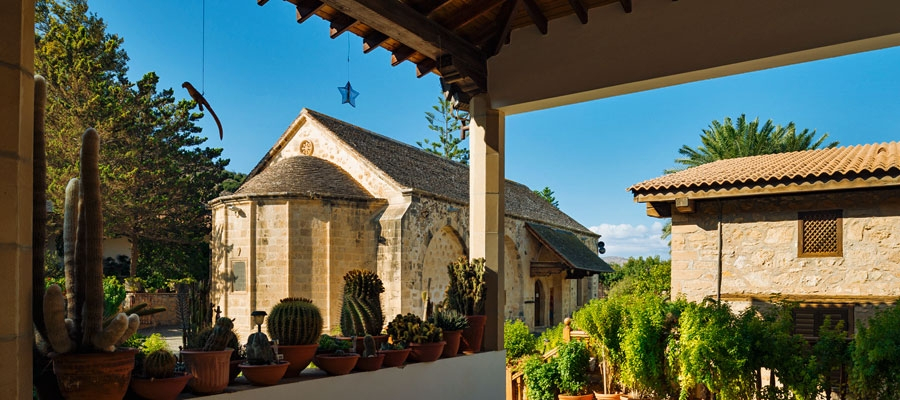
The 18th century convent of Agios Panteleimon, with its gabled roof, is located in the Achera Valley, northwest of the Lefkosia (Nicosia) district at the village of Agrokipia.

The original old monastery complex consisted of the main church and buildings standing in the northern and eastern side, while the ground floor of the northern part of the church was divided into storage rooms, a laundry room, rooms with gyles and ovens, as well as a room where sweets were produced. There are no remains of the old church, or the original buildings of the monastery.

According to an inscription located at the west entrance of the church, it was renovated in 1770, three years after Archbishop Chrysanthos was enthroned. The iconostasis was gilded, whilst icons of Jesus Christ, Virgin Mary, Agios Panteleimon and Agios Nicolaos were painted at the same time by the painters Michalis Thetallos or Thesalonikeas.

The monastery played an important humanitarian role for the island during the National Liberation Struggle and the Turkish invasion of 1974. It was restored shortly after 1960, and in 1989 another annex was added to the southern part of the building. Today the monastery functions as a convent. 

Region: Lefkosia
Address: Valley of Achera, between Agrokipia and Mitsero
GPS coordinates: Lat: 35.053901 Lon: 33.139694
Contact No: Tel: +357 22 632 345
Operating Hours: Winter, daily: 06:00 – 17:00
Summer, daily: 06:00 – 19:00
Operating Period: All year round.
Closed on Public Holidays.
Entrance Fee: Free
Disabled Access: Available at the monastery but not at the church.
  Opening and closing times as well as entrance fees, are subject to alterations without notice. Visitors are advised to check before visiting.
 

Saint George’s Church – Lazanias village

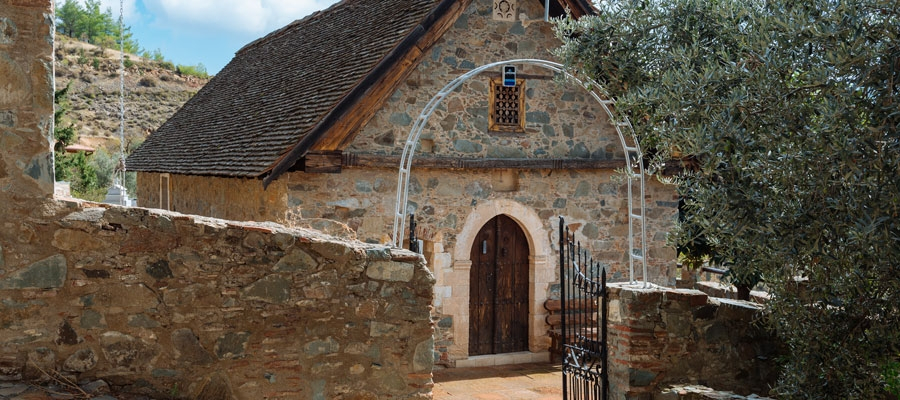
The wood-carved church of Saint George is located in the historic village of Lazanias and was built in 1855.

An inscription inside the church gives testimony that on April 27, 1865, a priestmonk gilded the iconostasis at his own expense. Also of interest are the artfully carved ‘gynaeconitis’ (area reserved for women), and the three earthenware jars that are planted on the floor of the church, and were used for better acoustics during Mass. An unusual vegetal decoration trails over the roof and decorates it.

The village itself takes its name from the word ‘Lusignan’ thanks to a farm of the Lusignan Crusaders that formed the basis of the village.

Region: Lefkosia (Nicosia)
Address: Lazanias village
Contact No: Tel: +357 99 374 944 (Mrs Fryni Papadopoulou)
Operating Hours: Church service one Sunday per month.
Operating Period: All year round.
Closed on Public Holidays.
Entrance Fee: Free
  Opening and closing times as well as entrance fees, are subject to alterations without notice. Visitors are advised to check before visiting.