Timios Stavros tou Agiasmati Church

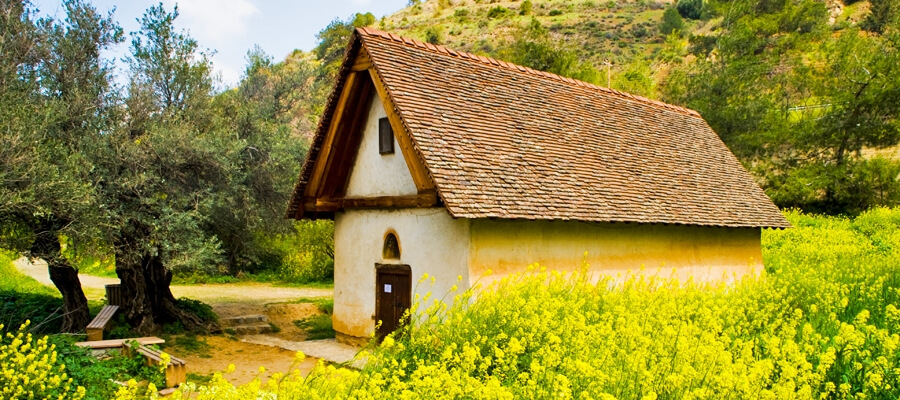
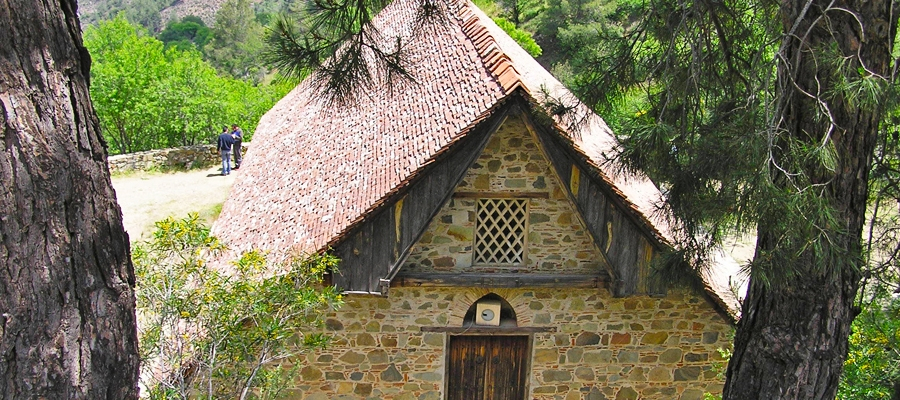
Located about 3km outside the mountainous village of Platanistasa, the 15th century church of Stavros tou Agiasmati is a UNESCO World Heritage site and retains the most complete cycles of mural paintings of the second half of the 15th century on the island.

Its name derives from the word ‘Agiasma’ (-atos) which in Greek means ‘sanctified water, spring or well near a church’. The church used to be a monastery church, but only traces of the cells of the monastic buildings remain to the south of the church.

The surviving structure is a single-aisled building with a steep-pitched timber roof covered with flat tiles that extends beyond the main structure to form a portico on all four sides – a feature that is unique in Cyprus. According to an inscription, the building was built with the donation of a priest named Petros Peratis and his wife Pepani, who are both depicted on a fresco offering a model of the church to Jesus with the mediation of the Virgin. Also noteworthy is the extensive and multi-person Last Judgment scene, which unfolds up to the far end of the gable where Jesus Christ is depicted.

Whilst the year of the church’s erection is not known, it is generally accepted that its decoration was completed in 1494.

The Church of the Holy Cross of Agiasmati in Platanistasa – Audio Guide

Region: Troodos area [Lefkosia (Nicosia) district]
Address: Platanistasa village
GPS coordinates: Lat: 34.979155 Lon: 33.047013
Contact No for Church: Tel: +357 22 652090 or 99677216 (Father Georgios Kourris)
Operating Hours: By appointment
Operating Period: All year round.
Closed on Public Holidays.
Entrance Fee: Free
Disabled Access: Wheelchair accessible.
Website: www.mcw.gov.cy/da
Opening and closing times as well as entrance fees, are subject to alterations without notice. Visitors are advised to check before visiting.

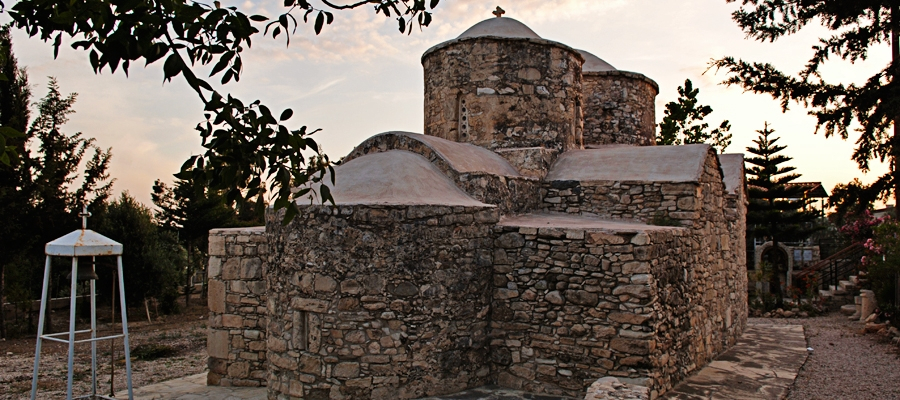
Timios Stavros Church in Pelendri village

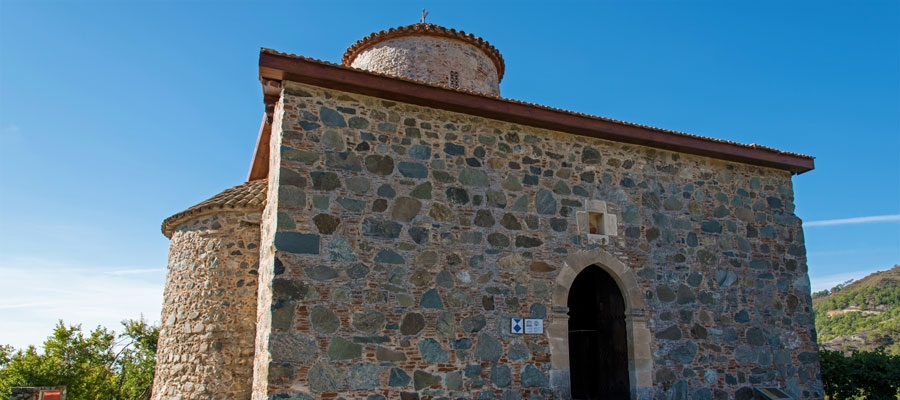
The 14th century church of Timios Stavrou (Holy Cross) in Pelendri village is decorated with exquisite wall paintings of the Palaiologan period and is a UNESCO World Heritage site.

The church was originally a single-aisled domed structure, built around the middle of the 12th century, and may have been the church of a cemetery. It was destroyed under unknown circumstances, and the present form of the church is the result of several additions and alterations, carried out throughout various periods, with only the original apse surviving.

According to an inscription in the apse, the original wall paintings date to 1171 / 1172 with fragments of the decoration preserved on the apse under the layer of the 14th century frescoes. The main part of the church was decorated during the second half of the 14th century by at least two artists.

The north aisle served as a private chapel for the family of the Latin feudal lord of the area, Ioannes Lusignan (1353 – 1374 / 1375), and the village itself was once the property of Jean de Lusignan, son of the Lusignan King of Cyprus, Hugh IV.

Church of Timios Stavros – The Holy Cross – in Pelendri – Audio Guide 

Region: Troodos area [Lemesos (Limassol) district]
Address: Pelendri village
GPS coordinates: Lat: 34.893036 Lon: 32.91096
Contact No: Tel.: +357 99 662286 Mr. Gregoris Kadis
Operating Hours: Monday – Friday: 9:00 – 11:00 & 13:00 – 16:00
Saturday – Sunday: 10:00 – 13:00
Operating Period: All year round.
Closed on Public Holidays.
Entrance Fee: Free
Website: www.mcw.gov.cy/da
Opening and closing times as well as entrance fees, are subject to alterations without notice. Visitors are advised to check before visiting.

Trooditissa Monastery

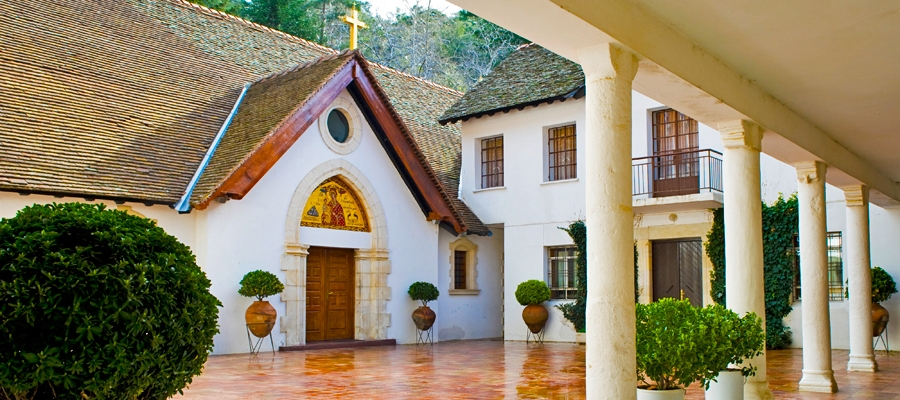
Located on the southern slopes of the Troodos mountain range, the 13th century Trooditissa Monastery is situated among pine trees, commanding a picturesque spot. The present church was built in 1731 and contains a priceless silver-leaf covered icon of the Virgin Mary brought from Asia Minor, believed to give childless couples hope if they pray to her.

The exact date of the foundation of the monastery is not known, but it is believed to have been established immediately after the iconoclastic era by a hermit who resided there during the years of the iconoclasm. The church, as well as the monastic buildings, belong to a later period and can be dated to the end of the 18th or the 19th and 20th centuries.

The monastery is a retreat for prayers, and as such it is closed for visits, although the church is open to visitors.

Region: Troodos area [Lemesos (Limassol) district]
Address: Between the villages of Platres and Prodromos
GPS coordinates: Lat: 34.91292 Lon: 32.838212
Operating Hours: Daily: 09:00 – 12:00 / 14:00 – 16:00 (church only)
Operating Period: All year round.
Closed on Public Holidays.
Entrance Fee: Free
Disabled Access: Wheelchair accessible.
Website: www.mcw.gov.cy/da
  Opening and closing times as well as entrance fees, are subject to alterations without notice. Visitors are advised to check before visiting.
 

Agios Sozomenos Church

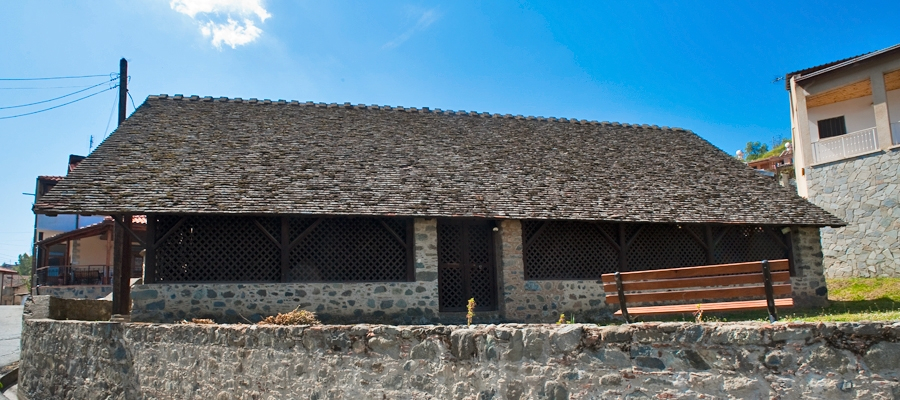
Located in the centre of the mountainous village of Galata, the church of Agios (Saint) Sozomenos dates to the early 16th century and retains a complete series of frescoes in the post-Byzantine style. It is one of four painted churches in the village.

According to an inscription above the west entrance, the church was built and decorated in 1513, and 14 villagers undertook the financial responsibility of painting the church. The structure is aisle-less and timber-roofed, with the roof extending to form a portico in the shape of the Greek letter ‘pi’ (like a square ‘u’).

The church’s interior is covered with frescoes that are in generally good condition and are divided into two tiers. On the upper tier there are scenes from the Christological cycle, while on the lower tier the standing figures of saints are depicted under painted arches. In the apse of the bema, the Virgin Mary is shown between the Archangels Michael and Gabriel. The wall paintings on the external side of the north wall include scenes from the Second Coming, the Root of Jesse and the eight Ecumenical Synods.

Region: Troodos area [Lefkosia (Nicosia) district]
Address: Gallata village
GPS coordinates: Lat: 34.996485 Lon: 32.898295
Contact No: Tel: +357 99 671 776
Operating Hours: By appointment.
Operating Period: All year round.
Closed on Public Holidays.
Entrance Fee: Free
Website: www.mcw.gov.cy/da
  Opening and closing times as well as entrance fees, are subject to alterations without notice. Visitors are advised to check before visiting.
 

The Church of the Archangelos Michael, or Panagia Theotokos

Located in the mountainous village of Galata, the Church of the Archangelos Michael, or Panagia Theotokos, is a timber-roofed chapel, painted in the post- Byzantine style of the early 16th century and one of four painted churches in the village.

Region: Troodos area [Lefkosia (Nicosia) district]
Address: Galata village
Contact No: Tel: +357 99 671 776
Operating Hours: By appointment.
Operating Period: All year round.
Closed on Public Holidays.
Entrance Fee: Free
Website: www.mcw.gov.cy/da
  Opening and closing times as well as entrance fees, are subject to alterations without notice. Visitors are advised to check before visiting.
 

Sanctuary of Aphrodite at Palaipafos

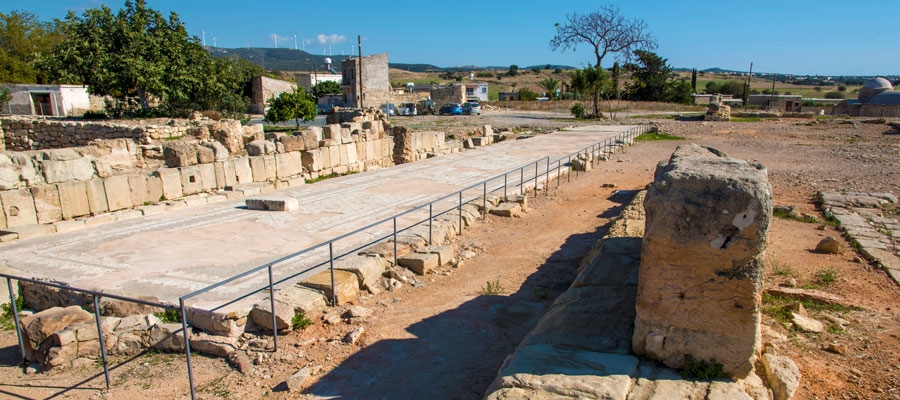
The archaeological site of Palaipafos (‘old Pafos’ in Greek) is located in Kouklia Village and was one of the most important city-kingdoms of Cyprus, as well as the first Cypriot site to be included in the World Heritage List of UNESCO in 1980.

The Sanctuary of Aphrodite is the most famous of the Ancient Greek Goddess’ sanctuaries, and its ancient remains date back to the 12th century BC, whilst it remained a place of worship until the 3rd – 4th centuries AD.

There are two versions of how Palaipafos was founded; one story tells that Agapenor, the King of Tegea (Peloponesus), founded the city-kingdom on his way back from the Trojan War. A second legend tells that Kinyras, the local legendary king (12th century) was the founder and first High Priest of The Sanctuary of Aphrodite.

The museum, housed in a Lusignan Manor, exhibits many interesting finds from the area and portrays how the Cult of the Goddess of Fertility developed into the Cult of Aphrodite.

The site is linked to the Aphrodite Cultural Route.

Region: Pafos (Paphos)
Address: Kouklia village, 14km east of Pafos
Contact No: Tel: +357 26 432 155
Operating Hours: April 16 – September 15, daily: 08:30 – 19:30
September 16 – April 15, daily: 08:30 – 17:00
From 1st of July 2024:  Tuesday-Sunday: 8:30-17:00.  On Monday will be closed.
Operating Period: All year round.
Closed on Christmas Day, New Year’s Day and Easter Sunday (Greek Orthodox).
Entrance Fee: €4,50
For organised groups consisting of more than 10 persons there is a 20% reduction on the entry fees.
The Department of Antiquities can issue special entry cards for all its museums and ancient monuments: One (1) day entry cards – €8,50, three (3) day entry cards – €17,00, seven (7) day entry cards – €25,00.
Website: www.mcw.gov.cy/da
  Opening and closing times as well as entrance fees, are subject to alterations without notice. Visitors are advised to check before visiting.
 

Birthplace of Aphrodite – Petra tou Romiou

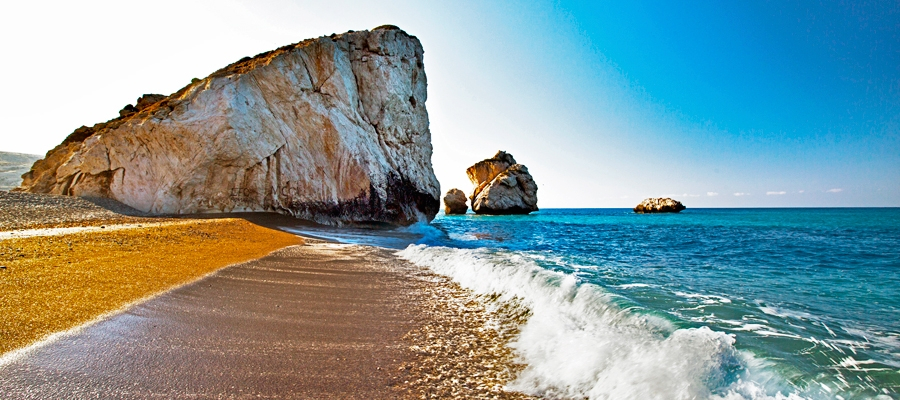
Aphrodite’s mythical birthplace ‘Petra tou Romiou’ is an interesting geological formation of huge rocks along one of the most beautiful coastlines on the island, located on the southwest coast of the Pafos (Paphos) district.

According to the legend, the Ancient Greek Goddess of Love and Beauty – Aphrodite – was born of the sea foam here. Legend tells that she rose from the waves and was escorted on a shell to this particular beach.

The giant rock formations, which are seen at the same location are linked with another – more recent – legend which tells that the Byzantine hero Digenis Akritas heaved them there to keep the Saracens Arabs (7th-10th centuries) at bay. The name of Petra tou Romiou (‘rock of the Greek’ in Greek) comes from the hero.

It is said that in certain weather conditions, the waves rise, break and form a column of water that dissolves into a pillar of foam. With imagination, this momentarily looks like an ephemeral, evanescent human shape. Other popular myths tell that swimming around the rock three times will bring various blessings, including eternal youth and beauty, good luck, fertility and true love.

The site is linked to the Aphrodite Cultural Route.

Petra tou Romiou – Audio Guide 

Panagia tou Sinti Monastery

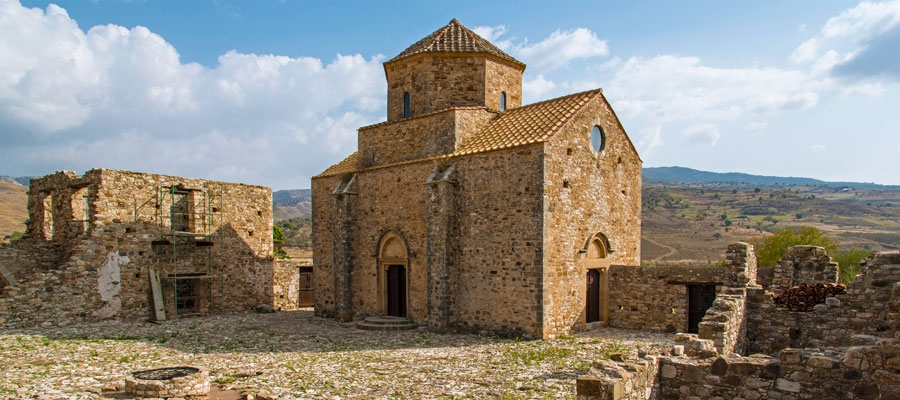
The abandoned monastery of Panagia tou Sinti is situated on the banks of the Xeros River in Pentalia, and is dedicated to the Virgin Mary (Panagia) of Sinti.

The church has an octagonal dome with four windows and belongs to the first half of the 16th century. Its central nave is in good condition, and it is considered to be one of the most important buildings of the Venetian period.

The Monastery remained in operation until 1927 and thereafter was abandoned. In 1994, the Monastery of Kykkos undertook the maintenance of the Monastery, completing it in 1997 when it earned the Europa Nostra Award for the use of good restoration techniques and preservation of its original character.  

GPS coordinates: Lat: 34.836407 Lon: 32.639144

Kourion Stadium

Kourion was an important city-kingdom in antiquity and stands as one of the most impressive archaeological sites in Cyprus.

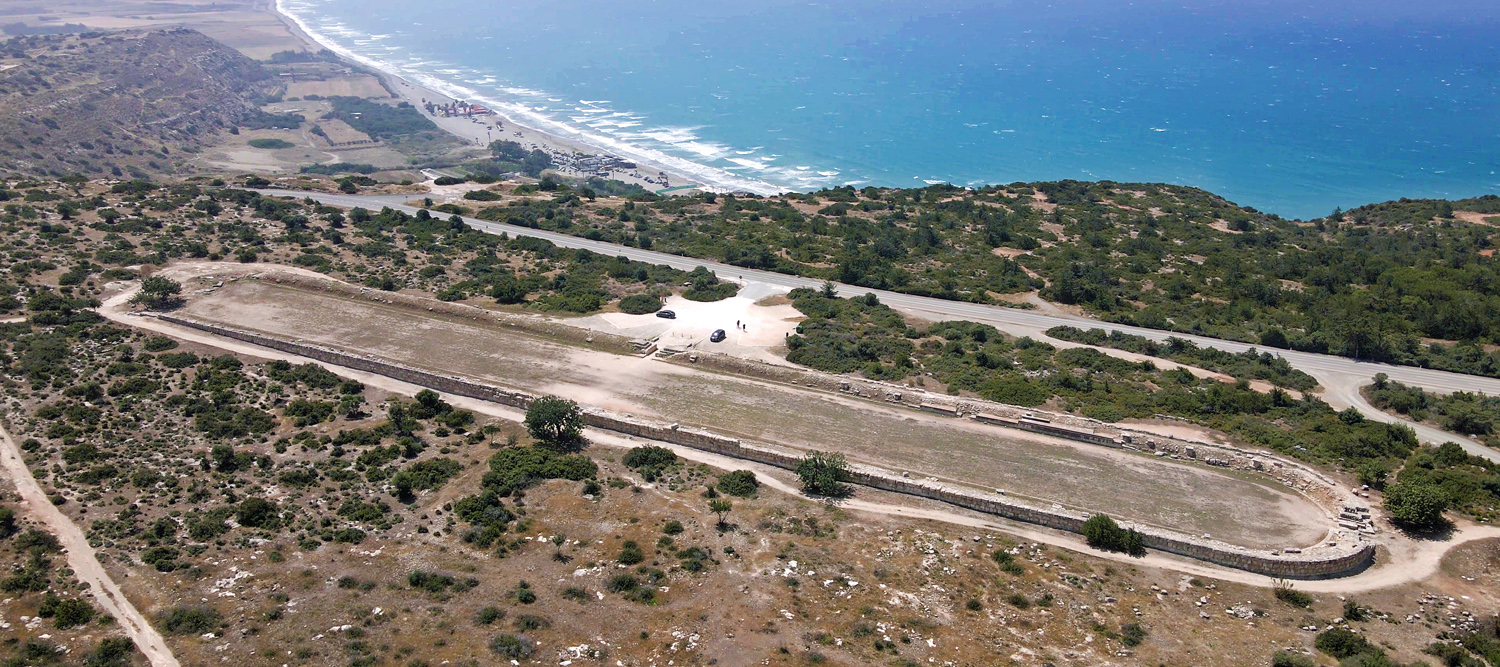
Located 20km west of Lemesos (Limassol), on the road to Pafos (Paphos), Kourion Stadium is the only ancient stadium found in Cyprus. Dating back to the 2nd century, the stadium had a capacity for 6.000 spectators and was the site of pentathlon events in ancient times.

The site is free admission.

Archaeological Site of Kourion – Audio Guide

Agia Anastasia Church

Agia Anastasia Church is a complex of two domed churches located in Polemidia village. The older church – possibly dating to the 12th century – is on the east side and is a cross-in-square domed church. The second church, on the west side, was added in the 14th century and built in the same architectural style. The surviving mural paintings date back to the 14th, 15th and 17th centuries.

Region: Lemesos (Limassol)
Address: Polemidia village, 5km north of Lemesos
GPS coordinates: Lat: 34.700919 Lon: 32.999997
Operating Hours: Any reasonable hour.
Operating Period: All year round.
Closed on Public Holidays.
Entrance Fee: Free
  Opening and closing times as well as entrance fees, are subject to alterations without notice. Visitors are advised to check before visiting.