Maa – Palaeokastro Archaeological Site and Museum

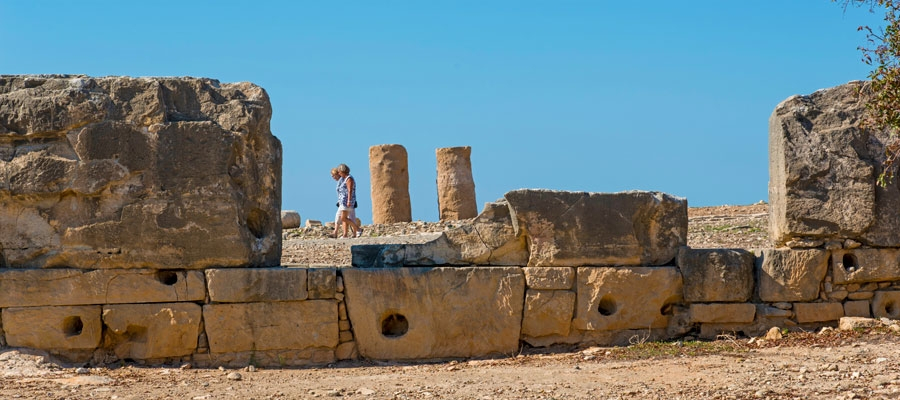
Located close to Coral Bay resort, the settlement of Maa-Paleokastro is where the first ancient (Mycenaean) Greeks settled in 1200 BC after emigrating to the island following the fall of the Mycenaean Kingdoms in mainland Greece. As such, it is a very important site for Cyprus – as this is where the Hellenisation of the island started – and offers great insight on the end of the Late Bronze Age on the island.

Its name of ‘Paleokastro’ (‘old castle’ in Greek) comes from its imposing defensive walls that were always exposed. The fortifications of the settlement consist of two separate Cyclopean-style walls; the first wall protected the settlement from the land, and the second offered protection from the sea.

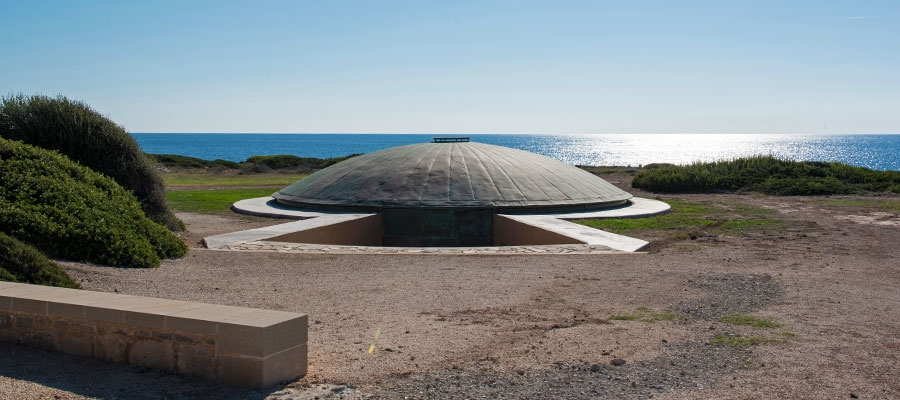
The little museum with its unusual architecture is the work of the Italian architect-conservator and professor Andrea Bruno. The Museum depicts the colonisation of Cyprus by the Mycenaean Greeks.

Region: Pafos (Paphos)
Address: Coral Bay, 9km northwest of Pafos
GPS coordinates: Lat: 34.85611 Lon: 32.36685
Operating Hours: April 16 – September 15, Monday – Friday: 09:30 – 17:00
September 16 – April 15, Monday – Friday: 08:30 – 16:00
Closed on weekend.
Operating Period: All year round.
Closed on Public Holidays.
Entrance Fee: €2,50
For organised groups consisting of more than 10 persons there is a 20% reduction on the entry fees.
The Department of Antiquities can issue special entry cards for all its museums and ancient monuments: One (1) day entry cards – €8,50, three (3) day entry cards – €17,00, seven (7) day entry cards – €25,00.
Website: www.mcw.gov.cy/da
  Opening and closing times as well as entrance fees, are subject to alterations without notice. Visitors are advised to check before visiting.
 

Palaipafos – Kouklia Archaeological Site

The archaeological site of Palaipafos (‘old Pafos’ in Greek) is located in Kouklia Village and was one of the most important city-kingdoms of Cyprus, as well as the first Cypriot site to be included in the World Heritage List of UNESCO in 1980.

There are two versions of how Palaipafos was founded; one story tells that Agapenor, the King of Tegea (Peloponesus), founded the city-kingdom on his way back from the Trojan War. A second legend tells that Kinyras, the local legendary king (12th century) was the founder and first High Priest of The Sanctuary of Aphrodite, which is one of the most significant monuments at the site and the most famous of the Goddess’ sanctuaries. Its ancient remains date back to the 12th century BC, whilst it remained a place of worship until the 3rd – 4th centuries AD.

The other significant monuments of Palaipafos are: The House of Leda; the northeast gate of the defensive wall; the city wall and the Palace of Hadji Abdulla; the Church of Panagia Katholiki; the Lusignan Manor House; the cemeteries and the Lusignan sugar-cane refinery in the coastal plain.

The museum, housed in a Lusignan Manor, exhibits many interesting finds from the area and portrays how the Cult of the Goddess of Fertility developed into the Cult of Aphrodite, whilst the sugar-cane refinery is also open to visitors.

The site is linked to the Aphrodite Cultural Route.

Kouklia Palaipafos – Audio Guide 

Region: Pafos (Paphos)
Address: Kouklia village, 14km east of Pafos
Contact No: Tel: +357 26 432 155
Operating Hours: Tuesday-Sunday : 08:30 – 17.00
Closed on Monday
Operating Period: All year round.
Closed on Christmas Day, New Year’s Day and Easter Sunday (Greek Orthodox).
Entrance Fee: €4,50
For organisedgroups consisting of more than 10 persons there is a 20% reduction on the entry fees.
The Department of Antiquities can issue special entry cards for all its museums and ancient monuments: One (1) day entry cards – €8,50, three (3) day entry cards – €17,00, seven (7) day entry cards – €25,00.
Website: www.mcw.gov.cy/da
  Opening and closing times as well as entrance fees, are subject to alterations without notice. Visitors are advised to check before visiting.
 

Panagia Chryseleousa Church

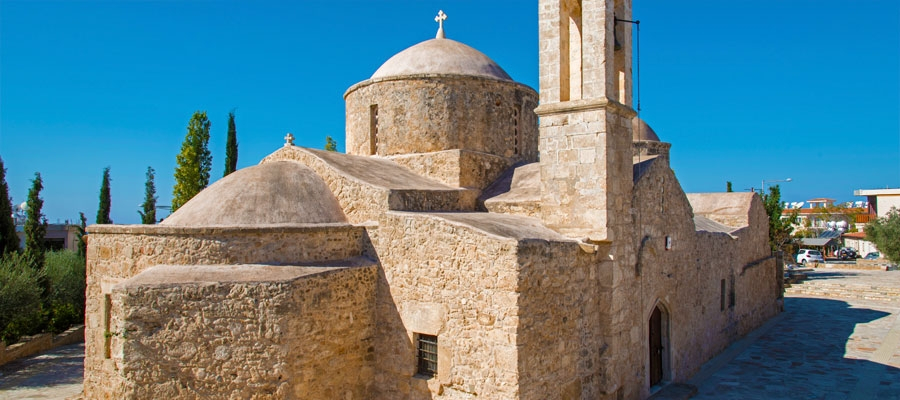
Located in Empa village, 3km north of Pafos (Paphos), the Church of Panagia Chryseleousa is actually a combination of two churches and is a stone-built structure with three aisles and two domes.

The eastern section was first built as a cruciform church with a dome in the 12th century, possibly on the ruins of an earlier Christian basilica. An extension was made to the west with a domed building of the cross-in-square type later on in the 13th century.

The church retains its rare wall paintings of the 12th, 13th, 15th and 16th centuries, with one of the most interesting depicting the miracle of fishing. Other ecclesiastical treasures include 15th and 16th century portable icons. Among them is a noteworthy icon of Jesus Christ holding a Gospel with his left hand, and a fine icon painted on two panels with six of the Apostles on each panel.


Agios Andronikos Church

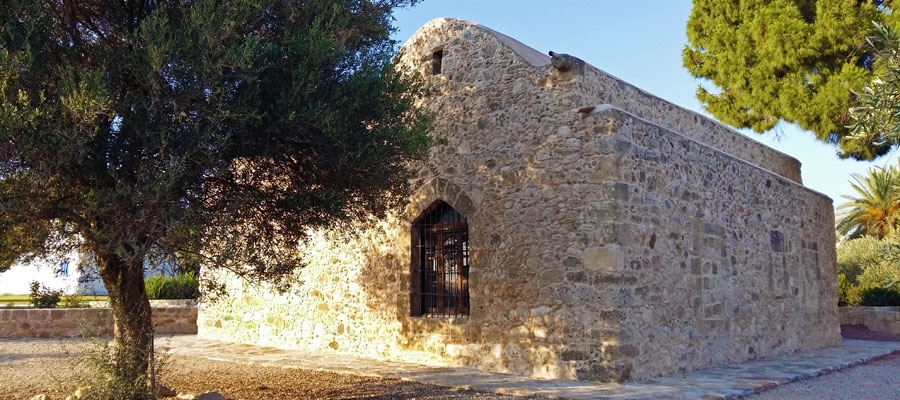
Located in Polis Chrysochous sub-district, this 16th century vaulted church was turned into a mosque during the Ottoman period. A northern annex was added to it and the 16th century frescoes were covered up, but these have now been uncovered and preserved.

Region: Pafos (Paphos)
Address: Polis Chrysochous
Contact No: Tel: +357 26 322 955
Operating Hours: Sunday: 08:30 – 16:00
Operating Period: All year round.
Closed on Public Holidays.
Entrance Fee: Free
Website: www.mcw.gov.cy/da
  Opening and closing times as well as entrance fees, are subject to alterations without notice. Visitors are advised to check before visiting.
 

Agios Kirykos and Agia Ioulitti Church

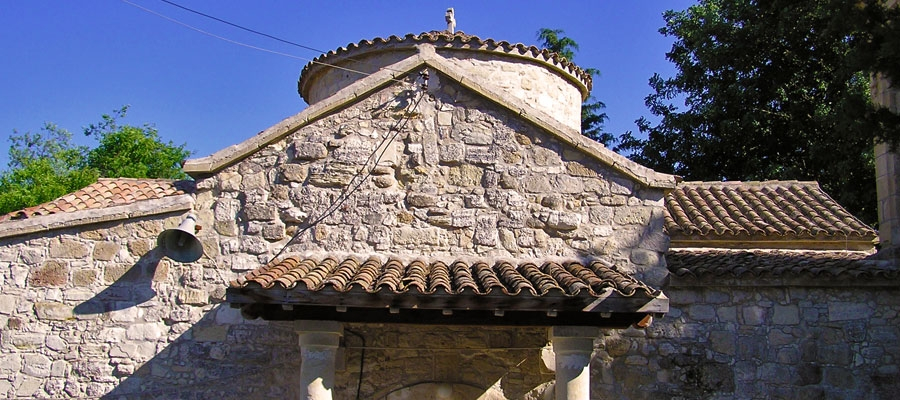
Located in Letymvou village, 16km northeast of Pafos (Paphos), the church of Agios Kirykos and Agia Ioulitti is a cross-in-square domed church dating to the 12th century, with many later additions – especially from the 15th century. It has a few surviving fragments of frescoes dating to the 12th and 15th centuries.

Agia Moni Monastery

Located 38km northeast of Pafos (Paphos), Agia Moni Monastery is linked to the very origins of monasticism in Cyprus.

According to tradition, the monastery was founded around 300 AD by Agios Nikolaos and Agios Eftychios as a place of prayer and contemplation. A sacred relic – which had been given to Agios Nikolaos – and a piece of the cloak of the Virgin Mary were kept at the monastery until 1754.


Agios Ioannis Lampadistis Church

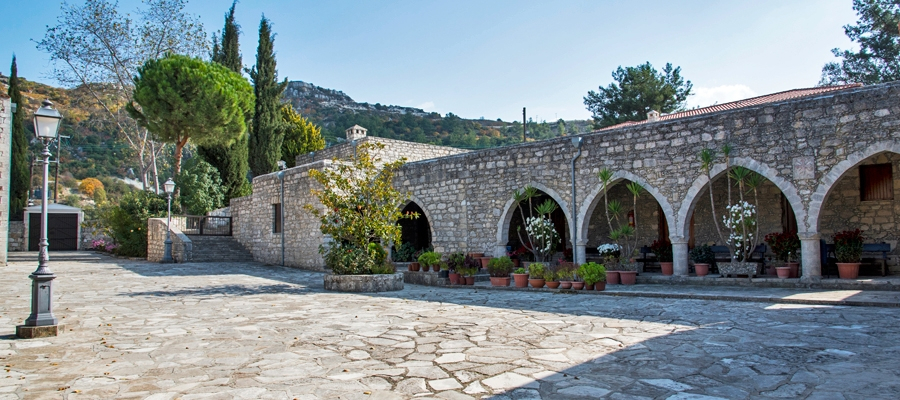
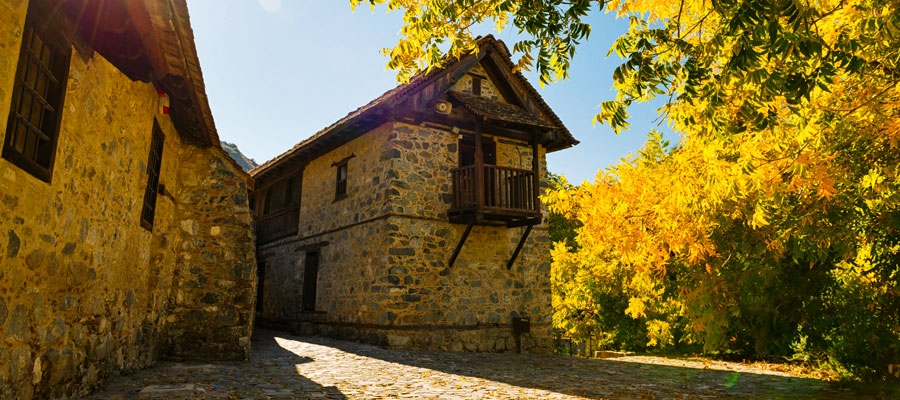
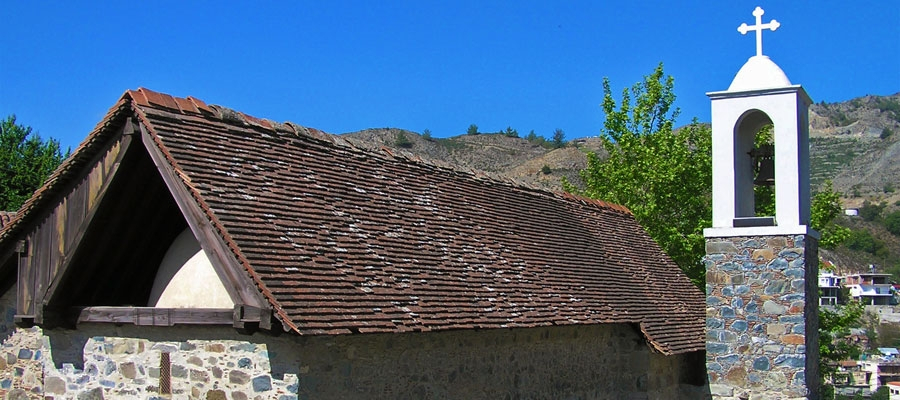
Originally a monastery, this UNESCO World Heritage Site is a complex of three churches – Ioannis Lampadistis, Agios Irakleidios and a Latin chapel – all under a single, enormous timber roof.

Located in the Troodos valley of Marathasa (just off the village of Kalopanagiotis), the precise date of the monastery’s foundation is not known, and the building complex that survives today has undergone extensive reconstruction and restoration at different periods.

The church of Agios Ioannis Lampadistis was built in 1731. The saint’s tomb, which dates to the 12th century, can be found under the narrow north-eastern arch, and the saint’s skull lies in a niche. The icon of Lampadistis dates to 1543. A very interesting Byzantine museum can be found near the church.

The church of Agios Irakleidios was built in the 11th century, while its frescoes date to the 13th and 16th century. The ancient wooden templon is particularly noteworthy and is covered with gargoyles, including a heraldic Lusignan lion and Byzantine eagle.

The Latin Chapel contains the most complete series of Italo-Byzantine paintings in Cyprus.

Monastery of Agios Ioannis Lampadistis – Audio Guide 

Region: Troodos area [Lefkosia (Nicosia) district]
Address: Kalopanagiotis village
GPS coordinates: Lat: 34.99232 Lon: 32.830193
Contact No: Byzantine Church, Tel: +357 22 953 460
Byzantine Museum, Tel: +357 22 932 414
Operating Hours: Byzantine Church: September – April, daily: 09:00 – 13:00 / 15:00 – 17:00, May – August, daily: 09:00 – 13:00 / 16:00 – 18:00
Byzantine Museum: October – February, Monday – Saturday: 10:00 – 15:30, March – May, Monday – Saturday: 9:30 – 17:00, June – August, Monday – Saturday: 09:30 – 18:00, September, Monday – Saturday: 09:30 – 17:00, Closed on Sunday.
Operating Period: All year round.
Closed on Public Holidays.
Entrance Fee: Byzantine Church: Free
Byzantine Museum: €1,00
Disabled Access: Entrance ramp.
Website: www.mcw.gov.cy/da
  Opening and closing times as well as entrance fees, are subject to alterations without notice. Visitors are advised to check before visiting.
 

Agios Nikolaos tis Stegis Church

The church of Agios Nikolaos tis Stegis (St. Nicholas of the Roof) is located in the Solea Valley (5km from Kakopetria village) and is a listed UNESCO World Heritage Site.

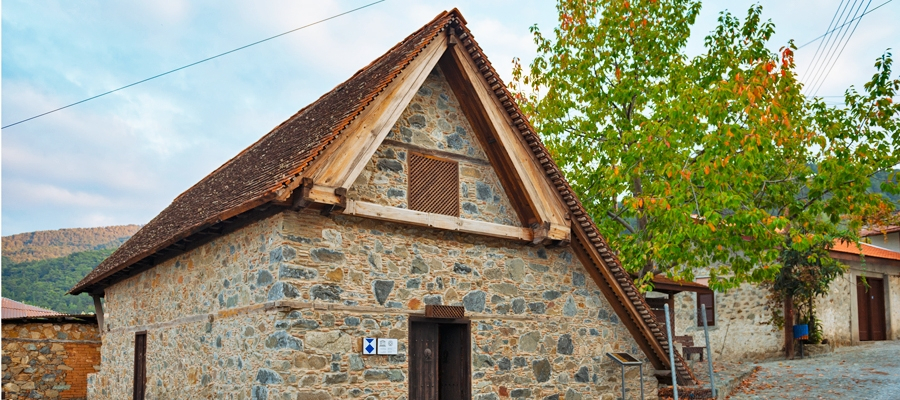
The domed cross-in-square church once belonged to a monastery complex and derives its name from its pitched timber roof that was built to protect it from the weather. It is the only surviving monastery church of its kind on the island and is covered entirely in wall paintings from the 11th to the 17th centuries, with the most important surviving set on the island from this period. As such, it is considered one of the most interesting Byzantine churches in Cyprus.

The church itself is dated to the 11th century, whilst the monastery dated to the end of the 13th or the beginning of the 14th century and flourished from the Middle Byzantine period up to the period of Frankish rule. It declined during the 18th century and ceased to function as a monastery by the end of the 19th century.

Agios Nikolaos tis Stegis – Audio Guide

Region: Troodos area (Lefkosia district)
Address: Solea Valley, 5km from Kakopetria village.
GPS coordinates: Lat: 34.977336 Lon: 32.889522
Contact No: Tel: +357 22 922 583
Operating Hours: Tuesday – Saturday: 09:00 – 16:00
Sunday: 11:00 – 16:00
Closed on Monday.
Operating Period: All year round.
Closed on Public Holidays.
Entrance Fee: Free
Disabled Access:: Wheelchair accessible.
Website: www.mcw.gov.cy/da
  Opening and closing times as well as entrance fees, are subject to alterations without notice. Visitors are advised to check before visiting.
 

Archangelos Michael Church

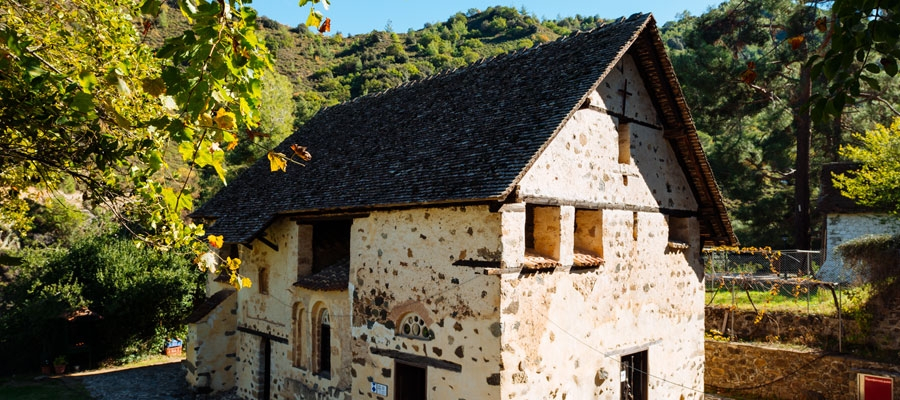
Located in the picturesque village of Pedoulas, Archangelos Michael Church is a small church that was built and decorated in 1474 by a local painter named Minas, who came from the area of Marathasa. It is on the list of UNESCO World Heritage Sites.

The church is completely decorated on two levels in the local post-Byzantine style that developed prior to Venetian rule. There are 11 compositions from the Festival Cycle above, and depictions of the saints below. The Crucifixion and the Ascension are depicted in the pediments.

The structure of the church has a usual sloping mountain roof and is single-aisled. The narthex, which extends to its south and west side, was used as a loft for women due to the small size of the church, whilst only men entered the main church. A wooden templon of the same period has remained intact and serves as an excellent example of its kind.

Church of Archangelos Michael in Pedoulas – Audio Guide 

Region: Troodos area [Lefkosia (Nicosia) district]
Address: Pedoulas village
Contact No: Tel: Byzantine Museum +357 22953636 or +357 99112352 (Mr. Raphael)
Operating Hours: Winter period: Everyday 7:00-17:00                                                                  Summer period:  Everyday 7:00-19:00
Operating Period: All year round.
Closed on Public Holidays.
Entrance Fee: Free
Disabled Access: Wheelchair accessible.
Website: www.mcw.gov.cy/da
Opening and closing times as well as entrance fees, are subject to alterations without notice. Visitors are advised to check before visiting.

Metamorfosis tou Sotiros Church

Overlooking the beautiful, old mountainous village of Palaichori, the Metamorfosis tou Sotiros Church (Transfiguration of the Saviour) is an early 16th century chapel that is a UNESCO World Heritage site.

The structure is single-aisled with a timber-roof that is characteristic of Troodos region churches. The narthex, which was added by the beginning of the 17th century, extends to the west and south sides of the church and is covered by the same timber roof.

The church’s interior is completely painted with one of the most complete series of murals of the post-Byzantine period in Cyprus. The unknown artist was influenced by the art of the Palaiologan period, but also draws influence from western art.

Church of Metamorphosis tou Sotiros (the Transfiguration of the Saviour) – Palaichori – Audio Guide 

Region: Troodos area [Lefkosia (Nicosia) district]
Address: Palaichori village
Contact No: Tel: +357 99 828700 (Mrs Sophia) / 97 790830 (Mrs Victoria)
Operating Hours: Tuesday-Friday: 10:00 – 13:00 or/ and Upon Request

Saturday – Sunday: Upon Request

Operating Period: All year round.
Closed on Public Holidays.
Entrance Fee: Free
Disabled Access: Wheelchair accessible.
Website: www.mcw.gov.cy/da
Opening and closing times as well as entrance fees, are subject to alterations without notice. Visitors are advised to check before visiting.