Kato Pyrgos village

Although located in the Lefkosia (Nicosia) district, due to the Turkish invasion of 1974, the village of Kato Pyrgos is now only accessible via the Pafos (Paphos) region; reached by-following the A1 and the A6 motorways. After arriving at Pafos, take the B7, then the E704 to find the village in the heart of the beautiful area of Tylliria.

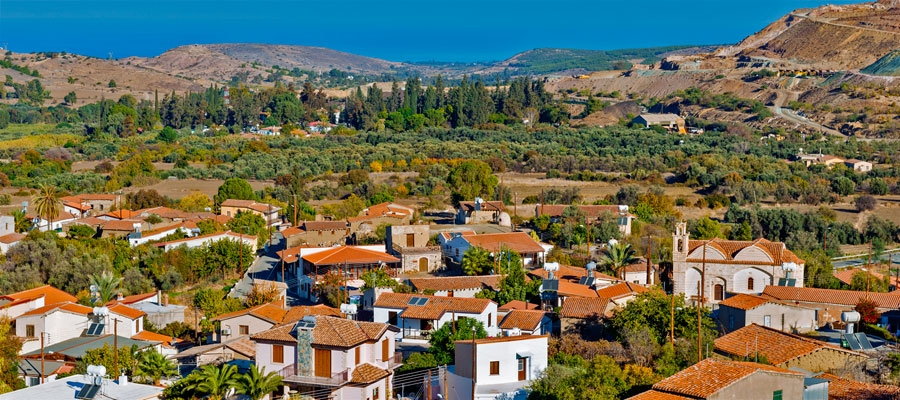
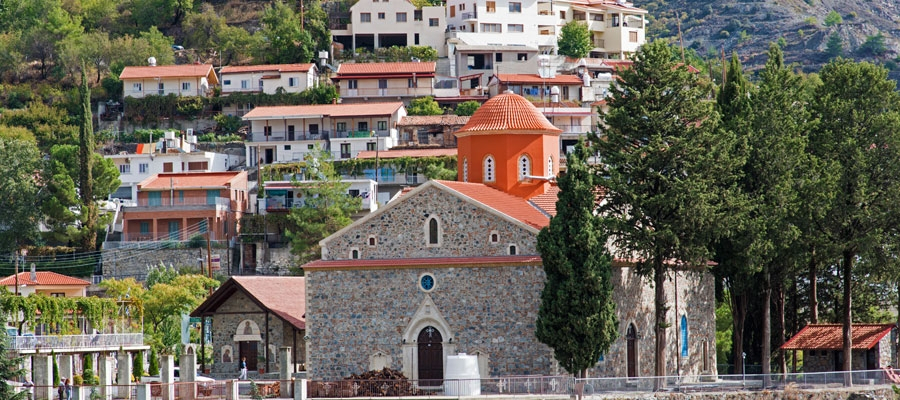
Built on the northern foothills of Troodos, the village uniquely combines coastal front with hillsides, and its surroundings of both beach and mountains – coupled with the fresh fish that comes from the fishing shelter of the village – make it a popular holiday resort.

The village is also home to the historic and significant Chapel of Panagia tis Galoktistis (Virgin Mary) which contains hagiographies dating back to the 12th and 14th centuries. Legend tells that the chapel was built with milk (‘Galoktistis’ in Greek) after the Virgin Mary answered the prayers of the villagers to heal their diseased sheep.

An old oak tree stands in the village square, dating back to 1898, and is over 20 metres high.In the nearby fields of the village, a variety of fruit is cultivated, and Pyrgos peaches are particularly famous. Kato Pyrgos is also known as one of the island’s main natural charcoal producers.

Katydata village

Located in the Lefkosia (Nicosia) district, 56 km away from the capital, the small village of Katydata can be reached by following the B9 towards the mountainous region of the Solea Valley.

The village has two rivers passing through it –  Karkotis and Setrahos – which give it its name, derived from the words ‘kato’ (under) and ‘ydor’ (water). It has maintained this name through the centuries and was referred to as ‘Cattidata’ in Medieval times.

Its main church is dedicated to Agios Ioannis Theologos, and was built in 1870, on top of the relics of an older church.

The nearby Skouriotissa copper mine has been exploited since antiquity and was – and still is – the biggest on the island. It is the only active mine in Cyprus today, and still produces copper cathodes. Nearby, there is also an interesting mine museum that showcases the mining activity of the area.

Gourri village

Located in the Lefkosia (Nicosia) district, just 36 km from the capital, the small mountainous village of Gourri sits at the foothills of the Machairas mountain forest – in the Pitsilia area – and can be reached by following the E903 and then the E904.

There are various versions of how the village was founded and named. One tells that it was established around 800 AD, taking its name from the Kourries clan who were in control of the east side of the mountain, whilst another believes it comes from the Frankish feudal lord, Jacob de Gourr.

Aside from its charming character and scenic views, the village also has an interesting Folk Art Museum, which opened in 2015, as well as the church of Agios Georgios. According to an ancient inscription in the interior of the church, the inauguration occurred on May 24, 1898, whilst sections of its iconostasis date back to 1906.

While visiting Gourri, take the opportunity to purchase local, traditionally-made sweets and preserves, including homemade marmalades and ‘glyka tou koutaliou’ (fruit and vegetables preserved in syrup), all made by the local housewives. A short drive away you will also find the scenic village of Fikardou and Machairas Monastery.

Fikardou village

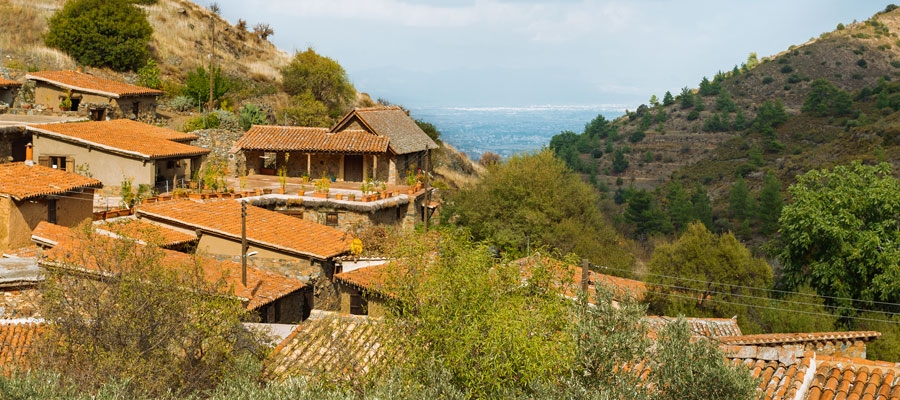
Located in the Lefkosia (Nicosia) district, Fikardou village sits at an altitude of 900 metres in the region of Pitsilia. The historical site can be reached by following the E903 and then the E904, finally reaching this secluded and idyllic village.

The name of the village is believed to have originated from the Greek for ‘den of fugitives’ (‘figa andron’), from the fugitives who were recruited by two dominant clans that controlled the region between 400 AD – 800 AD.

Now almost-deserted, the village was declared an Ancient Monument in 1978 by the department of antiquities, and won the Europa Nostra award in 1987. The village was carefully restored to preserve the 18th century houses with their remarkable woodwork and folk architecture. Two of these – the House of Katsinioros, and the House of Achilleas Dimitris – are now owned by the Department of Antiquities, and have been turned into museums, exhibiting rural items and depicting rural life in years past.

After touring the village, visitors will find a traditional Cypriot welcome at the quaint little coffee shop, whilst the Monastery of Machairas is less than 15 minutes away.

GPS coordinates: Lat: 34.95927 Lon: 33.171481

General Info Weddings Blessings Honeymoon

Weddings, Blessings and Honeymoons

Cyprus is one of Europe’s leading destinations for weddings, blessings and honeymoons, and is famed for its wonderful climate, beautiful scenery and myriad of options for venues, ceremonies and celebrations. From sundrenched vows and sacred ceremonies to newlywed adventures, Aphrodite’s island is love personified.

There are so many reasons why Cyprus wins the heart of couples wishing to marry abroad, including:

  • Short flying time from all European countries.
  • Significantly lower costs compared to marrying in other countries.
  • Simple marriage formalities with worldwide legality.
  • Wedding certificate given at the ceremony on the same day.
  • Ease of last minute arrangements.
  • English widely spoken.
  • Stunning variety of different wedding venues including beaches, yachts, castles, museums, wineries and traditional villages.
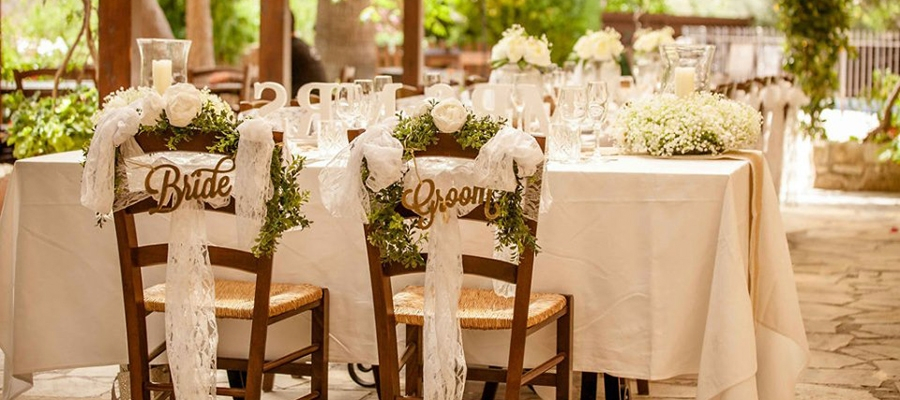
  • A range of bespoke, themed and packaged weddings all available on the island. Traditional Cypriot village weddings that follow the local customs available for something different and unique.
  • Beautiful beaches with crystal clear waters.
  • Fantastic climate with warm, sunny days throughout the year.
  • Location provides a combination of wedding, blessing and/or renewal of vows with holidays and honeymoon.
  • Highly experienced and professional municipal wedding officers available to help you plan your event to suit both your vision and your budget.
  • Highly experienced and professional wedding planners available, with a specialisation in beautiful bespoke weddings.
  • A wide range of accommodation to suit all budgets from 5-star resorts to self-catering apartments.
  • Family and friends can combine wedding with a holiday.
  • Delicious Mediterranean cuisine.
  • Warm and welcoming culture.
  • Cyprus widely recognized as the ‘Island of Love’ identifying brides with the Goddess of Love and Beauty, Aphrodite, who was born on the island.
  • Diverse activities including: water sports, golf, sailing, horse riding, walking, cycling and even skiing and snowboarding in winter.

Municipality and Religious Wedding Venues

All towns and cities in Cyprus have their own Municipal Offices where you can acquire your Marriage License and, if you are planning a civil ceremony, get married. If you prefer a religious ceremony, you must first apply for your Marriage License at the Municipal Offices, and then make arrangements for the ceremony to take place at the religious venue of your choice. Click on the links for a full list of  Municipal Offices and Religious venues.

Everything at Your Fingertips

You can find a complete range of the services you need for your wedding and/or honeymoon across the island, and there are teams of professionals in all sectors who are ready to help your wedding dream become a beautiful reality.

From start to finish, you will find everything to make your day complete, including:

  • Wedding Coordinators
  • Wedding certificates
  • Invitation design and printing
  • Florists (bouquets & arrangements)
  • Music (live, DJs, traditional, etc.)
  • Marquees
  • Wedding dress / bridesmaids’ dresses
  • Groom’s suit
  • Wedding rings
  • Bonboniere (guests gifts)
  • Wedding cake
  • Photography & video
  • Reception venues
  • Limousines / antique cars / carriages
  • Guest transportation / car hire / accommodation
  • Make-up and hair stylists
  • Fireworks, balloons and special effects
  • Stag & hen nights
  • Honeymoon arrangements
  • Catamaran trips / receptions / parties
  • Cruises

Wedding Exhibitions

The Cyprus Tourism Organisation (CTO) participates in Wedding Exhibitions in various locations throughout the year, where you can find out more about marrying on the island and how your perfect wedding day can unfold under the sun.

For more detailed information and assistance with the wedding procedure, contact your Tour Operator, Travel Agent, Hotelier or Cyprus Wedding Planner.

Agros village

Located in the Troodos mountain range, in Pitsilia region of Lemesos (Limassol) district, Agros sits at an altitude of 1.100 metres.

The layout of this picturesque village resembles that of a theatre, embraced by the surrounding mountains, Agros is nestled in stunning environs with panoramic forest views, making it ideal for agrotourism. It has maintained its traditional character and customs and grows a wide variety of fruits and vegetables.

The village is famous for its cultivation of roses, along with its production of cured meats (sausages, ‘Lountza’ and ‘Hiromeri’), homemade marmalades and sweets. Visitors can see these traditional practises at the local workshops where rose oil distillation, sweet making and meat processing take place.

Avgorou village

Located in the Ammochostos (Famagusta) district, the village of Avgorou is one of the ‘red soil villages’ (Kokkinochoria), which are famous for their agricultural produce. As a farming village, it grows delicious potatoes, flavoursome vegetables and juicy citrus fruit, thanks to its mineral-rich, distinctive red earth.

The village has an ancient past and was named after the baths of King Evagoras – the king of the Ancient city-state of Salamis – with finds that date back to the Late Bronze Age III. As such, it has a number of interesting, old buildings and historic churches, including the church of Apostolos Peter and Paul, and Agios Kendeas Monastery.

Two important religious festivals are held to honour the saints annually on June 29 (Feast of Apostolos Peter and Paul), and on October 06 (Feast of Agios Kendeas Monastery). Visitors are welcome to join in the traditional festivities, which include stalls, entertainment and local food and drink.

Other interesting features of the village are its Ethnographic Museum, which depicts the daily life of villagers in the past, and its annual Potato Festival in July, which celebrates the bumper crop of the village’s most famous agricultural produce.

Drouseia village

Located in the Pafos (Paphos) region, the pretty little village of Drouseia sits at an altitude of 630 metres in the mountainous area of Laona, and is thus named for the cool breeze that carries from the Akamas Peninsula, coming from the Greek word for ‘cool’ (‘drosera’).

Just 30 km away from Pafos and 10 km away from Polis, the village can be reached following either the B7 route and then the E711, or taking the E709, and then the F708.

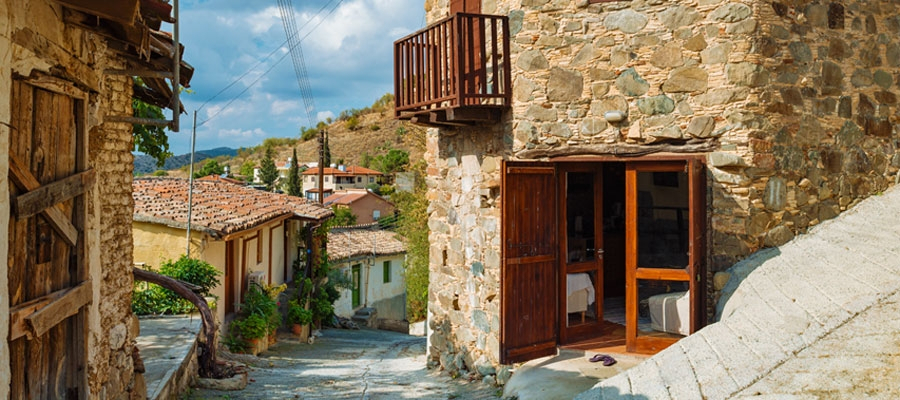
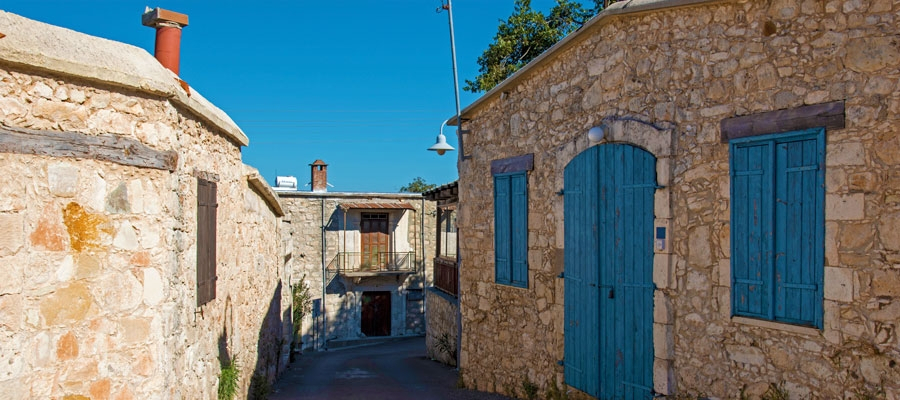
The traditional character of the village is maintained through its stone houses with carved doors and windows, and in its narrow, winding streets that offer stunning views of hillside and coast. The tranquil and traditional environment makes Drouseia perfect for agrotourism, and accommodation is available in many small hotels, as well as the stone houses themselves.

The taverns of the village are also known locally for their excellent Cypriot cuisine, and the warm family welcome they give.

Aside from its pretty views, the village is home to the religiously significant ancient monastery of Agios Georgios Nikoxilitis, which was built in the 15th century, and was rebuilt in 1923 after it was destroyed by a fire.

Athienou village

Located in the Larnaka (Larnaca) region, the village of Athienou is a large community found midway between the city of Lefkosia (Nicosia) (38 km) and the town of Larnaka (33 km), and can be reached by following either the A3 and the B17 route, or the A2 and B2 route.

Athienou has been inhabited since the Neolithic period, and is the continuation of the ancient city-kingdom of Golgoi.

The village is famous for its delicious traditional bread – known locally as ‘Athienitiko’ – and its pastries, as well as its dairy products, which visitors can watch being made.

Other interesting sights include the archaeological site of Athienou-Malloura, the Kallinikeio Municipal Museum (which also exhibits finds from the Malloura site), and several old, restored buildings – including a traditional flour mill.

Athienou’s churches of Panagia Chryseleoussa, Agios Fokas and Agios Georgios are particularly notable for their historically significant icons and frescoes.

Anogyra village

Located in the Lemesos (Limassol) district, the quaint village of Anogyra sits at an altitude of 170 metres and just 45 km away from Lemesos town. The village can be reached by following A6 route and then the F607.

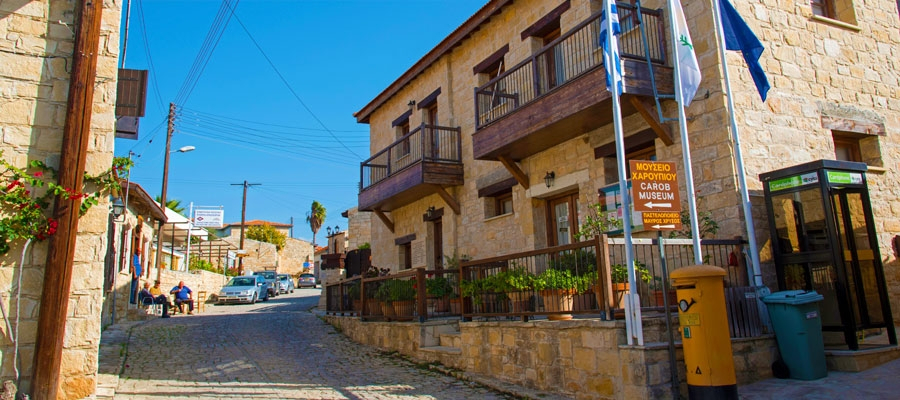
Anogyra was once a main carob-grower and is famous for its traditional sweet ‘Pasteli’, which is made from carob syrup, and only produced traditionally in the village.

The history of the village dates back to the Neolithic era, and its name may originate from the plant ‘anagyris’ (which grows in the village), or that the village that exists today constituted the upper (‘ano’) part of the village once known as ‘Gyroi’.

Its interesting sites include the Pastelli museums, the Olive-Park – Oleastro, the church of Timios Stavros (Holy Cross), and a winery. The village is also a perfect destination for agrotourism.

The custom of Pasteli making is celebrated annually in September with a Pasteli Festival that features the sweet being made in the traditional way, along with local food and a programme of folkloric entertainment.