Church of Panagia Iamatiki

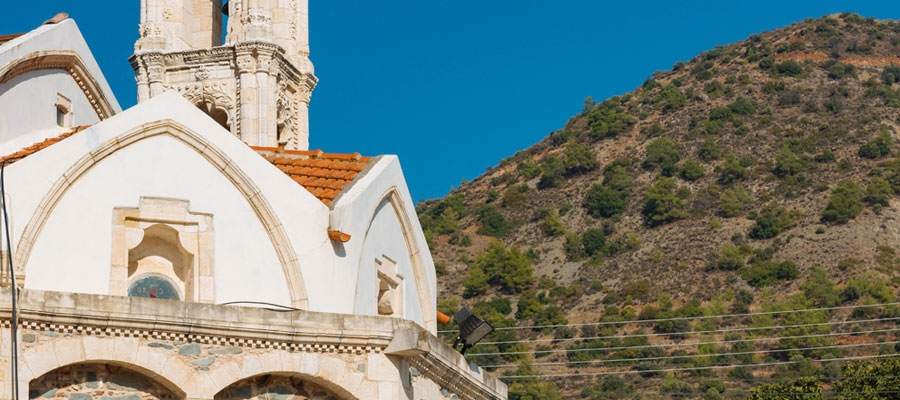
The Church of Panagia Iamatiki is situated on the outskirts of the village of Arakapas, and is a three-aisled wooden-roofed church. The church contains sophisticated wall paintings of the early 16th century that are among the most important surviving examples of the Italo-Byzantine style of art on the island.

An extraordinary leather icon of the Virgin (in the nearby new church) is believed to have special curative powers.

Region: Lemesos (Limassol)
Address: Arakapas village, 35,5km from Lemesos
Contact No: Tel: +357 25 622 300 / +357 25 222 679 / +357 99 411 088
Operating Hours: Old Church: call in advance to arrange a visit.
New Church: any reasonable hour.
Operating Period: All year round.
Entrance Fee: Free
  Opening and closing times as well as entrance fees, are subject to alterations without notice. Visitors are advised to check before visiting.
 

Theatre of Kourion

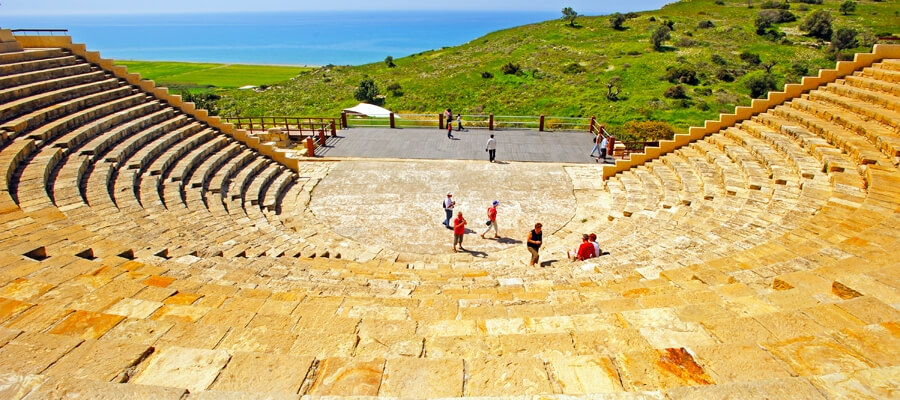
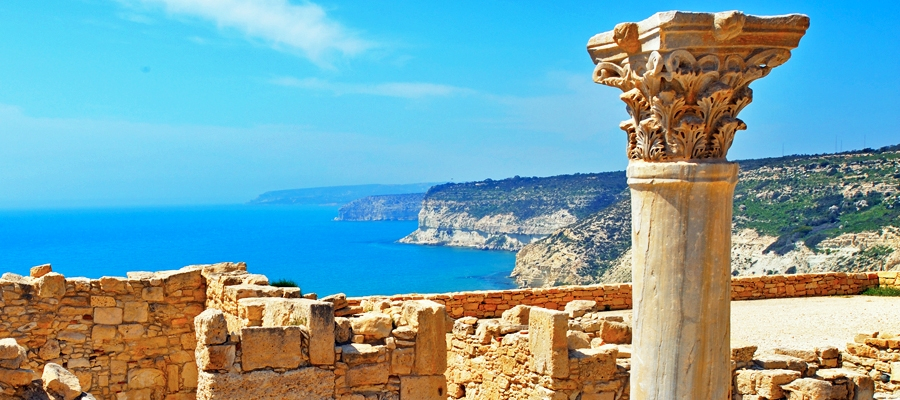
Kourion was an important city-kingdom in antiquity and stands as one of the most impressive archaeological sites in Cyprus. Its theatre – located on the southern end of the abrupt hill on which the city is built – is of great significance.

The theatre was constructed at the end of the 2nd century BC, but took its current dimensions during the 2nd century AD. Consisting of a semicircular orchestra that is surrounded by seats of the cavea (subterranean cells), it was enclosed to the south by the building of the scaenae frons (façade) that must have reached the height of the cavea, though today only the foundations remain.

On either side of the stage were two vaulted parodoi (corridors) from where the audience entered the theatre. The theatre could seat up to 3,500 spectators.

In the beginning of the 3rd century AD modifications were made, and the theatre was transformed into an arena that was used for fights with wild animals. At the end of the 3rd century AD, the arena spectacles declined and the theatre reassumed its proper purpose.

Excavations began in 1933, conducted by the University of Pennsylvania, whilst many other University Archaeological Missions – as well as the Cyprus Department of Antiquities – continued the excavations.

Today, it is the scene of many cultural activities and theatrical performances, especially during the summer season.

Archaeological Site of Kourion – Audio Guide

Region: Lemesos (Limassol)
Address: Kourion, 19km west of Lemesos on the road towards Pafos (Paphos)
Contact No: Tel: +357 25 934 250
Operating Hours: September 16 – April 15, daily: 08.30 – 17:00
April 16 – September 15, daily: 08:30 – 19:30
Operating Period: All year round.
Closed on Christmas Day, New Year’s Day and Easter Sunday (Greek Orthodox).
Entrance Fee: €4,50
For organised groups consisting of more than 10 persons there is a 20% reduction on the entry fees.
The Department of Antiquities can issue special entry cards for all its museums and ancient monuments: One (1) day entry cards – €8,50, three (3) day entry cards – €17,00, seven (7) day entry cards – €25,00.
Disabled Access: Partly accessible.
Website: www.mcw.gov.cy/da
  Opening and closing times as well as entrance fees, are subject to alterations without notice. Visitors are advised to check before visiting.
 

Sanctuary of Apollon Hylates

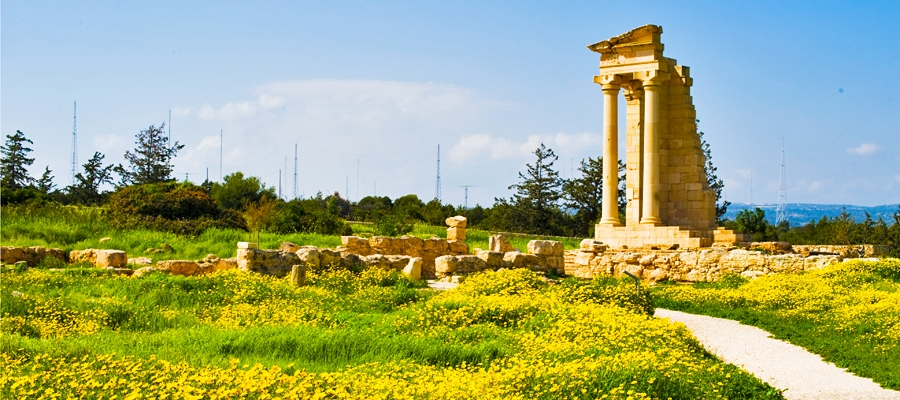
Apollon Hylates, God of the Woodland, was the protector of Kourion and it is believed that he was worshipped at the site from the 8th century BC to the 4th century AD. His sanctuary was an important religious centre and underwent many extensions and alterations in different periods.

Originally, the site consisted of a temple (traces of which survive in the foundations of the present temple), a circular monument, and a formalized Archaic Altar and Precinct. During the Roman period the site was extended with the addition of the south and north buildings, which may have been used for the display of votives or the accommodation of visitors. Terracotta figurines and pottery that were accumulated in the temple from the 5th century BC to the Roman period were buried in the votive pit.

The majority of the monuments – as they can be seen today – belong to the site’s 1st century AD restorations, and consist of Apollo’s temple (which has been partly restored), pilgrim halls, the ‘palaistra’ (where athletes exercised and played games), a bath complex, and a holy precinct.

Region: Lemesos (Limassol)
Address: 3km west of Kourion Archaeological Site [22km west of Lemesos on the road towards Pafos (Paphos)]
Contact No: Tel: +357 99 630 238
Operating Hours: September 16 – April 15, daily: 08.30 – 17:00
April 16 – September 15, daily: 08:30 – 19:30
Operating Period: All year round.
Closed on Christmas Day, New Year’s Day and Easter Sunday (Greek Orthodox).
Entrance Fee: €2,50
For organised groups consisting of more than 10 persons there is a 20% reduction on the entry fees.
The Department of Antiquities can issue special entry cards for all its museums and ancient monuments: One (1) day entry cards – €8,50, three (3) day entry cards – €17,00, seven (7) day entry cards – €25,00.
Website: www.mcw.gov.cy/da
  Opening and closing times as well as entrance fees, are subject to alterations without notice. Visitors are advised to check before visiting.


St. Catherine’s Catholic Church

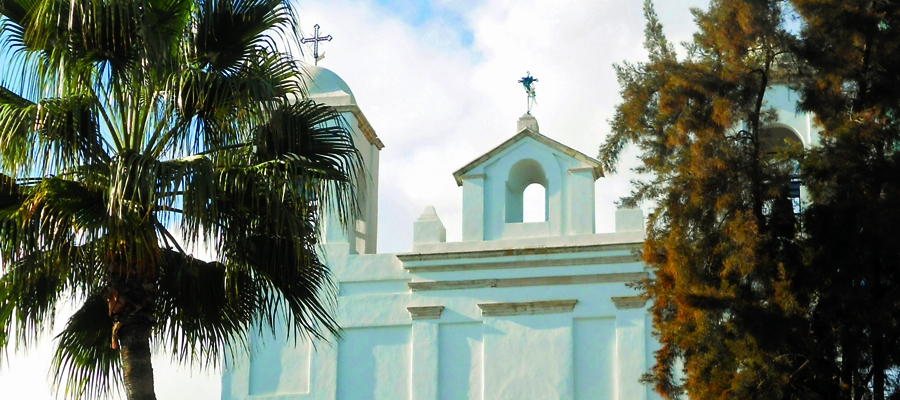
Built in 1879 by architect Friar Francesco da Monghidoro from Bologna, the church follows the architectural style for similar buildings of that period throughout Europe. The Friar used an interior baroque style, whilst opting for an eclectic design on the exterior facade. The walls on the apse and its vault are decorated with neo-Byzantine frescoes, which were repainted during renovations in 1979.

Region: Lemesos (Limassol)
Address: 28th Oktovriou 259
Contact No: Tel: +357 25 362 946
Entrance Fee: Free
Website: www.cypruscatholicchurch.org
  Opening and closing times as well as entrance fees, are subject to alterations without notice. Visitors are advised to check before visiting.
 

Lemesos (Limassol) Medieval Castle

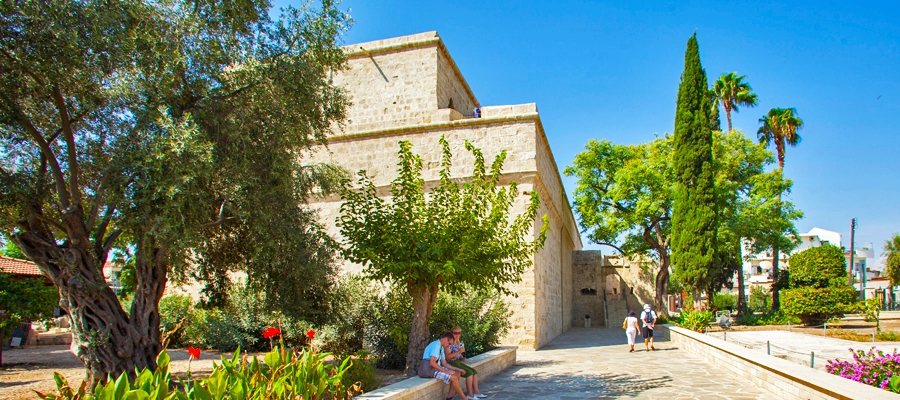
Lemesos (Limassol) Medieval Castle is situated in the heart of the old town, just above the old harbour. According to tradition, this is where Richard the Lionheart married Berengaria of Navarre and crowned her Queen of England in 1191. The fortified walls are of considerable archaeological interest and thought to be fragments of a much larger castle.

The exact date of the fort’s construction is not known; according to Etienne de Lusignan, it was built in 1193 by the founder of the Lusignan dynasty, Guy de Lusignan, but the first official reference to the fort dates to 1228, during the involvement of Frederic II of Germany in the affairs of Cyprus.

Throughout the years, the fort suffered the assaults of many invaders, sustaining further damage in the earthquakes of 1567 and 1568. Finally, in 1590, the Ottomans rebuilt the fort in its current form. The original fort was larger than the later one, which incorporates some parts of the former building, such as the two oblong halls of the ground floor. Below the eastern hall there is a basement with cells, which was used as a prison until 1950. Today, the fort houses the Medieval Museum of Cyprus.

Region: Lemesos
Address: Richardou & Berengarias, near the Old Port
GPS coordinates: Lat: 34.6722 Lon: 33.04163
Contact No: Tel: +357 25 305 419
Operating Hours: Monday – Saturday: 09:00 – 17:00
Sunday: 10:00 – 13:00
Operating Period: All year round.
Closed on Public Holidays.
Entrance Fee: €4,50
For organised groups consisting of more than 10 persons there is a 20% reduction on the entry fees.
The Department of Antiquities can issue special entry cards for all its museums and ancient monuments: One (1) day entry cards – €8,50, three (3) day entry cards – €17,00, seven (7) day entry cards – €25,00.
Website: www.mcw.gov.cy/da
  Opening and closing times as well as entrance fees, are subject to alterations without notice. Visitors are advised to check before visiting.
 

Kourion Mosaics

Kourion was an important city-kingdom in antiquity and stands as one of the most impressive archaeological sites in Cyprus, where well-preserved mosaics decorate the floors of its stately villas.

The Baths and the House of Eustolios

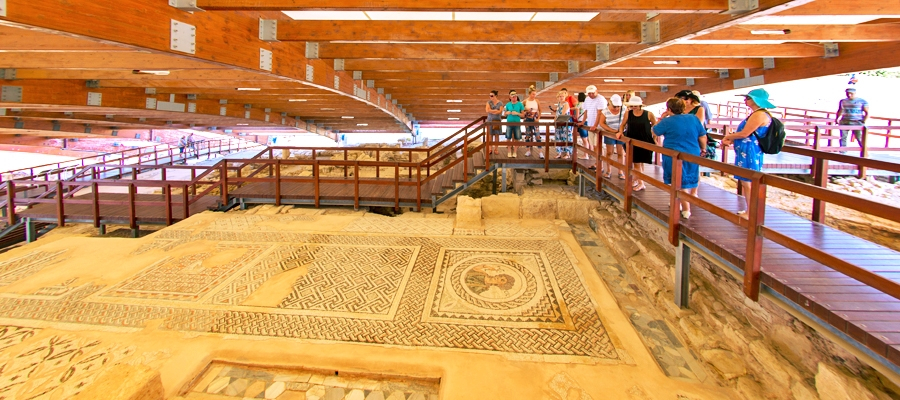
Located east of the theatre is the House of Eustolios, which probably dates to the early 5th century AD, and takes its name from an inscription citing Eustolios as the builder. A mosaic with a welcoming inscription graces the antechamber of the entrance, whilst there are mosaic decorations in three of the porticoes and a bath complex to the north.

The house is believed to have been originally built as a residence and was probably opened to the public after the construction of the baths and the addition of the mosaic floors.

House of Gladiators

One of the most notable villas, which dates back to the second half of the 3rd century AD, is the House of Gladiators. It takes its name from a series of mosaics near its main courtyard representing gladiatorial combats.

The central part of the house was an atrium. Entrance was through a stairway on the northeast corner which opened onto another, smaller atrium joined to the central one by a corridor. The southern part of the building was destroyed, probably due to earthquakes in the 4th century AD. To the east of the corridor is a typical bath complex.

House of Achilles

Consisting of an open courtyard with rooms on two sides and a portico, the 4th century AD House of Achilles takes its name from the mosaic of the legendary Greek hero. The residence was most likely used to receive official guests, whilst the house has other mosaic floors.

Archaeological Site of Kourion – Audio Guide

Region: Lemesos (Limassol)
Address: Kourion, 19km west of Lemesos on the road towards Pafos (Paphos)
Contact No: Tel: +357 25 934 250
Operating Hours: September 16 – April 15, daily: 08.30 – 17:00
April 16 – September 15, daily: 08:30 – 19:30
Operating Period: All year round.
Closed on Christmas Day, New Year’s Day and Easter Sunday (Greek Orthodox).
Entrance Fee: €4,50
For organised groups consisting of more than 10 persons there is a 20% reduction on the entry fees.
The Department of Antiquities can issue special entry cards for all its museums and ancient monuments: One (1) day entry cards – €8,50, three (3) day entry cards – €17,00, seven (7) day entry cards – €25,00.
Disabled Access: Partly accessible.
Website: www.mcw.gov.cy/da
  Opening and closing times as well as entrance fees, are subject to alterations without notice. Visitors are advised to check before visiting.


Kourion Archaeological Site

Monday 1st December to Sunday 7th December 2025, the Archaeological Site of Kourion will be closed to the public due to conservation and maintenance works.

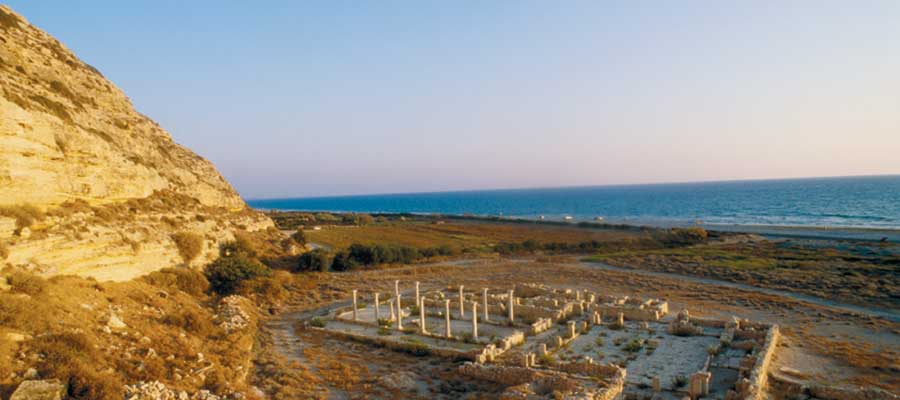
The archaeological remains of Kourion – which was one of the island’s most important city-kingdoms in antiquity – are of the most impressive on the island, and excavations have unearthed many significant finds, which can be viewed at the site.

The city-kingdom was built on the hills of the area, and overlooked and controlled the fertile valley of the river Kouris. According to archaeological finds, evidence suggests that Kourion was associated with the Greek legend of Argos of Peloponnese, and that  its inhabitants believed they were descendents of Argean immigrants. The once-flourishing kingdom was eventually destroyed in a severe earthquake in 365 AD.

The magnificent Greco-Roman theatre – the site’s centrepiece – was built in the 2nd century BC and extended in the 2nd century AD. The theatre has been restored, and is now used for open-air musical and theatrical performances – mainly during the summer months – making it one of the most popular settings for high-calibre cultural events.

East of the theatre are the remains of a prominent building, the ‘House of Eustolios’, which was originally a private villa that was turned into a public recreation centre during the Early Christian period.

Whilst the villa was modest in size, it was well equipped and richly adorned. Its remains consist of four panels of beautiful, 5th century mosaic floors in the central room, and a bathing complex that is located on a higher level, accessed by steps, north of the building. A roof structure allows visitors to enjoy the  site all year round, and explore its remnants.

The baths themselves originally opened off the central room to the north and east, where there were cold baths (frigidarium). Before each is a shallow foot-bath; while on the west, the remains of the hypocausts – which heated the medium room (tepidarium), and the hot room (caldarium) – can be seen. In the latter, the built-in basins for hot baths have survived, as have the firing chambers, where hot air was carried through the hypocausts, travelling up through specially-cut flues, through the walls, and beneath the terracotta tiles of the floor.

Along with the House of Eustolios, there are further impressive mosaic floors in the ‘House of Achilles’ and the ‘House of the Gladiators’, with the villas named after the scenes depicted on the mosaics.

The remains of the Roman Agora are also visible at the site. The structure dates back to the early 3rd century, with additions made later on, during the Early Christian period. The Roman Agora is built on the remains of an earlier public building, which was in use from the end of the 4th century to the end of Hellenistic period.

The Agora of the city is surrounded by porticos with marble columns on both sides, whilst on its northwest side, is an impressive public bath and a small temple, the Nymphaeum, dedicated to the water nymphs.

An early Christian basilica at the site dates back to the 5th century, with separate baptistery on the external northern side.

The Stadium of Kourion  lies 1km to the west, on the right side of the road towards Pafos.

Archaeological Site of Kourion – Audio Guide

Region: Lemesos (Limassol)
Address: Kourion, 19km west of Lemesos on the road towards Pafos (Paphos)
Contact No: Tel: +357 25 934 250
Operating Hours: September 16 – April 15, daily: 08.30 – 17:00
April 16 – September 15, daily: 08:30 – 19:30
Operating Period: All year round.
Closed on Christmas Day, New Year’s Day and Easter Sunday (Greek Orthodox).
Entrance Fee: €4,50
For organised groups consisting of more than 10 persons there is a 20% reduction on the entry fees.
The Department of Antiquities can issue special entry cards for all its museums and ancient monuments: One (1) day entry cards – €8,50, three (3) day entry cards – €17,00, seven (7) day entry cards – €25,00.
Disabled Access: Partly accessible.
Website: www.mcw.gov.cy/da
Opening and closing times as well as entrance fees, are subject to alterations without notice. Visitors are advised to check before visiting.

Kolossi Medieval Castle

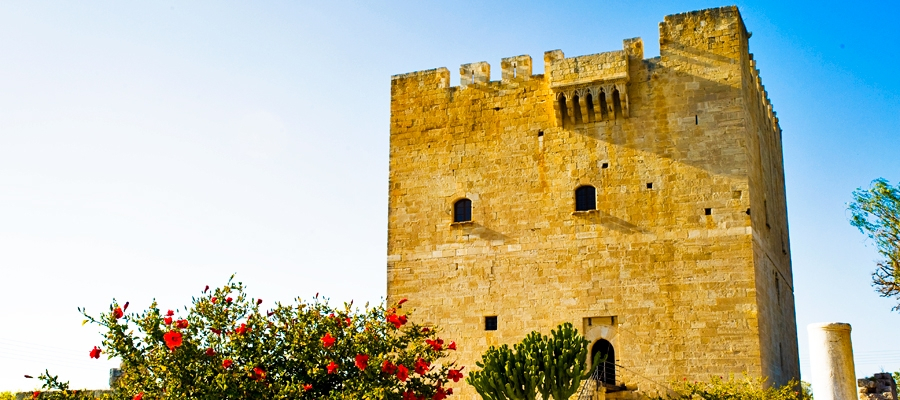
Serving as a fine example of military architecture, Kolossi castle was originally built in the 13th century, and rebuilt in its present form in the 15th century.

After the fall of Acre in 1291, it served as the Grand Commandery of the Knights of the Order of St. John of Jerusalem, and in the 14th century came under the domain of the Knights Templar. During their stay in Cyprus, the Knights produced and exported a sweet wine, which became known as the ‘vin de Commanderie’. Today, Commandaria wine is one of the island’s traditional wines and one of the oldest named wines in the world, having had the same name for eight centuries.

Next to the castle are the ruins of a 14th century sugar mill.

Kolossi Medieval Castle – Audio Guide 

Region: Lemesos (Limassol)
Address: Kolossi, 14km west of Lemesos on the road towards Pafos (Paphos)
Contact No: Tel: +357 25 934 907
Operating Hours: September 16 – April 15, daily: 08:30 – 17:00
April 16 – September 15, daily: 08:30 – 19:30
Operating Period: All year round.
Closed on Christmas Day, New Year’s Day and Easter Sunday (Greek Orthodox).
Entrance Fee: €2,50
For organised groups consisting of more than 10 persons there is a 20% reduction on the entry fees.
The Department of Antiquities can issue special entry cards for all its museums and ancient monuments: One (1) day entry cards – €8,50, three (3) day entry cards – €17,00, seven (7) day entry cards – €25,00.
Website: www.mcw.gov.cy/da
  Opening and closing times as well as entrance fees, are subject to alterations without notice. Visitors are advised to check before visiting.


Amathous Harbour

Amathous is one of the ancient city-kingdoms of Cyprus where, according to mythology, Greek hero Theseus left the pregnant Ariadne to be attended by local women. It was also an important site of worship of the Goddess Aphrodite-Astarte.

Amathous Harbour was constructed during the Hellenistic period by Demetrios Poliorketes and consisted of two parts; the outer and the inner port.

The outer port measured around 100 metres by 180 metres and was delineated by wharves in the east and a breakwater in the south. Access was through an opening on the east wharf. The port had a short lifespan as it soon silted up and the sea level dropped.

The inner port stood behind the outer port and was where mariners moored their ships in order to protect them from bad weather. It was abandoned quite early on due to the outer port silting up.

By the 3rd century BC, the harbour was used only by fishermen, and by the 1st century AD, it was completely dry. Today it lies below sea level, but is easy to distinguish.

Region: Lemesos (Limassol)
Address: Amathous, 11km east of Lemesos centre
GPS coordinates: Lat: 34.71016 Lon: 33.14273
 

Amathous Archaeological Site

Amathous is one of the significant ancient city-kingdoms of Cyprus where, according to mythology, Greek hero Theseus left the pregnant Ariadne to be attended by local women. It was also an important site of worship of the Goddess Aphrodite-Astarte.

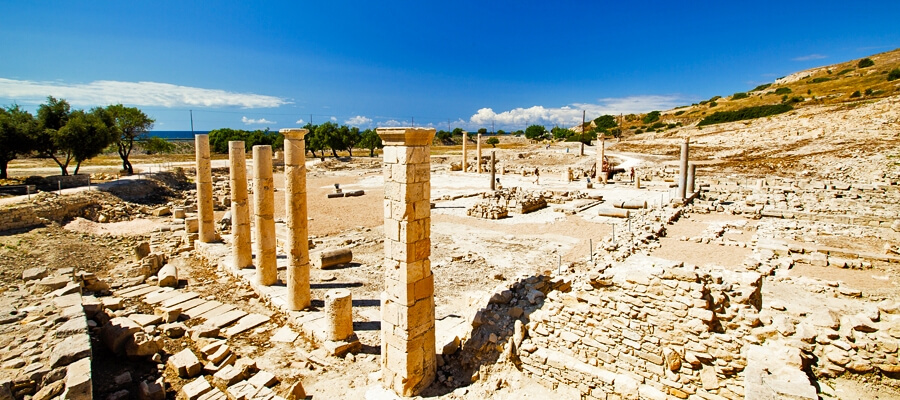
There are various, rich archaeological finds at the site, including the Agora, the public baths, the Temple of Aphrodite, early Christian basilicas and several tombs.

The Agora is located in the lower town. In ancient times, it was the traditional hub for commercial and political activities, and the many buildings surrounding it, played an important role in the daily life of the city. During the Roman period, the Agora was organised around a large stone-paved court. Three porticos occupy the other three sides. The west portico opened to the court through 13 Doric columns, and ended at its north edge at a fountain (or a Nympheum), and at a later cistern. Buildings were erected behind the north portico – which is very damaged – and appear to have constituted the most important administrative or religious buildings of the site.

The area south of the Agora is occupied by a public bath (balaneion), which is comprised of a closed circular area and annexes. The bath – along with part of the west portico of the Agora – date to the Hellenistic period, and constitute the earliest indications of human activity in the area.

Also at the site is the Temple of Aphrodite, sat atop of a hill at the Acropolis of Amathous. Evidence of the presence of a sanctuary in the area includes votive offerings going back to the mid 8th century BC. Through the centuries, the Temple of Aphrodite was a sacred enclosed space for ceremonies and votive offerings around an altar. There may have been other buildings in the area, but the cult itself was not housed in a main building.

Two gigantic stone craters (huge monolith vessels) – believed to be of the late Archaic period stood in the area. One was taken to the Paris Louvre in the middle of the 19th century and has now been replaced by a modern replica.

It is also believed that there were two other temples at the Acropolis of Amathous – one dedicated to Adonis and the other to Hercules.

Finds also originate from several tombs and date from the Archaic to the Roman and Christian periods, were found at the Acropolis and the lower section of the town, and in five early Christian basilicas.

The site is also linked to the Aphrodite Cultural Route.

Region: Lemesos (Limassol)
Address: Amathous, 11km east of Lemesos centre
Contact No: Tel: +357 25 635 226
Operating Hours: September 16 – April 15, daily: 08.30 – 17:00
April 16 – September 15, daily: 08:30 – 19:30
Operating Period: All year round.
Closed on Christmas Day, New Year’s Day and Easter Sunday (Greek Orthodox).
Entrance Fee: €2,50
For groups consisting of more than 10 persons there is a 20% reduction on the entry fees.
The Department of Antiquities can issue special entry cards for all its museums and ancient monuments: One (1) day entry cards – €8,50, three (3) day entry cards – €17,00, seven (7) day entry cards – €25,00.
Disabled Access: Partially wheelchair accessible and disabled toilets.
Website: www.mcw.gov.cy/da
  Opening and closing times as well as entrance fees, are subject to alterations without notice. Visitors are advised to check before visiting.