Holy Cross Catholic Church

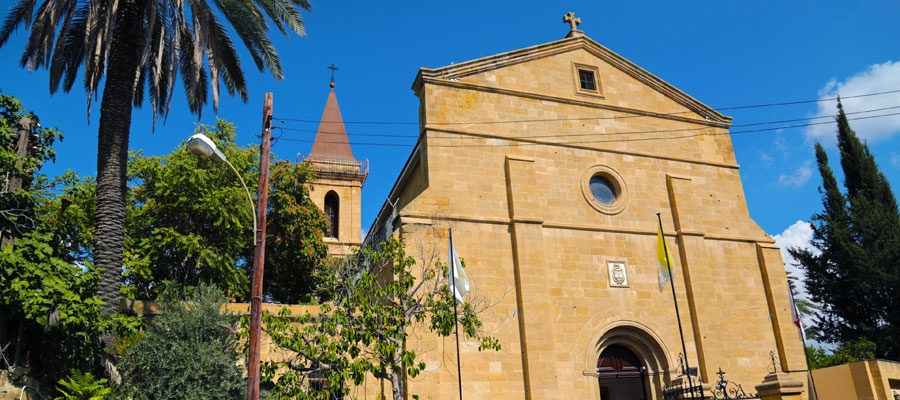
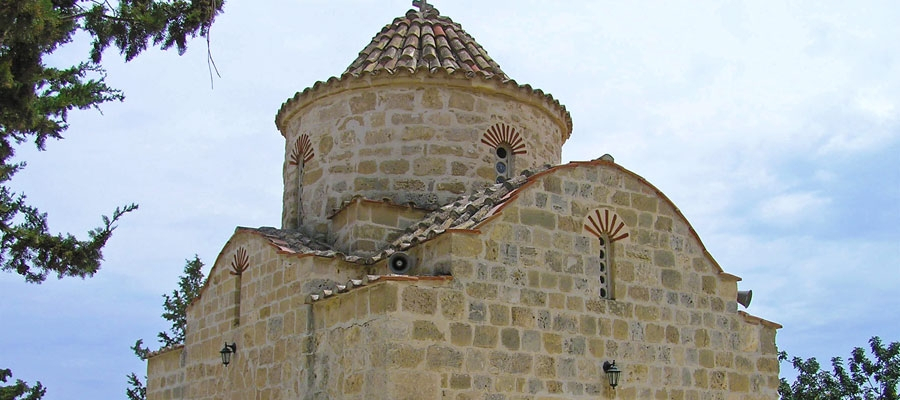
The Church of the Holy Cross, built in 1902, is situated near Pafos Gate, one of the three entrances into the town through the Venetian walls surrounding Lefkosia (Nicosia). The church does not belong to any definite architectural style, and its features are austere. A rose window (decorated circular window) with the cross of Jerusalem in stained glass can be seen in the façade, whilst below the rose window, there is the coat-of-arms of the Custody of the Holy Land.

Region: Lefkosia
Address: Pafos (Paphos) Gate
Contact No: Tel: +357 22 662 132, Fax: +357 22 660 767
Website: www.cypruscatholicchurch.org
  Opening and closing times as well as entrance fees, are subject to alterations without notice. Visitors are advised to check before visiting.
 

Hamam Omeriye

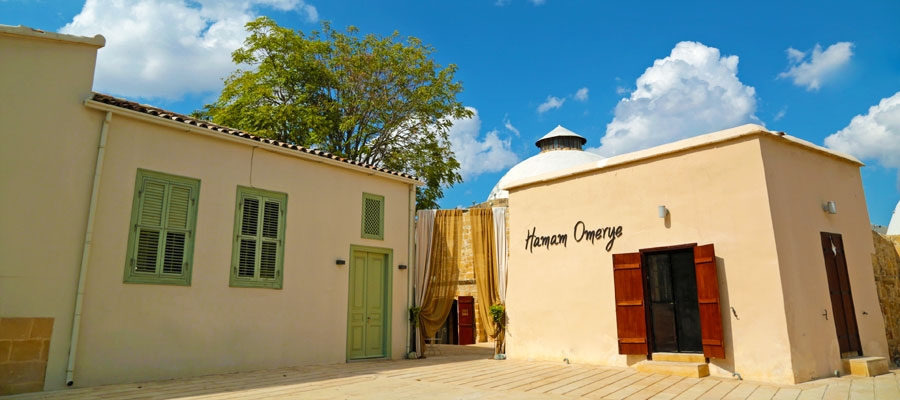
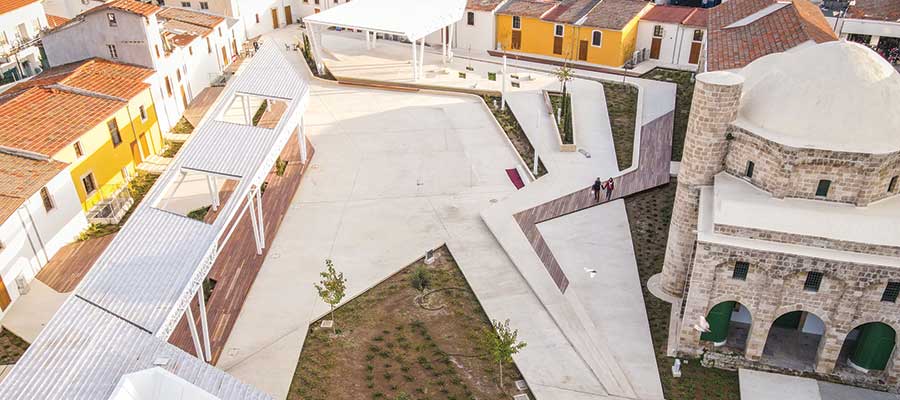
The Hamam Omeriye (Turkish) baths were built in the 16th century by Lala Mustafa Pasha as a gift to the city, with the bath complex dedicated to the Caliph Omer, giving the area its name of ‘Omeriye’.

After a long period of closure, the baths were once again restored to their original glory, earning them the ‘Europa Nostra’ award in 2005, and are open to the public for steam baths and other treatments.

As is typical with Ottoman baths, there are three main areas: the changing and resting room that leads to the warm and hot chambers via an intermediate tepid area. In ancient times, exposure to hot and humid conditions was a prized remedy for general health and formed part of a cleansing ritual.

Region: Lefkosia (Nicosia)
Address: Plateia Tyllirias 8
GPS coordinates: Lat: 35.172466 Lon: 33.365443
Contact No: Tel: +357 22 460 006
Operating Hours: Tuesday – Sunday: 10:30 – 21:30 (sessions for men, women and both sexes at different times).
Closed on Monday.
Operating Period: All year round.
Closed on Public Holidays.
Entrance Fee: Dependant on services used, please check with venue.
Website: www.hamamomerye.com
  Opening and closing times as well as entrance fees, are subject to alterations without notice. Visitors are advised to check before visiting.
 

Faneromeni Church

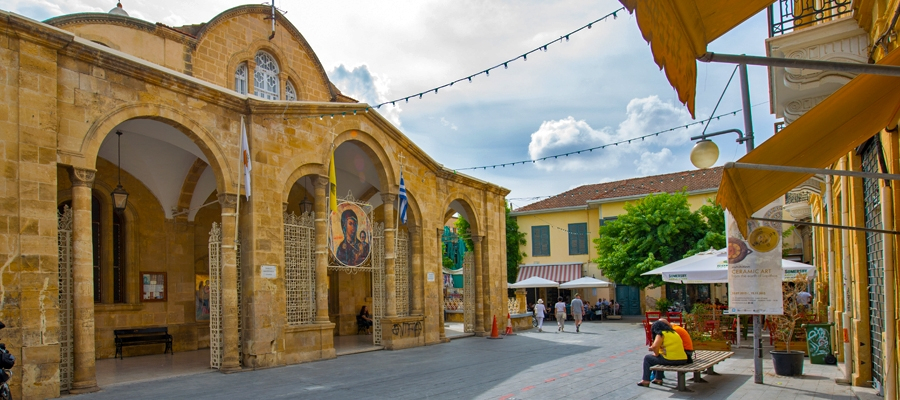
Located within the walled city of Lefkosia (Nicosia) on Onasagorou Street, Faneromeni Church is one of the largest churches of the capital, and was built in 1872. The marble mausoleum to the east of the church contains the relics of the bishops and priests executed by the Ottomans on July 09, 1821. Opposite the church is Faneromeni School, one of the most historic academic institutions on the island.


Bayraktar Mosque

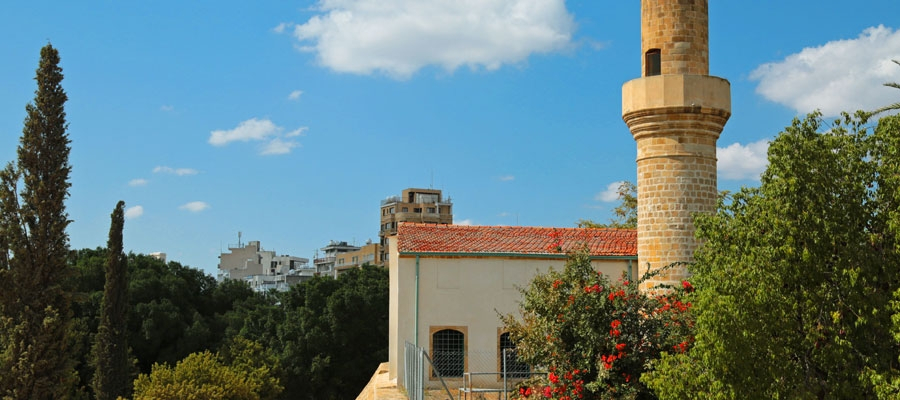
Located next to OCHI Market, this Ottoman mosque is built on the western end of Constanza Bastion, in honour of the flag carrier who first climbed on to the walls of Lefkosia (Nicosia) during the siege of the city by the Ottoman troops in 1570.

Its name derives from the Turkish word ‘bayrak’, meaning ‘flag’ or ‘military trophy’, with the flag carrier’s grave built on the spot later in 1764. The mosque itself dates back to 1820, and was restored and opened for worship in late 2003.

Region: Lefkosia
Address: Constantinou Paleologou (next to OCHI Market)
GPS coordinates: Lat: 35.169118 Lon: 33.365441
Operating Period: Only during important Muslim religious holidays.  
Entrance Fee: Free
  Opening and closing times as well as entrance fees, are subject to alterations without notice. Visitors are advised to check before visiting.
 

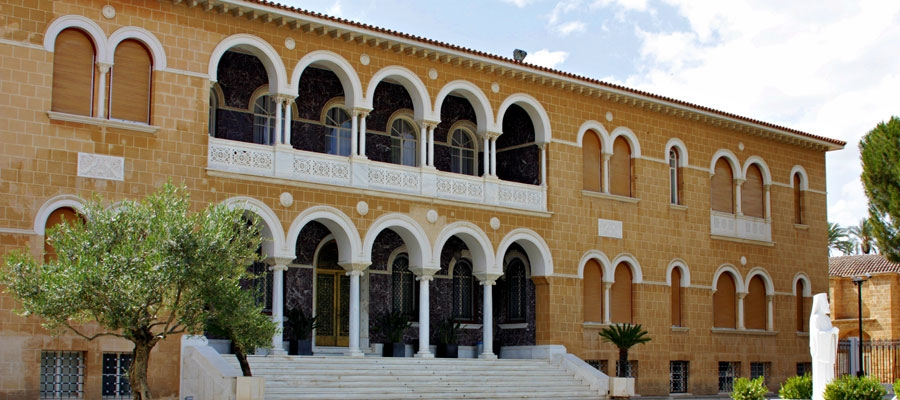
Archbishop’s Palace

The New Archbishopric – the seat of the Cyprus Orthodox Church – was built in 1960 in a Neo-Byzantine style and contains the private suite of the late Archbishop Makarios III. The Old Archbishopric that stands alongside it was built in 1730 and houses the Ethnographic Museum of Cyprus on its ground floor.

GPS coordinates: Lat: 35.172821 Lon: 33.36815

Archangelos Michael Convent

Located along the Lefkosia (Nicosia) – Anthoupolis Road, the church of the convent dates back to the Byzantine period and was founded by Archbishop Nikiforos, whose tomb can be seen in the narthex of the church. It was rebuilt in 1636 and was ceded to Kykkos Monastery in 1713.

The iconostasis dates back to 1650, whilst the convent has a 1785 fresco depicting the Archangel Michael (Archangelos Michael) whom it is dedicated to. Today the convent houses the Kykkos Monastery Research Centre.

GPS coordinates: Lat: 35.131723 Lon: 33.310905

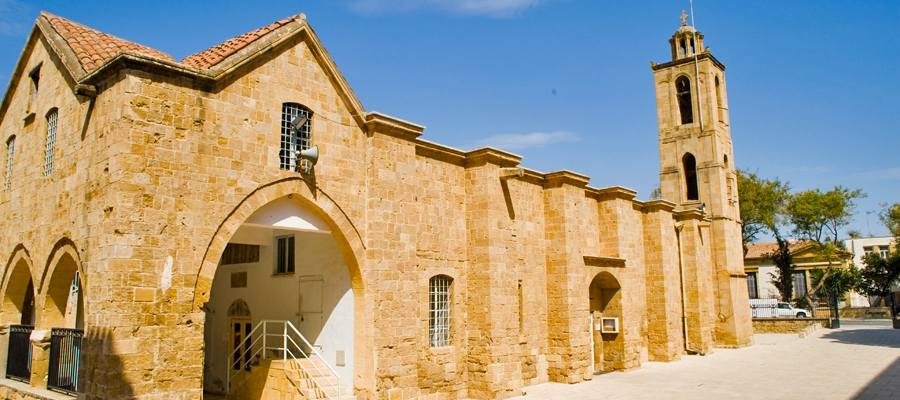
Agios Ioannis (St John’s) Cathedral

Agios Ioannis, within the walled city of Lefkosia (Nicosia), is built on the site of the 14th century chapel of the Benedictine Abbey of Agios Ioannis, the Evangelist of Bibi.

Archbishop Nikiforos rebuilt the monastery chapel from its foundations in 1662. Dedicated to Agios Ioannis the Theologian, it remained a monastery until the 18th century when Archbishop Sylvester converted it into a cathedral, establishing it as the seat of the Orthodox Archbishopric in Cyprus.

The church is small, single-aisled and barrel vaulted, in the Franco-Byzantine style, with external buttresses and a west portico. In contrast to the deliberately modest exterior that was required by Ottoman rule, the gilded woodwork and bright interior illuminated by crystal chandeliers is particularly ornate. Covered in gold leaf, the woodcarving is in the best tradition of 18th century Cypriot craftsmanship, and it remains the only church in Lefkosia in which the whole of the internal Frescoes have survived in their entirety.

The four large icons on the iconostasis were painted by the Cretan master, Ioannis Kornaros in 1795 and 1797, and the 18th century wall paintings depict scenes from the Bible and the discovery of the tomb of Agios Varnavas (St. Barnabas) at Salamis.

Region: Lefkosia
Address: Plateia Archiepiskopou Kyprianou, (next to the Archbishopric)
Operating Hours: Tuesday – Friday: 09:00 – 15:00
Saturday: 09:00 – 12:00 (and during mass)

Monday and Sunday closed

Last entry to the Church is 15 minutes before closing.

Operating Period: All year round.
Closed on Public Holidays.
Entrance Fee: Free
Opening and closing times as well as entrance fees, are subject to alterations without notice. Visitors are advised to check before visiting.

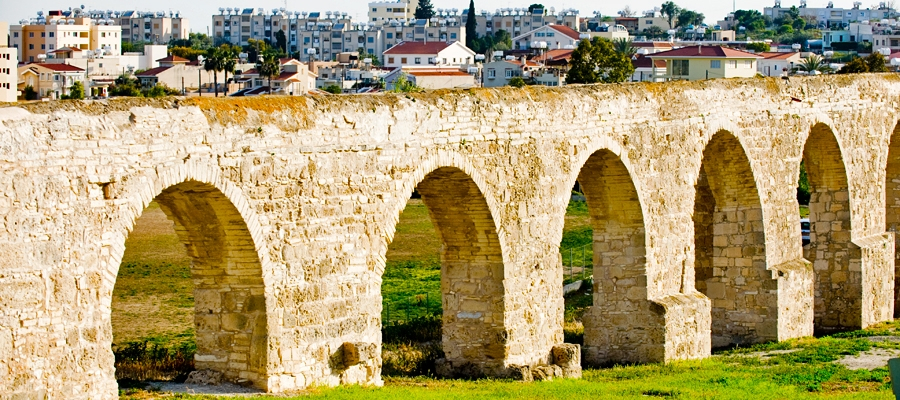
Kamares Aqueduct

This beautiful 18th century aqueduct can be found on the road heading towards Lemesos (Limassol) in the area of Kamares, which takes its name from the distinctive arches (‘kamares’ in Greek).

An open-air sight, the aqueduct was built in the Roman style in 1746 by the Turkish governor of Larnaka, Bekir Pasha, who funded it out of his own sources to carry water to Larnaka (Larnaca) from a source about 10 km away. The aqueduct was abandoned in 1939 and its function replaced by modern pipes.

There are more than 20 arches still intact, and these are strikingly illuminated at night. A cobbled area with benches and a footpath allow you to enjoy the site of this monument, with the path linking up with Larnaka Salt Lake.

GPS coordinates: Lat: 34.912388 Lon: 33.598903

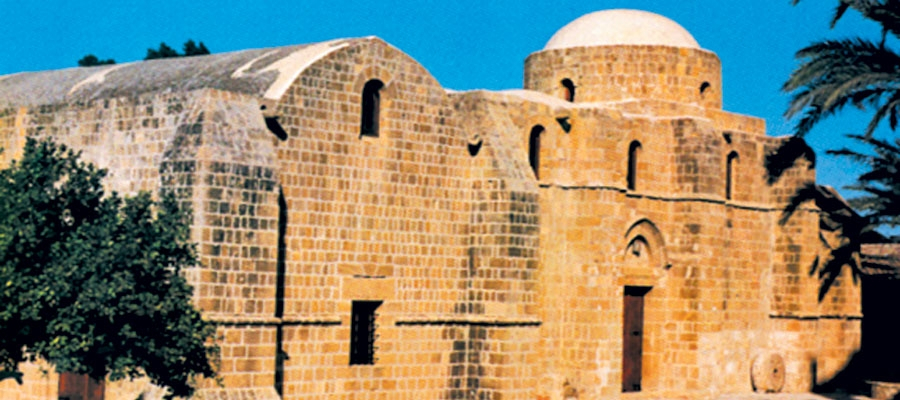
Agios Georgios Makris Chapel

Built on a small hill that overlooks the area of the Salt Lake, the quaint stone-built chapel of Agios Georgios dates back to the 13th century when it was the church of the Medieval village of Agrinou, and serves as a miniature piece of late Byzantine architecture.

The village and the church were destroyed by the Egyptian Mameluks, who invaded in 1426 and also captured the Lusignan King Janos. The church was soon repaired and the king was freed, but an annual tax was paid to the Mameluks until the Ottoman occupation.

The church served as a monastery in the 18th-19th centuries, but the annexed structures were demolished in the 20th century, thus restoring the original setting of the church. A wall painting of the saint still survives on the north wall.

Region: Larnaka (Larnaca)
Address: Faneromenis Avenue
Operating Hours: Church hours.
Operating Period: All year round.
Closed on Public Holidays.
Entrance Fee: Free
  Opening and closing times as well as entrance fees, are subject to alterations without notice. Visitors are advised to check before visiting.
 

Zuhuri Mosque

Zuhuri Mosque lies between the Kebir (Buyuk) Mosque and the Church of Agios Lazaros. It was built in the middle of the 19th century and is an important Muslim religious centre. Its minaret collapsed in the 20th century.

Region: Larnaka (Larnaca)
Address: Nicolaou Roussou Street
GPS coordinates: Lat: 34.911776 Lon: 33.636092
Operating Hours: Any reasonable hour providing there is no prayer.
Operating Period: All year round.
Closed on Public Holidays.
Entrance Fee: Free
  Opening and closing times as well as entrance fees, are subject to alterations without notice. Visitors are advised to check before visiting.