Kallinikeio Municipal Museum of Athienou

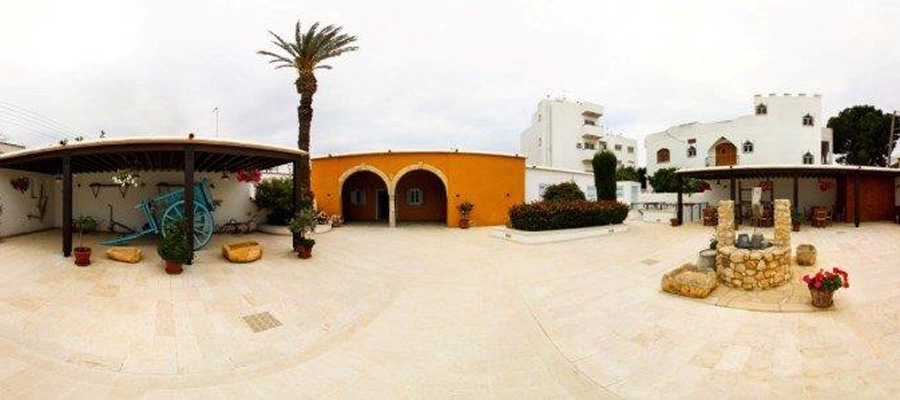
The Kallinikeio Municipal Museum of Athienou is housed in the Kallinikeio Municipal Hall and exhibits collections that showcase aspects of the history of the area from the Late Bronze Age (1600-1050 BC) until today.

The Museum consists of the Archaeological Collection, the Collection of Ecclesiastical Art and the Ethnographic Collection.

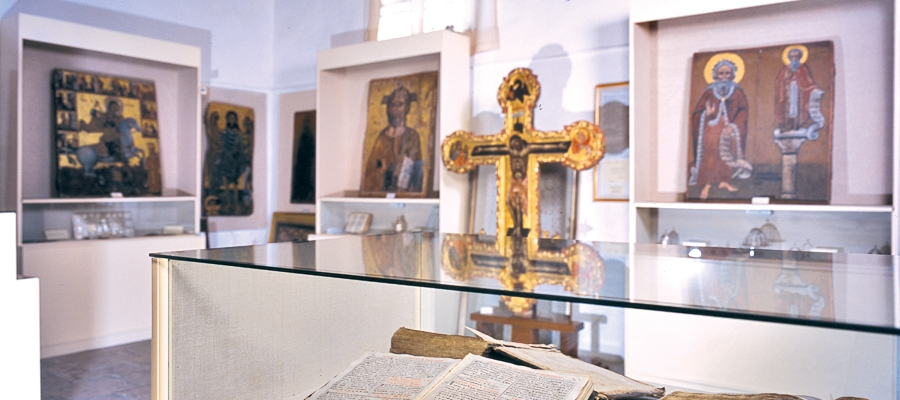
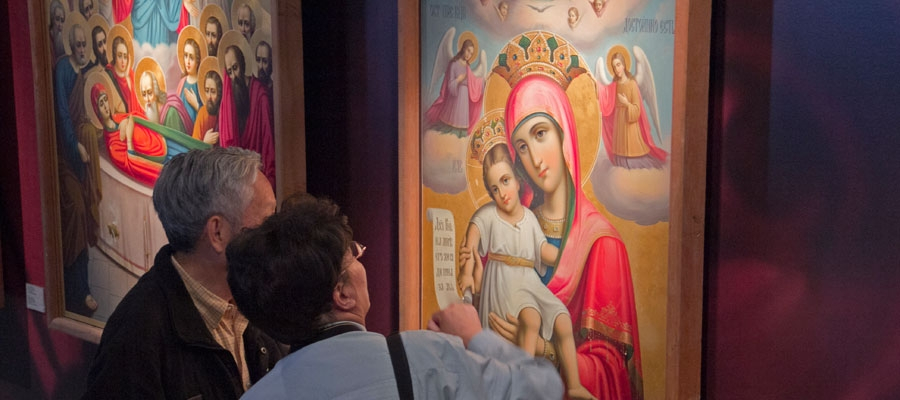
The Collection of Ecclesiastical Art includes priceless icons painted by the monk Kallinikos Stavrovouniotis and other icons from his personal collection. The monk was an excellent icon painter and a great benefactor to Athienou, and thus the museum is named in his honour. In the Icon Painting and Mosaic Workshop, icons and mosaics by the brothers George and Alkis Kepola are on display.

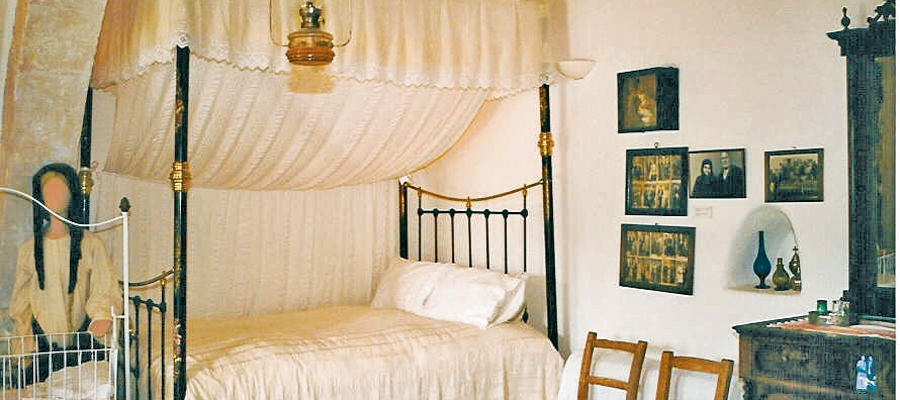
The Ethnographic Collection presents the daily life of the people of the 20th century through photographic material and other objects.

The museum also organises tours, periodic exhibitions, educational programmes, presentations and conferences.

As part of the Larnaka Virtual Museums project, you can tour the museum virtually below or in full screen here, with enriched and bonus material from home, or whilst at the museum for a hybrid experience.


Region: Larnaka (Larnaca)
Address: Archbishop Makarios III Avenue, 2, 7600 Athienou village
Contact No: Tel: +357 24 524 002 / +357 24 811 370, Fax: +357 24 522 333
Operating Hours: Monday – Friday: 08:00 – 15:00
Weekends: by appointment only.
Operating Period: All year round.
Closed on Public Holidays.
Entrance Fee: Adults €2,00 / Children free (under 12 years)
Groups of 10 or more €1,00 per person.
Website: https://athienoumuseum.org.cy/
  Opening and closing times as well as entrance fees, are subject to alterations without notice. Visitors are advised to check before visiting.


Folklore Museum ‘Kostas Kaimakliotis’ – Aradippou

The Folklore Museum in the village of Aradippou was founded in 2007 as a centre for preserving, researching and promoting Cypriot Folklore Tradition.

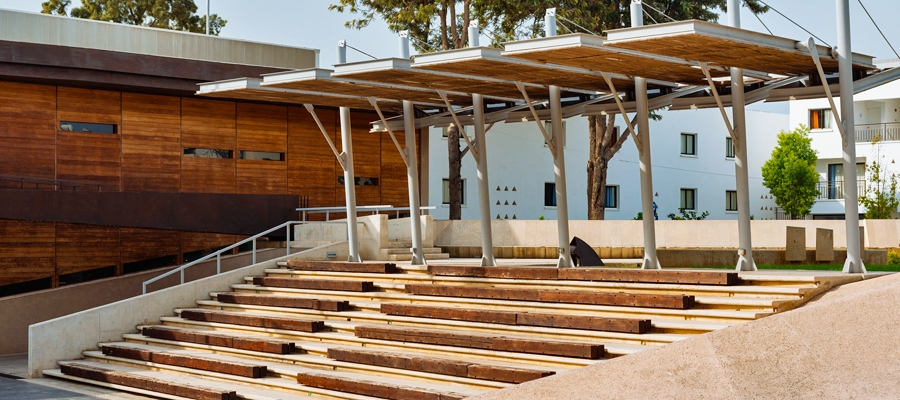
Housed in a 1901 mansion, the museum uses the basement and upper storey of the building for exhibits, whilst the small amphitheatre in the yard is used for cultural and artistic performances and exhibitions during the summer.

The museum basement consists of a Sun Room, Family Chamber, Weaving Hall,Domestic Appliances Hall, Farming and Animal Raising Hall, and Traditional Jobs Hall. From March – May, visitors can watch the seasonal process of breeding silkworms as they make their cocoons and then hatch as silk moths.

There are two rooms contained in the upper storey; a single room and the Hall of the Social and Cultural Traditions of Aradippou, where a re-enactment of the traditional wedding ritual ‘the dressing of the bride’ takes place.

The building of the museum originally belonged to the Kostas Xatzikakou family. It was later bought by the Pavlos Konstantinides family and then the Kaimakliotis family, who in turn donated it to Aradippou Municipality in memory of Kostas Kaimakliotis.

Region: Larnaka (Larnaca)
Address: Thermopilon, 12, Aradippou village
GPS coordinates: Lat: 34.95182 Lon: 33.588538
Contact No: Tel: +357 24 531 218, Fax: +357 24 530 690
Operating Hours: Monday – Friday: 07:30 – 15:00
Closed on weekends.
Operating Period: All year round.
Closed on Public Holidays.
Entrance Fee: €1,00
Website: www.aradippou.org.cy
  Opening and closing times as well as entrance fees, are subject to alterations without notice. Visitors are advised to check before visiting.


Agios Lazaros Byzantine Museum

The Byzantine Museum at the church of Agios Lazaros is housed in some of the cells of the hypostyle porch that still stand to its south. The museum’s exhibits include important religious icons, artefacts and relics, including Byzantine icons, gospels, crosses and other ecclesiastical treasures from the whole district of Larnaka (Larnaca).

The church itself is located in its own, picturesque square in the centre of town. It is one of the most remarkable examples of Byzantine architecture in Cyprus and lies over the tomb of the saint, who came to Cyprus after being resurrected by Jesus. He was ordained as Bishop of Kition by the Apostles Barnabas and Paul and lived in the town for 30 years.

Saint Lazarus is so revered that a procession is held in his honour eight days before Easter. During the procession, the icon of the saint is carried through the streets of Larnaka.

As part of the Larnaka Virtual Museums project, you can tour the museum virtually below or in full screen here, with enriched and bonus material from home, or whilst at the museum for a hybrid experience.

Agios Lazaros Church and Ecclesiastical Museum – Audio Guide

Region: Larnaka
Address: Plateia Agiou Lazarou
Contact No: Tel: +357 24 652 498
Operating Hours: Monday – Saturday: 08:15 – 12:30 / 15:00 – 17:30
Closed on Wednesday and Saturday afternoon
Closed on Sunday
Operating Period: All year round
Closed on Public Holidays
Entrance Fee: €1,00 per person
Groups of 10 or more: €10,00
Disabled Access: Entrance ramp, chair lifts for rooms and disabled toilets
  Opening and closing times as well as entrance fees, are subject to alterations without notice. Visitors are advised to check before visiting.
 

Paralimni Folkloric Museum

Housed in a traditional 19th century residence that belongs to the municipality of Paralimni, the Paralimni Folkloric Museum exhibits a collection of Cypriot art and everyday tools and implements that showcase the olden­day, rural life of the local inhabitants of the area.

The museum offers an interesting insight into the traditions and pastimes of previous generations, whilst the building also functions as a multipurpose centre for exhibitions, cultural events and civil marriages.

Region: Ammochostos (Famagusta)
Address: Agias Marinas 5, Paralimni
Contact No: Tel: +357 23 74 18 26
Operating Hours: Monday – Friday: 07:00 – 15:00
Closed on weekends.
Operating Period: All year round.
Closed on Public Holidays.
Entrance Fee: Free
Website: www.paralimni.org.cy
Opening and closing times as well as entrance fees, are subject to alterations without notice. Visitors are advised to check before visiting.

Deryneia Folkloric Museum / Open Air Museum for Traditional Professions

Housed in an old traditional residence, Deryneia Folk Art Museum exhibits a collection of everyday agricultural tools and equipment used by traditional farming families of bygone times.

Located opposite is the Open Air Traditional Folk Art Museum which further showcases traditional professions in its exhibition rooms, including that of furniture and shoe maker, carpenter, tailor, blacksmith, builder, barber, sculptor, fisherman and farmer, among others. Exhibitions are also held on the grounds, along with civil marriages and other cultural events.

Region: Ammochostos (Famagusta)
Address: Demetri Liberti 2 & 3, Deryneia village
Contact No: Tel: +357 23 811 000
Operating Hours: Winter: Monday – ­ Saturday: 09:00 – 13:00 / 15:00 – ­17:00
Summer: Monday – ­ Saturday: 09:00 – 13:00 / 15:00 -­ 18:00
Closed on Sunday.
Operating Period: All year round.
Closed on Public Holidays.
Entrance Fee: €2,00 / Groups €1,00 (both museums)
Disabled Access: Wheelchair accessible
Website: www.visitfamagusta.com.cy
  Opening and closing times as well as entrance fees, are subject to alterations without notice. Visitors are advised to check before visiting.
 

Thalassa Agia Napa Municipal Museum

Named after the Greek word for ‘sea’ – the Thalassa Museum was created to promote awareness of the marine heritage of Cyprus from prehistoric times to the present, and is a modern, interactive museum, housed in a multi­purpose cultural centre.

Pride of place among the exhibits is a life­size replica of the famous 4th century Greek trading ship ‘Keryneia II’ that sank off the coast of Keryneia around the year 300 BC. Due to the museum’s design, the ship can be viewed from different levels, including a birds­eye view – as can the other exhibits, that include pottery and other antiquities.

Housed in the basement is a marine life section with various exhibits, from fish and sea mammals to crustaceans, corals, shells and fossils – some dating back 130 million years ago.

The museum also functions as an arts exhibition centre, as well as a multipurpose hall for a variety of events and conferences.

Region: Ammochostos (Famagusta)
Address: Leoforos Kryou Nerou, 14, Agia Napa
GPS coordinates: Lat: 34.987634 Lon: 34.002424
Contact No: Tel: +357 23 816 366, Fax: +357 23 816 369
Operating Hours: October – May: Monday: 09:00 – 13:00, Tuesday – Saturday: 09:00 – 17:00, Sunday: closed
June – September: Monday: 09:00 – 13:00, Tuesday – Saturday: 09:00 – 17:00, Sunday: 15:00 – 19:00
Operating Period: All year round.
Closed on Public Holidays.
Entrance Fee: Adults €4,00 / Children €1,50
Special rates for students and groups.
Disabled Access: Wheelchair accessible.
Website: https://thalassamuseum.org.cy/
  Opening and closing times as well as entrance fees, are subject to alterations without notice. Visitors are advised to check before visiting.
 

The Avgorou Ethnographic Museum

The Ethnographic Museum in the village of Avgorou is housed in a 1921 two­storey, traditional residence (the Koutras House), and depicts the daily life of previous generations.

Amongst its exhibits are rare 19th century wood­carved furniture, costumes, silverware and pottery, a collection of paintings by self­taught Cypriot artists, and priceless traditional textiles and embroideries of the 18th – 19th century, as well as many other traditional utensils and tools.

The museum also has a large courtyard, stockyard, water reservoir and wheel­well.

Region: Ammochostos (Famagusta)
Address: Leoforos Karyon, 52, Avgorou village
GPS coordinates: Lat: 35.0395 Lon: 33.83987
Contact No: Tel: +357 23 923 340
Operating Hours: Monday – Friday: 08:30 – 13:30
Tuesday, Thursday, Friday: 16:00 – 18:00
Saturday: 09:00 – 13:00
Closed on Sunday.
Operating Period: All year round.
Closed on Public Holidays.
Entrance Fee: Adults €1,71 / Children €0,86
Special rates for students and groups.
  Opening and closing times as well as entrance fees, are subject to alterations without notice. Visitors are advised to check before visiting.
 

Sea Caves – Agioi Anargyroi (Linear) – Ammochostos (Famagusta) District, Cape Gkreko National Forest Park Nature Trail

GPS coordinates of the starting point: Lat: 34.975349 Lon: 34.075822
Altitude of the starting point: 13m
Altitude of the highest peak: 30m
Altitude of the end peak: 13m
Starting point: (a) the Sea Caves / (b) Agioi Anargyroi Church.
Length: 4km
Estimated duration: 1.5 hour
Difficulty rate: 1


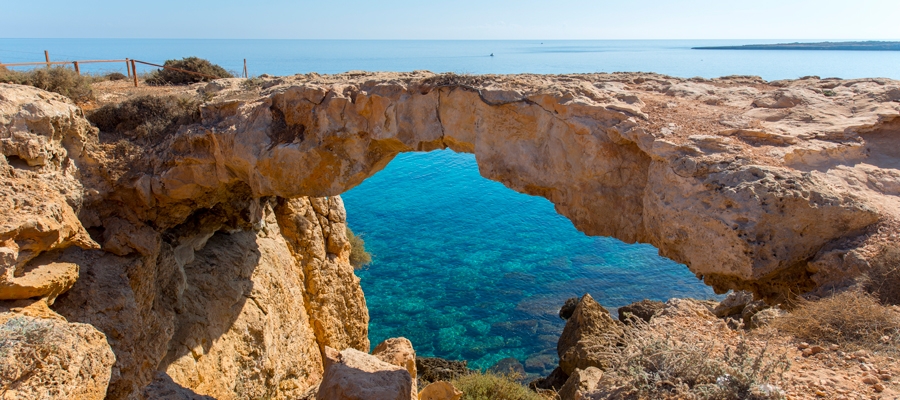
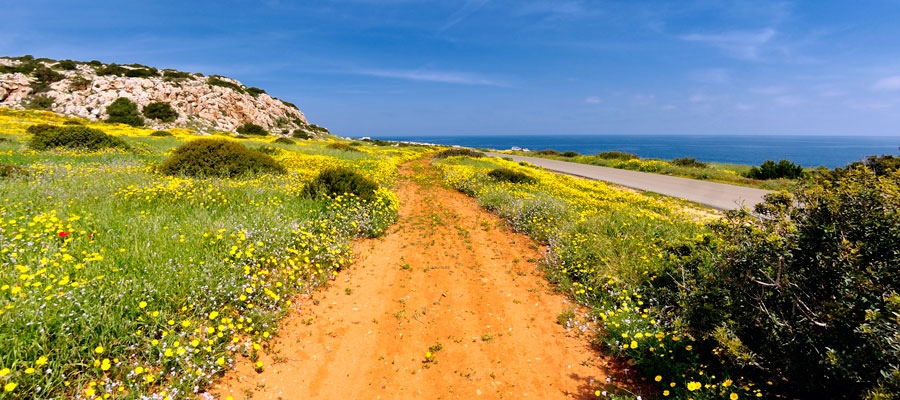
Points of interest: The Sea Caves – Agioi Anargyroi Trail is located on the cape of Cape Gkreko, within the National Forest Park, which is a Natura 2000 area. A big part of the route runs parallel to the shoreline. From the Sea Caves to Kavos hill the trail passes through a rocky area with sparse halophytic vegetation. It then follows a course due north, through low shrubby vegetation. Passing through an area of fields planted with cereals ­ and through an area of low bushes ­ the trail reaches a natural bridge called ‘Kamara tou Koraka’ and ends up at Agioi Anargyroi Church. The church is built over a sea cave, where it is believed that saints (known as Agioi Anargyroi) lived as ascetics. The trail connects to the Konnoi – Agioi Anargyroi Trail, and to the Aphrodite Trail. About 200 metres to the west of the end of trail, there is a picnic site with drinking water.

Flora: While hiking you can study the plants: prickly burnet (Sarcopoterium spinosum), wild thyme (Thymus capitatus), rock samphires (Crithmum maritimum), lentisk (Pistacia lentiscus), wild olive (Olea europaea).

Aphrodite (Circular), Ammochostos (Famagusta) District, Cape Gkreko National Forest Park Nature Trail Agia Napa

GPS coordinates of the starting point: Lat: 34.982762 Lon: 34.069630
GPS coordinates of the ending point: Lat: 34.982762 Lon: 34.069630
Altitude of the starting point: 10m
Altitude of the highest peak: 60m
Altitude of the end peak: 10m
Starting point: Visitor Centre parking site.
Length: 2km
Estimated duration: 1 hour
Difficulty rate: 1


Points of interest: The Aphrodite Trail is located within the Cape Gkreko National Forest Park and follows a downhill incline until it reaches the beach. Here, it connects to the Sea Caves – Agioi Anargyroi Trail and before it reaches a natural bridge called ‘Kamara tou Koraka’ it takes an uphill turn toward the Visitor Centre. This part of the trail is common with the Konnoi – Agioi Anargyroi. The first part of the trail passes by the ruins of the ancient temple, dedicated to the Goddess of Love and Beauty, Aphrodite. On the way to the beach, the trail passes by natural caves with dry stone walls built around their perimeter – constructions that were used by shepherds to keep animals. There are many viewpoints along the route. There is also a sign with the Cypria Aphrodite (Κύπριδα Αφροδίτη) logo indicating where an ancient temple dedicated to the Goddess Aphrodite is believed to have been.

Flora: While hiking you can study the indigenous plants: Phoenician juniper (Juniperus phoenicea), wild thyme (Thymus capitatus), prickly burnet (Sarcopoterium spinosum), rock samphires (Crithmum maritimum).

Konnoi – Cyclops Cave (Circular) – Ammochostos (Famagusta) District, Cape Gkreko National Forest Park Nature Trail

GPS coordinates of the starting point: Lat: 34.984287 Lon: 34.068423
GPS coordinates of the ending point: Lat: 34.984287 Lon: 34.068423
Altitude of the starting point: 27m
Altitude of the highest peak: 30m
Altitude of the end peak: 27m
Starting point: Konnos beach parking area.
Length: 1.7km
Estimated duration: 45 minutes
Difficulty rate: 1


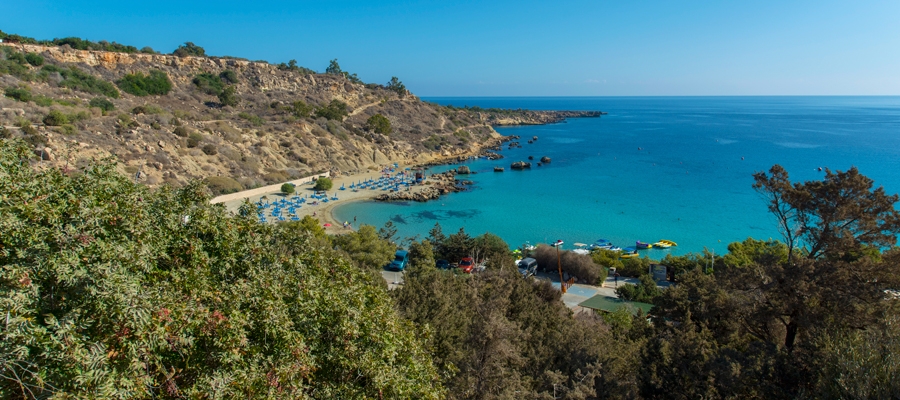
Points of interest: The Konnoi – Cyclops Cave Trail is situated within the Cape Gkreko National Forest Park, which is a Natura 2000 area. The trail follows a route parallel to the rugged shore. Passing through mostly shrubby vegetation, it reaches the natural Cyclops Cave. The return route is on the same trail for about 250 metres. It then follows a downward path toward the beach and finally an uphill climb back to the starting point. All along the trail, there is a seamless view of the turquoise waters and golden sands of Konnos beach, as well as of Agioi Anargyroi church.

Flora: While hiking you can study the plants: coastal boxthorn (Lycium schweinfurthii), prickly burnets (Sarcopoterium spinosum), Phoenician juniper trees (Juniperus phoenicea), acacia trees (Acacia sp.).