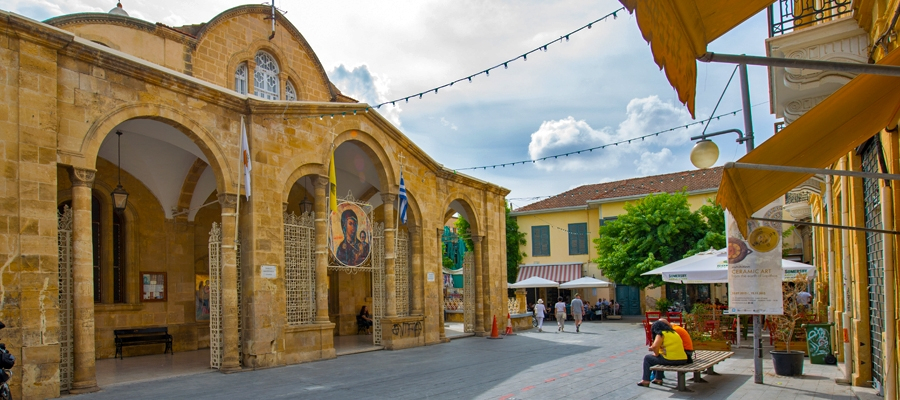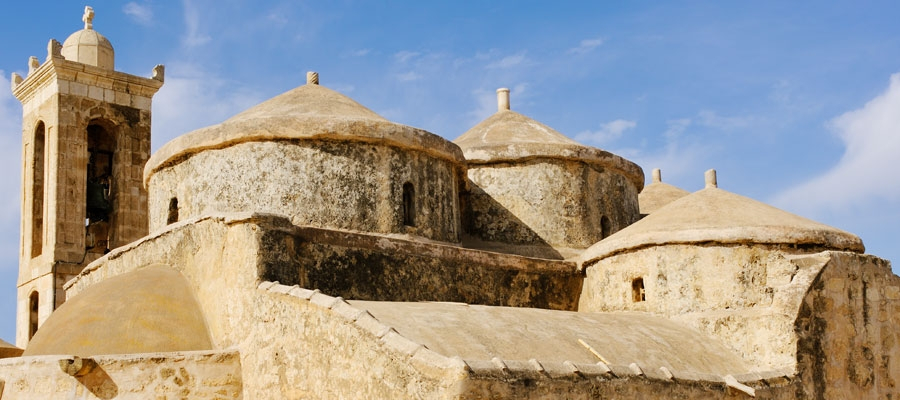
St. Paul’s Anglican Church
The church of St. Paul was built in 1893 when Cyprus was a protectorate of the British Empire. The influence of politics on architecture is
You are here: Home » Discover Cyprus » Culture » Page 18
Cyprus is a small island with a long history and a rich culture that spans 11.000 years, making it one of the oldest civilisations in the Mediterranean – as evidenced by the many fascinating cultural sights, museums, monuments and galleries. Situated at the crossroads of three continents – Europe, Asia and Africa – the island’s unique geographic position has played an important part in its turbulent past since antiquity. Its Prehistoric Age inhabitants were joined 3,500 years ago by the Mycenaean Greeks, who introduced and established their civilisation, thus permanently instilling the island’s Greek roots. Many other cultures followed thereafter, including Phoenicians, Assyrians, Egyptians, Romans, Franks, Venetians, Ottomans and British, who all left behind visible remnants of their passage, and have thus created a mosaic of different cultures and periods. As such, the island is an open-air museum of prehistoric settlements, classical Greek temples, Roman theatres and villas, Early Christian basilicas, Byzantine churches and monasteries, Crusader castles, Gothic cathedrals, Venetian fortifications, Moslem mosques, and British colonial-style buildings. The old ways of life, customs and traditions are still beautifully preserved in the rural villages, and interesting elements of the island are captured in the many museums and galleries. It is not surprising then that UNESCO includes a number of the island’s sights on its list of World Heritage Sites. Whilst the preservation of historical sites and riches is of the upmost priority for the island, these efforts are in stark contrast with the unfortunate reality that a large part of its cultural heritage remains under Turkish occupation since July 1974, and has been subjected to severe damage. But when visiting Cyprus, you will never have to look far to find a piece of its history and culture, whether you want to discover more about the traditions of the island, or immerse yourself in its captivating past.
For the 11000 Years e-brochure click here (pdf)

The church of St. Paul was built in 1893 when Cyprus was a protectorate of the British Empire. The influence of politics on architecture is

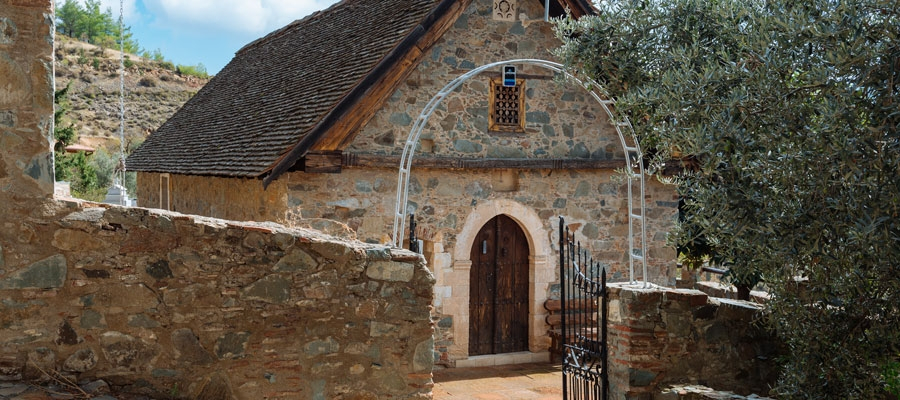
Located in the mountainous village of Galata, the Church of the Archangelos Michael, or Panagia Theotokos, is a timber-roofed chapel, painted in the post- Byzantine

The Fyti Weaving Museum exhibits examples of the village’s famous woven textiles, and demonstrates how the craft has been practised in the village since Medieval

Set in beautiful natural surroundings, the Monastery of Chrysorrogiatissa is dedicated to ‘Our Lady of the Golden Pomegranate’ and was established in 1152 by monk

The Byzantine Museum, within the walled city of Lefkosia (Nicosia), contains the richest and most representative collection of Byzantine art on the island. Over 200

Located in its own square in the centre of town, the magnificent stone church of Agios Lazaros is one of the most remarkable examples of