Drouseia village

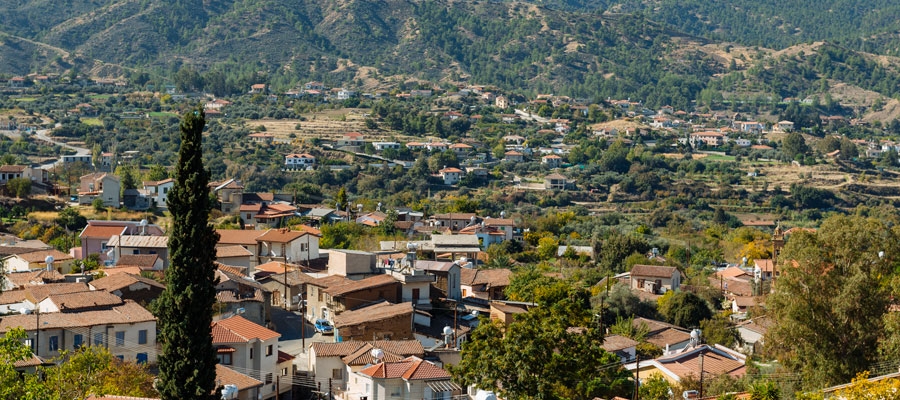
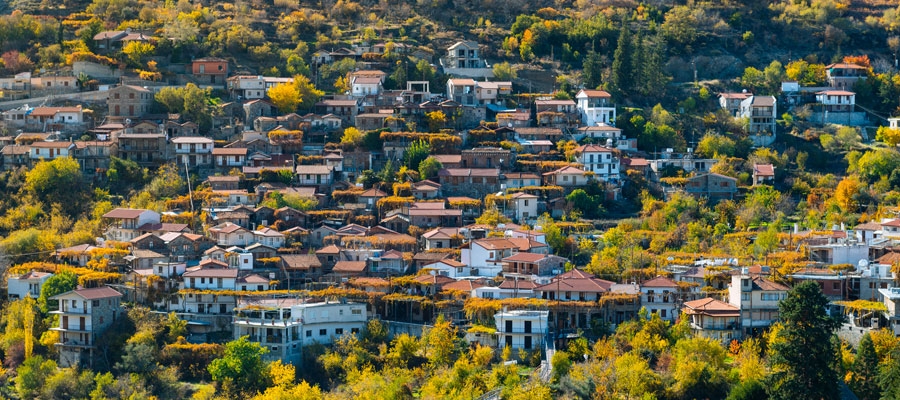
Located in the Pafos (Paphos) region, the pretty little village of Drouseia sits at an altitude of 630 metres in the mountainous area of Laona, and is thus named for the cool breeze that carries from the Akamas Peninsula, coming from the Greek word for ‘cool’ (‘drosera’).

Just 30 km away from Pafos and 10 km away from Polis, the village can be reached following either the B7 route and then the E711, or taking the E709, and then the F708.

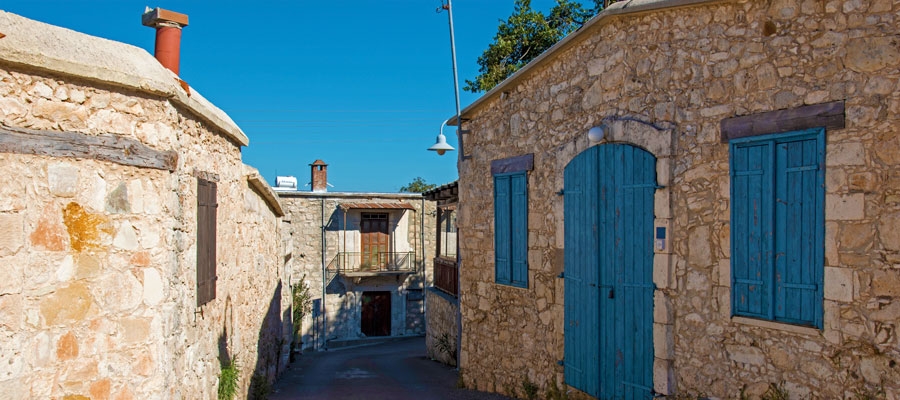
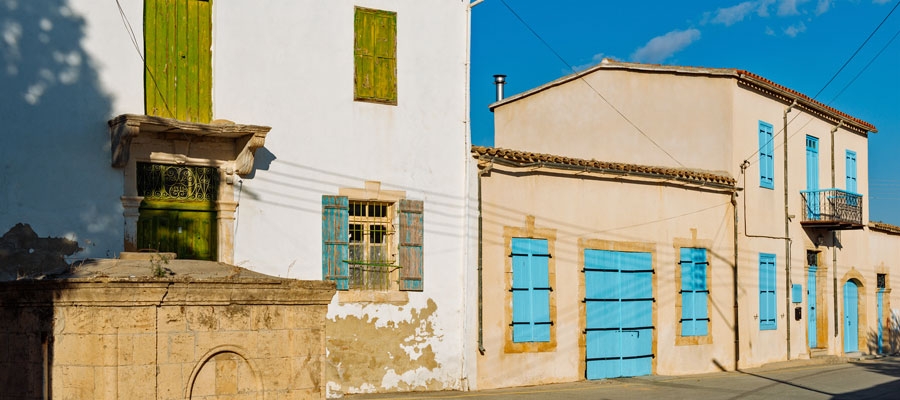
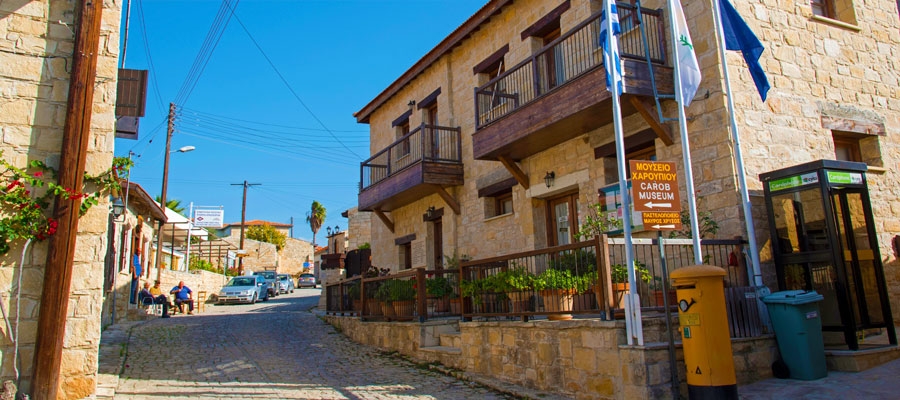
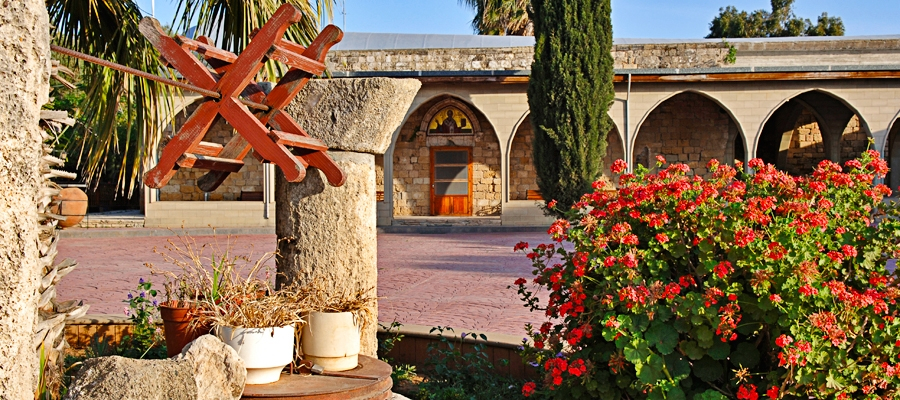
The traditional character of the village is maintained through its stone houses with carved doors and windows, and in its narrow, winding streets that offer stunning views of hillside and coast. The tranquil and traditional environment makes Drouseia perfect for agrotourism, and accommodation is available in many small hotels, as well as the stone houses themselves.

The taverns of the village are also known locally for their excellent Cypriot cuisine, and the warm family welcome they give.

Aside from its pretty views, the village is home to the religiously significant ancient monastery of Agios Georgios Nikoxilitis, which was built in the 15th century, and was rebuilt in 1923 after it was destroyed by a fire.

Athienou village (Larnaka (Larnaca) district)

Located in the Larnaka (Larnaca) region, the village of Athienou is a large community found midway between the city of Lefkosia (Nicosia) (38 km) and the town of Larnaka (33 km), and can be reached by following either the A3 and the B17 route, or the A2 and B2 route.

Athienou has been inhabited since the Neolithic period, and is the continuation of the ancient city-kingdom of Golgoi.

The village is famous for its delicious traditional bread – known locally as ‘Athienitiko’ – and its pastries, as well as its dairy products, which visitors can watch being made.

Other interesting sights include the archaeological site of Athienou-Malloura, the Kallinikeio Municipal Museum (which also exhibits finds from the Malloura site), and several old, restored buildings – including a traditional flour mill.

Athienou’s churches of Panagia Chryseleoussa, Agios Fokas and Agios Georgios are particularly notable for their historically significant icons and frescoes.

Anogyra village (Lemesos (Limassol) district)

Located in the Lemesos (Limassol) district, the quaint village of Anogyra sits at an altitude of 170 metres and just 45 km away from Lemesos town. The village can be reached by following A6 route and then the F607.

Anogyra was once a main carob-grower and is famous for its traditional sweet ‘Pasteli’, which is made from carob syrup, and only produced traditionally in the village.

The history of the village dates back to the Neolithic era, and its name may originate from the plant ‘anagyris’ (which grows in the village), or that the village that exists today constituted the upper (‘ano’) part of the village once known as ‘Gyroi’.

Its interesting sites include the Pastelli museums, the Folk Art Museum, the church of Timios Stavros (Holy Cross), and a winery. The village is also a perfect destination for agrotourism.

The custom of Pasteli making is celebrated annually in September with a Pasteli Festival that features the sweet being made in the traditional way, along with local food and a programme of folkloric entertainment.


Evrychou village

Located in the Lefkosia (Nicosia) district, the village of Evrychou is the agricultural centre of the Solea region. Located about 50 km southwest of Lefkosia, the village can be reached by following the B10, and then the B9 straight to the heart of Solea Valley.

Its verdant landscape is dotted with small streams that run down the slopes towards the Karkotis Valley, which is lined with rockroses, terebinths, fleabanes, and pine trees. Although the village is a major producer of many kinds of fruit, it is most famous for its apples.

Evrychou retains its traditional character with old houses made of local stone, with tiled inclining roofs and wooden balconies. Amongst its village churches, the most notable are those of Agios Georgios and Agia Marina. The old water mills of the village ‘Mill of Styllis’ are also a must-see, and serve as an excellent example of Cypriot folk architecture.

A unique attraction of the village is the Cyprus Railways Museum, which is housed in the old railway station. Original documents, drawings, photos and various objects related to the now-defunct Cyprus railway system are exhibited, along with scale models of the main stations and rolling stock.

Alona village (Lefkosia (Nicosia) District)

Located in the Lefkosia (Nicosia) district, the old village of Alona sits at an altitude of 1.200 metres on the Troodos mountain range, in the picturesque Pitsilia area. Just 53 km away from Lefkosia, the village can be reached by following the E902 route, and then the E903.

The village produces the local spirit ‘Zivania’, and the tradition is celebrated with an annual Festival in November. Visitors can sample and buy Zivania, learn all about its production, and enjoy an entertainment programme, whilst there are also many stalls selling traditional produce.

Interesting sights of the village include two ancient churches; that of Panagia Kardakiotissa – which dates back to the 15th century – and that of Agios Georgios, which houses an exceptional icon of the saint that dates back to 1835. A major celebration takes place annually in the village square in honour of the saint every November 03.

Also, at the village square is the start of a scenic nature trail that unfolds through to orchards of hazelnut and cherry trees. In spring, you will see violets, ferns and even lily pads along the damper areas of the trail, whereas in winter, wild cyclamens dominate the landscape.

The village is naturally beautiful and its leafy scenery provides inspiration for artists, including many greats of modern Cypriot painting.

Sanctuary of Apollon Hylates

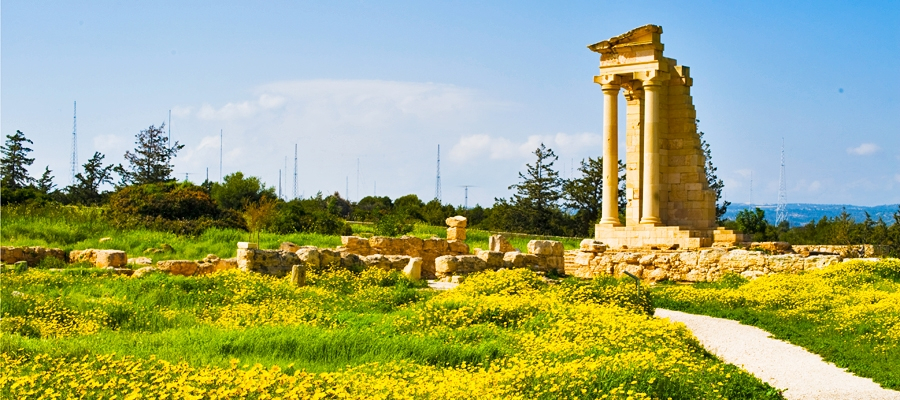
Apollon Hylates, God of the Woodland, was the protector of Kourion and it is believed that he was worshipped at the site from the 8th century BC to the 4th century AD. His sanctuary was an important religious centre and underwent many extensions and alterations in different periods.

Originally, the site consisted of a temple (traces of which survive in the foundations of the present temple), a circular monument, and a formalized Archaic Altar and Precinct. During the Roman period the site was extended with the addition of the south and north buildings, which may have been used for the display of votives or the accommodation of visitors. Terracotta figurines and pottery that were accumulated in the temple from the 5th century BC to the Roman period were buried in the votive pit.

The majority of the monuments – as they can be seen today – belong to the site’s 1st century AD restorations, and consist of Apollo’s temple (which has been partly restored), pilgrim halls, the ‘palaistra’ (where athletes exercised and played games), a bath complex, and a holy precinct.

Region: Lemesos (Limassol)
Address: 3km west of Kourion Archaeological Site [22km west of Lemesos on the road towards Pafos (Paphos)]
Contact No: Tel: +357 99 630 238
Operating Hours: September 16 – April 15, daily: 08.30 – 17:00
April 16 – September 15, daily: 08:30 – 19:30
Operating Period: All year round.
Closed on Christmas Day, New Year’s Day and Easter Sunday (Greek Orthodox).
Entrance Fee: €2,50
For organised groups consisting of more than 10 persons there is a 20% reduction on the entry fees.
The Department of Antiquities can issue special entry cards for all its museums and ancient monuments: One (1) day entry cards – €8,50, three (3) day entry cards – €17,00, seven (7) day entry cards – €25,00.
Website: www.mcw.gov.cy/da
  Opening and closing times as well as entrance fees, are subject to alterations without notice. Visitors are advised to check before visiting.


Kourion Mosaics

Kourion was an important city-kingdom in antiquity and stands as one of the most impressive archaeological sites in Cyprus, where well-preserved mosaics decorate the floors of its stately villas.

The Baths and the House of Eustolios

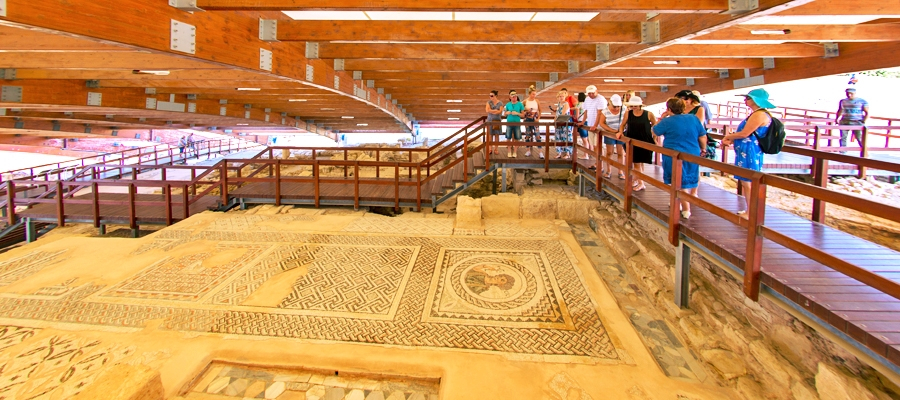
Located east of the theatre is the House of Eustolios, which probably dates to the early 5th century AD, and takes its name from an inscription citing Eustolios as the builder. A mosaic with a welcoming inscription graces the antechamber of the entrance, whilst there are mosaic decorations in three of the porticoes and a bath complex to the north.

The house is believed to have been originally built as a residence and was probably opened to the public after the construction of the baths and the addition of the mosaic floors.

House of Gladiators

One of the most notable villas, which dates back to the second half of the 3rd century AD, is the House of Gladiators. It takes its name from a series of mosaics near its main courtyard representing gladiatorial combats.

The central part of the house was an atrium. Entrance was through a stairway on the northeast corner which opened onto another, smaller atrium joined to the central one by a corridor. The southern part of the building was destroyed, probably due to earthquakes in the 4th century AD. To the east of the corridor is a typical bath complex.

House of Achilles

Consisting of an open courtyard with rooms on two sides and a portico, the 4th century AD House of Achilles takes its name from the mosaic of the legendary Greek hero. The residence was most likely used to receive official guests, whilst the house has other mosaic floors.

Archaeological Site of Kourion – Audio Guide

Region: Lemesos (Limassol)
Address: Kourion, 19km west of Lemesos on the road towards Pafos (Paphos)
Contact No: Tel: +357 25 934 250
Operating Hours: September 16 – April 15, daily: 08.30 – 17:00
April 16 – September 15, daily: 08:30 – 19:30
Operating Period: All year round.
Closed on Christmas Day, New Year’s Day and Easter Sunday (Greek Orthodox).
Entrance Fee: €4,50
For organised groups consisting of more than 10 persons there is a 20% reduction on the entry fees.
The Department of Antiquities can issue special entry cards for all its museums and ancient monuments: One (1) day entry cards – €8,50, three (3) day entry cards – €17,00, seven (7) day entry cards – €25,00.
Disabled Access: Partly accessible.
Website: www.mcw.gov.cy/da
  Opening and closing times as well as entrance fees, are subject to alterations without notice. Visitors are advised to check before visiting.


Kourion Archaeological Site

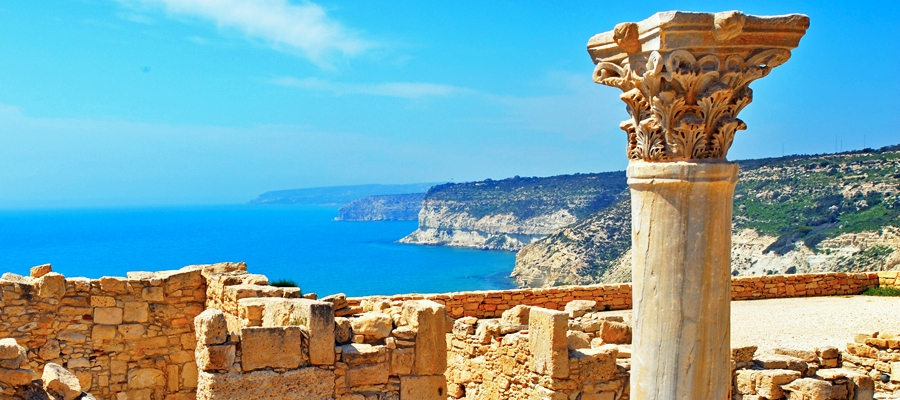
The archaeological remains of Kourion – which was one of the island’s most important city-kingdoms in antiquity – are of the most impressive on the island, and excavations have unearthed many significant finds, which can be viewed at the site.

The city-kingdom was built on the hills of the area, and overlooked and controlled the fertile valley of the river Kouris. According to archaeological finds, evidence suggests that Kourion was associated with the Greek legend of Argos of Peloponnese, and that  its inhabitants believed they were descendents of Argean immigrants. The once-flourishing kingdom was eventually destroyed in a severe earthquake in 365 AD.

The magnificent Greco-Roman theatre – the site’s centrepiece – was built in the 2nd century BC and extended in the 2nd century AD. The theatre has been restored, and is now used for open-air musical and theatrical performances – mainly during the summer months – making it one of the most popular settings for high-calibre cultural events.

East of the theatre are the remains of a prominent building, the ‘House of Eustolios’, which was originally a private villa that was turned into a public recreation centre during the Early Christian period.

Whilst the villa was modest in size, it was well equipped and richly adorned. Its remains consist of four panels of beautiful, 5th century mosaic floors in the central room, and a bathing complex that is located on a higher level, accessed by steps, north of the building. A roof structure allows visitors to enjoy the  site all year round, and explore its remnants.

The baths themselves originally opened off the central room to the north and east, where there were cold baths (frigidarium). Before each is a shallow foot-bath; while on the west, the remains of the hypocausts – which heated the medium room (tepidarium), and the hot room (caldarium) – can be seen. In the latter, the built-in basins for hot baths have survived, as have the firing chambers, where hot air was carried through the hypocausts, travelling up through specially-cut flues, through the walls, and beneath the terracotta tiles of the floor.

Along with the House of Eustolios, there are further impressive mosaic floors in the ‘House of Achilles’ and the ‘House of the Gladiators’, with the villas named after the scenes depicted on the mosaics.

The remains of the Roman Agora are also visible at the site. The structure dates back to the early 3rd century, with additions made later on, during the Early Christian period. The Roman Agora is built on the remains of an earlier public building, which was in use from the end of the 4th century to the end of Hellenistic period.

The Agora of the city is surrounded by porticos with marble columns on both sides, whilst on its northwest side, is an impressive public bath and a small temple, the Nymphaeum, dedicated to the water nymphs.

An early Christian basilica at the site dates back to the 5th century, with separate baptistery on the external northern side.

The Stadium of Kourion  lies 1km to the west, on the right side of the road towards Pafos.

Archaeological Site of Kourion – Audio Guide

Region: Lemesos (Limassol)
Address: Kourion, 19km west of Lemesos on the road towards Pafos (Paphos)
Contact No: Tel: +357 25 934 250
Operating Hours: September 16 – April 15, daily: 08.30 – 17:00
April 16 – September 15, daily: 08:30 – 19:30
Operating Period: All year round.
Closed on Christmas Day, New Year’s Day and Easter Sunday (Greek Orthodox).
Entrance Fee: €4,50
For organised groups consisting of more than 10 persons there is a 20% reduction on the entry fees.
The Department of Antiquities can issue special entry cards for all its museums and ancient monuments: One (1) day entry cards – €8,50, three (3) day entry cards – €17,00, seven (7) day entry cards – €25,00.
Disabled Access: Partly accessible.
Website: www.mcw.gov.cy/da
  Opening and closing times as well as entrance fees, are subject to alterations without notice. Visitors are advised to check before visiting.


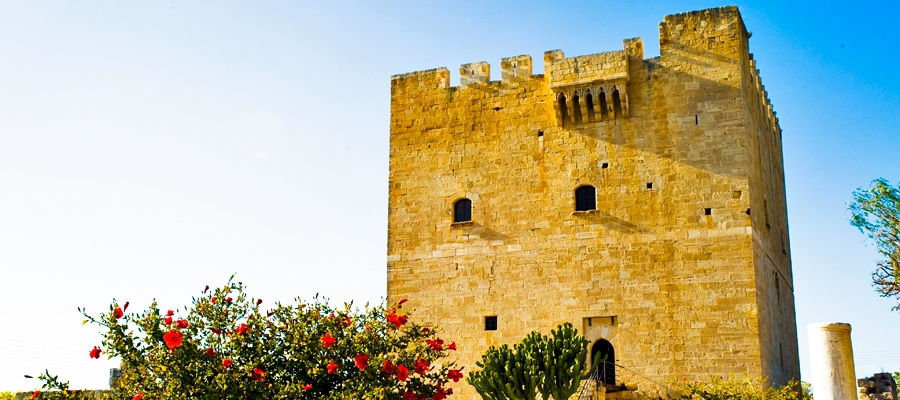
Kolossi Medieval Castle

Serving as a fine example of military architecture, Kolossi castle was originally built in the 13th century, and rebuilt in its present form in the 15th century.

After the fall of Acre in 1291, it served as the Grand Commandery of the Knights of the Order of St. John of Jerusalem, and in the 14th century came under the domain of the Knights Templar. During their stay in Cyprus, the Knights produced and exported a sweet wine, which became known as the ‘vin de Commanderie’. Today, Commandaria wine is one of the island’s traditional wines and one of the oldest named wines in the world, having had the same name for eight centuries.

Next to the castle are the ruins of a 14th century sugar mill.

Kolossi Medieval Castle – Audio Guide 

Region: Lemesos (Limassol)
Address: Kolossi, 14km west of Lemesos on the road towards Pafos (Paphos)
Contact No: Tel: +357 25 934 907
Operating Hours: September 16 – April 15, daily: 08:30 – 17:00
April 16 – September 15, daily: 08:30 – 19:30
Operating Period: All year round.
Closed on Christmas Day, New Year’s Day and Easter Sunday (Greek Orthodox).
Entrance Fee: €2,50
For organised groups consisting of more than 10 persons there is a 20% reduction on the entry fees.
The Department of Antiquities can issue special entry cards for all its museums and ancient monuments: One (1) day entry cards – €8,50, three (3) day entry cards – €17,00, seven (7) day entry cards – €25,00.
Website: www.mcw.gov.cy/da
  Opening and closing times as well as entrance fees, are subject to alterations without notice. Visitors are advised to check before visiting.


Agios Nikolaos ton Gaton Convent – St. Nicholas of the Cats Convent

Located on Cape Gata, 15km west of Lemesos (Limassol) and south-east of Akrotiri Salt Lake, the monastery of Agios Nikolaos ton Gaton (St. Nicholas of the Cats) is possibly the oldest monastery in Cyprus. The monastery chapel dates back to the 14th century and was abandoned in the 16th century. It was reinstated by Orthodox nuns in 1983.

According to tradition, the monastery was founded by St. Helena, the mother of Emperor Constantine the Great, who left a piece of wood from the Holy Cross at the site. During that period, Cyprus experienced a severe drought, forcing many people to flee the cape and the area became infested by snakes.

Constantine the Great sent a commander called Kalokeros to Cyprus to release thousands of cats in order to rid the area of the snakes, and thus the cape was saved and came to be known as Cape Gata (Cape Cat).

Whilst the monastery has just a handful of nuns now, there are many cats, which are said to be the descendants of those who rid the area of snakes.

Region: Lemesos
Address: Cape Gata, 15km west of Lemesos.
GPS coordinates: Lat: 34.599653 Lon: 32.987017
Contact No: Tel: +357 25 952 621
Operating Hours*: Daily: 07:00 – 12:00 / 14:00 – 17:00
Operating Period: All year round.
Entrance Fee: Free
  Opening and closing times as well as entrance fees, are subject to alterations without notice. Visitors are advised to check before visiting.

* The monastery’s church is termporaily closed due to technical issues.  The rest of the monastery is open for visiting.