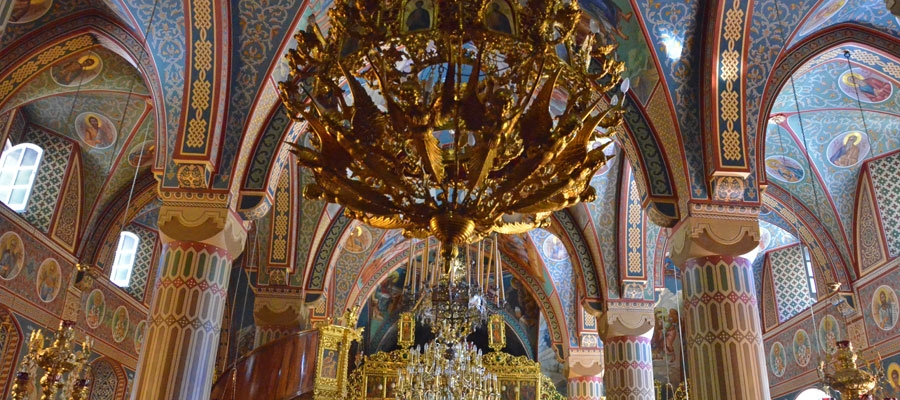
The Byzantine Art in Cyprus – Reminiscence of a glorious past (A)

Byzantine Art is found everywhere in Cyprus, and the especially good condition of these samples of art (mainly the frescoes) make Cyprus a centre of Byzantine Art study. The first Christian centuries and their art reached our days through the mosaics of three churches – two of which are in the Turkish occupied part of the island.

The basic West route is: Lefkosia (Nicosia) – Peristerona – Kalopanagiotis – Monastery of Panagia tou Kykkou – Panagia (Chrysorogiatissa) – Τala – Empa – Κato Pafos (Paphos) – Geroskipou – Τimi – Kouklia – Κourio – Κolossi – Lemesos (Limassol) – Pyrga – Pera Chorio and Lefkosia.

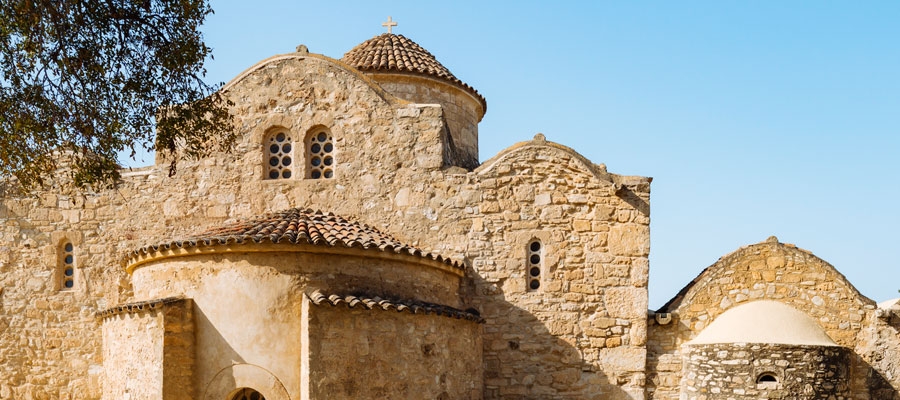
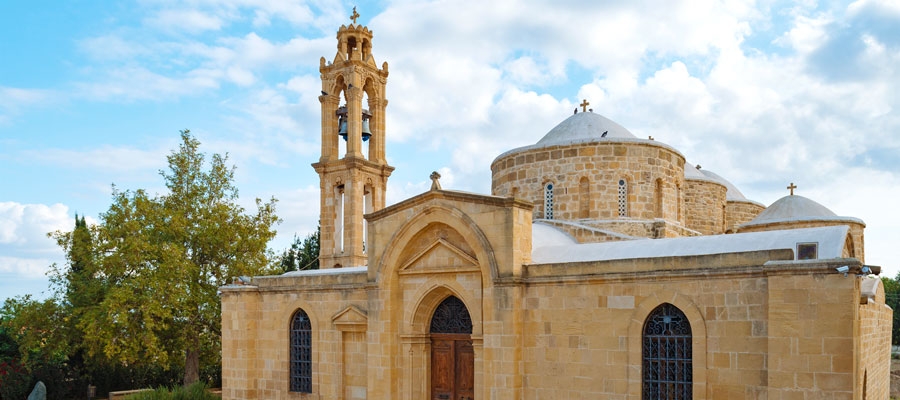
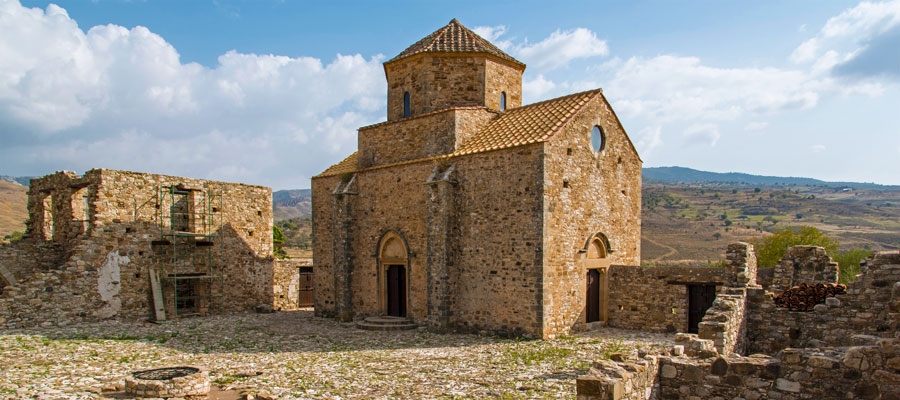
It is impressive that despite the fact that Cyprus was conquered by many peoples, not only did it preserve the monuments, but also continued to create more with only some influences from the conquerors. The Byzantine art was present on the island from 726-843 AD, although due to the iconoclasm, the most significant monument, which has been salvaged, is the ornament of the eastern dome of the five-domed church in Geroskipou. From the 10th century and up to this day, the Byzantine art both flourished and survived. All proposed monuments of the route are considered to be significant. In Peristerona you will also visit the other five-domed church (there are only two).

Monuments: the Church of Agion Varnava and Ilariona in Peristerona, Monastery of Agios Ioannis tou Lampadisti in Kalopanagiotis, Monastery of Chrysorogiatissa in Pano Panagia, Monastery of Agios Neophytos in Tala, Church of Panagia Chryseleousa in Empa, Church of Agia Kyriaki in Pafos, Church of Agia Paraskevi in Geroskipou, Church of Agia Sofia in Timi, Church of Panagia Katholiki in Kouklia, Church of Agios Efstathios in Kolossi, Monastery of Timios Stavros in Stavrovouni, Royal Chapel in Pyrga and Churches of Agios Georgios and Agios Dimitrianos in Dali.

Total route length: 280 km.
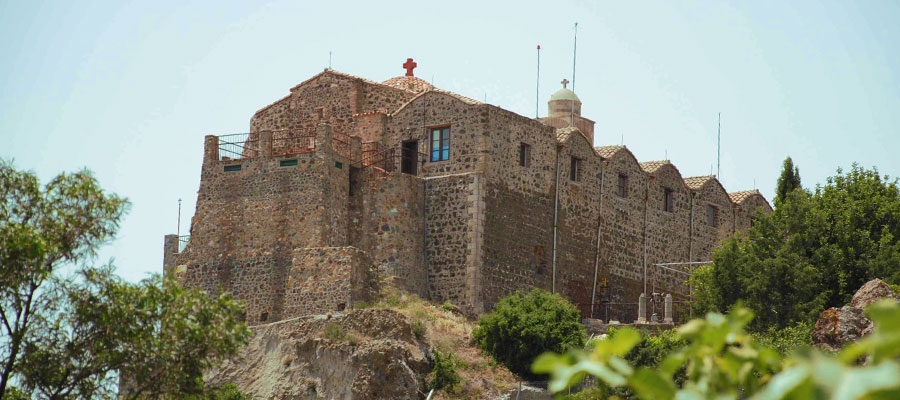
Worship of the Holy Cross in Cyprus Religious Route

Τhe fact that Cyprus is at the centre of Eastern Mediterranean, very close to the Middle East and Asia Minor, played a significant role as a stop on the way to and from the Holy Land. Tradition has it that Agia Eleni, the Mother of Constantine the Great, when transferring the Holy Cross from Palestine stopped in Cyprus, and followed a course along which churches dedicated to the Holy Cross were built.

Μoni Stavrovouniou – Tochni – Lefkara – Pelendri – Kouka – Omodos – Anogyra – Tsada.

The route starts from Moni Stavrovouniou, which has, however, the rule of ‘avato’ meaning that it is inaccessible to women. The church of Timios Stavros in Tochni is the only church built on a bridge, the church of Pelendri with the same name has magnificent frescoes of the 12th, 13th, 14th and 15th centuries. In Omodos, the visitor will see a piece of the rope used to tie Jesus on the cross.

Monuments: Monastery of Timios Stavros in Stavrovouni, Churches of Timios Stavros in Tochni, Lefkara, Pelendri, Kouka, Monasteries of Timios Stavros in Anogyra and Tsada and Monastery of Timios Stavros Minthis in Tsada.

Τhe total route length is not fixed.

Byzantine Route: 10 Painted Churches of Troodos Religious Route

Discover the island’s deep religious roots and its significance in the history of Christianity as you follow a path that takes in sacred churches and monasteries, all revered and priceless in their evidence of faith, and humbling to behold.

A genuine Byzantine treasure trove is nestled in the mountain range of Troodos, and reveals the island’s religious heritage through Holy buildings that have remained largely unchanged for centuries. With the island situated at crucial crossroads of the Eastern Mediterranean, the land is characterised by one of the greatest concentrations of churches and grandiose monasteries of the former Byzantine Empire.

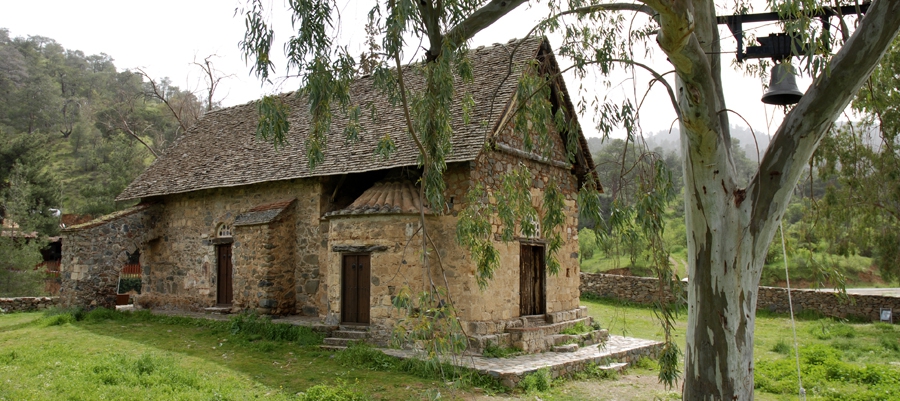
With 10 of these beautifully painted churches included on the UNESCO World Heritage List, days out can be spent driving through the areas of Pitsilia, Solea and Marathasa to uncover the stories of their origins, which are as fascinating as the structures themselves. Unique steep-pitched timber roofs shelter chunky wooden doors that open up onto an array of vivid icons and frescos depicting saints, Apostles and stories from the Bible in all their colourful glory.

The sequence of churches dedicated to the Holy Cross is particularly significant. They pay tribute to Agia Eleni, Mother of Constantine the Great, who passed through Cyprus when returning from the Holy Land and was integral in paving the path of Christianity on the island.

PITSILIA
1.   Stavros tou Agiasmati
2.   Metamorfosis tou Sotiros
3.   Timios Stavros
4.   Panagia tou Araka

SOLEA
5.   Agios Nikolaos tis Stegis
6.   Panagia Podithou
7.   Panagia Asinou

MARATHASA
8.   Agios Ioannis Lambadistis
9.   Panagia tou Moutoulla
10. Archangelos Michael


Cyprus of Apostles Pavlos and Varnavas Religious Route

This route follows the steps of Apostles Pavlos and Varnavas starting as follows:

Larnaka (Larnaca) – Kiti – Amathounta – Kourio – Pafos (Paphos) – Agios  Georgios  Pegeias – Salamina – Pegeia then Larnaka, ­ Pegeia, Stavrovouni – Omodos and Larnaka – Tsada.

This route is related to a significant part of the religious history of Cyprus since the passage of these two apostles from Cyprus formed one of the most significant historical facts of the island.

The route gives visitors the opportunity to visit significant churches such as that of Agios Lazaros in Larnaka, Panagia Aggeloktisti in Kiti, old­-Christian basilicas in Amathounta, Kourion and Pafos as well as the great stele where, according to tradition, Apostolos Pavlos was tied and whipped 40 times minus one. At the same time, in the course of this route, visitors will have the opportunity to also visit many ancient buildings which were connected to the Apostles.

Monuments: Monastery of Agios Lazaros in Larnaka, Church of Aggeloktisti in Kiti, Old–Christian basilicas in Amathounta, Kourio, Pafos and Pegeia.

This tour has different parts, therefore its total length varies.

The Heart of Religion

An ethereal and blessed land, Cyprus’s religious roots are both sacred and humbling, as evidenced by the impressive number of monuments of religious devotion that tell the story of the island’s path to Christianity and its deep faith, from inception to the present day.

It is no coincidence that Cyprus ­ the island of beauty, where according to Greek myth the goddess Aphrodite was born ­ was chosen as the first place to receive the great message of the new faith on the advent of Christianity. The island became the gateway through which the message of the Gospels spread throughout the length and breadth of the Ecumene. The first mission of the apostles Paul and Barnabas (the latter of Cypriot descent) occurred here in accordance with the will and wish of God: “…being sent forth by the Holy Ghost, departed unto Seleucia; and from thence they sailed to Cyprus” (Acts 12, 4).

This divine ‘choice’ – at the same time an ornament and endowment for the country – is expressed through the many monuments dedicated to prayer and devotion, but also through the plethora of holy men connected with the saintly island, thus endowing it with the expression ‘Cyprus the island of saints’.

Discover the churches, chapels and monasteries of the island, and immerse yourself in their journey of faith, history and culture. Through their unique structures; the biblical stories told in ancient icons and frescos; rich Ecclesiastical museums, and a Byzantine treasure trove of 10 painted mountain churches ­ so religiously priceless that they are part of the UNESCO World Heritage List – you cannot fail to feel uplifted, and for your heart to fill with enlightenment, serenity and devotion.

To access the full brochure detailing all the religious routes, click here.

Cyprus the island of Saints (East)

This general route covers the entire eastern part of the island, starting and ending in Lefkosia.

Route: Lefkosia (Nicosia) – Pera Chorio – Kellia – Sotira – Paralimni – Agia Napa – Larnaka (Larnaca) – Dromolaxia – Kisivili – Klavdia – Pyrga – Lefkosia.

On this tour, visitors have the opportunity to view not only churches and monasteries of the Byzantine period and later, but also churches which under turkish rule were converted into mosques.

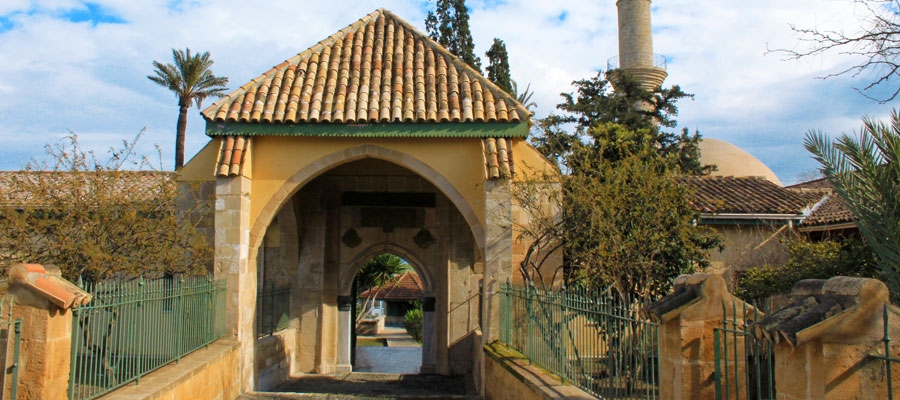
An interesting and significant place to visit is the Um Haram Mosque, a significant Muslim monument built after the death of Um Haram, who, as tradition has it, was a relative of Muhammed himself.

In Kiti, the church of Panagia tis Aggeloktistis has a mosaic of the 6th century AD. The Monastery of Stavrovouni is a men’s monastery which, according to tradition, was established by Agia Eleni, the mother of Constantine the Great and there lies a piece from the Holy Cross.

Μonuments: Church of Agion Apostolon, Lefkosia – Church of Agios Antonios, Kellia – Churches of Transfiguration (Metamorphoseos) of Agios Mamas, Agios Georgios Chortakion, Panagia Chortakion, Sotira – Churches of Panagia-Agia Anna, and Agia Marina, Paralimni – Monastery of Agia Napa, Agia Napa – Church of Agios Lazaros, Larnaka – Um Haram Mosque or Hala Sultan Mosque, Dromolaxia – Church of Panagia Aggeloktisti, Kiti – Church of Panagia, Kisivili – Church / Mosque Agia Aikaterini, Klavdia – Gothic Church of Panagia Stazousa, Royal Chapel and Agia Marina – Monastery of Stavrovouni, Pyrga.

Cyprus the island of Saints (West)

This route is general, which means that it is neither based on cities nor on districts. Heading west, visitors will visit a large number of significant monuments which clearly demonstrate the ecclesiastical wealth of the island.

Route: Lefkosia (Nicosia) – Peristerona – Kalopanagiotis – Κampos – Panagia – Τala – Empa – Pafos (Paphos) / Ktima – Κato Pafos – Geroskipou – Κouklia – Κolossi – Lemesos (Limassol) – Pyrga – Pera Chorio – Lefkosia.

A walk in the greater region will help visitors view various samples of ecclesiastical art, starting from Peristerona and the five-domed church of Agion Varnava and Ilariona. Heading towards Kalopanagiotis, visitors will come across the Monastery of Ioannis o Lampadistis, which is of unique beauty, and where three churches coexist in a single area. Kykkos Monastery is offered for the worship of the icon of Virgin Mary, which, as tradition has it, is a work of Apostolos Loukas.

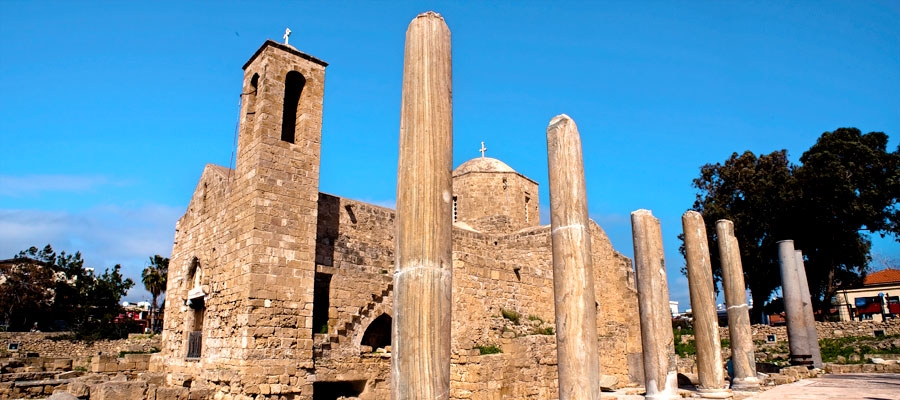
The course continues towards Pafos and the Monastery of Panagia tis Chrysorrogiatissas, the Egkleistra (enclosure carved out of the mountain) of Agios Neophytos, and the church of Panagia tis Chryseleousas in Empa. When arriving at Pafos, visitors will be able to visit the church of Agia Sofia, which was converted into a mosque under Frankish rule, and in Kato Pafos, the Basilica of Chrysopolitissa – one of the biggest basilicas in Cyprus.

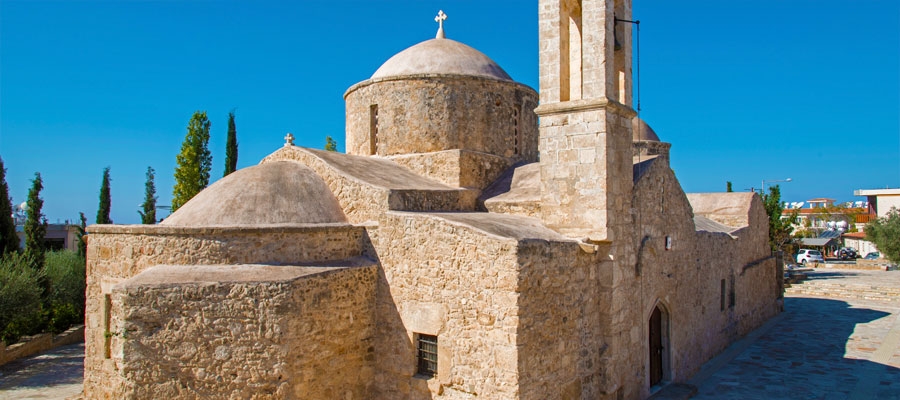
The second and last five-domed church of Cyprus is located in Geroskipou, and is dedicated to Agia Paraskevi, while in Palaipafos – in the village of Kouklia – the church of Panagia tis Katholikis is located very near the ruins of the Temple of Aphrodite, the worship of whom was replaced by that of Virgin Mary.

On the way back to Lefkosia, the route passes from the small church of Agios Efstathios and the impressive Monastery of Stavrovouni, with the strict ritual of Mount Athos, which – according to tradition – is a creation of Agia Eleni.

The wonderfully frescoed church of Agion Apostolon in Pera Chorio, which is the last stop of this route, is an interesting place to visit.

Μonuments: Church of Agion Varnava and Ilariona, Peristerona – Μonastery of Ioannis o Lampadistis, Kalopanagiotis – Μonastery of Panagia tou Kykkou, Κampos – Monastery of Panagia Chrysorrogiatissa, Panagia – Μonastery and Egkleistra of Agios Neophytos, Τala – Church of Panagia Chryseleousa, Empa – Mosque / Church of Agia Sofia, Pafos / Ktima – Palaiochristian Basilica of Chrysopolitissa, Kato Pafos – Church of Agia Kyriaki, Kato Pafos – Agia Paraskevi, Geroskipou – Church of Panagia Katholikis, Kouklia – Church of Agios Efstathios, Kolossi – Μonastery of Stavrovouni, Pyrga – Royal Chapel, Pyrga – Church of Agion Apostolon, Pera Chorio.


Pafos – The cradle of Christianity in Cyprus C

Like in the case of the other routes of Pafos (Paphos), this route also starts from the Palaiochristian Basilica of Chrysopolitissa in Kato Pafos, the church that is connected to Apostolos Pavlos, since in its yard lies the column on which he was tied and whipped.

The Church of Agia Kyriaki, also in Kato Pafos, dates back to the 15th century. Τhe Βyzantine Museum of the Holy Bishopric of Pafos is considered to be one of the richest museums in terms of significant exhibits, and its collection can easily be compared to that of the Museum of the Archbishop Makarios III Foundation in Lefkosia.

The next stop is at the Bishopric and at the Church of Agios Ilarionas, with only the south aisle of the original building salvaged today. The Church of Panagia tis Eleousas in Nata village is a church of large dimensions, which has been under reconstruction in the past years.

The Μonastery of Panagia tou Sinti, in Pentalia is assumed to have been built in 1542. While originally it was autonomous, it later became, under Turkish rule, a glebe of Kykkos Monastery.

The last church of this route is the Church of Agios Nikolaos in Galataria with beautiful frescoes of the first half of the 16th century.

Total route length: 85 km.

Pafos – The cradle of Christianity in Cyprus (B)

The second ecclesiastical local route of Pafos (Paphos) is longer and starts from Kato Pafos and the Palaiochristian Basilica of Chrysopolitissa, the big church that is directly connected to Apostolos Pavlos, since the column on which he was tied and whipped can be found there.

The Church of Agia Kyriaki, also located in Kato Pafos, is built on the ruins of the north aisle of the Basilica of Chrysopolitissa and dates back to the 15th century. The Holy Bishopric of Pafos hosts the Βyzantine Museum with icons dating back to the 8th, 9th, and up until the 19th centuries.

The next stop is at the Church of Panagia tis Chryselaiousis in Empa, one of the most significant Byzantine monuments of Cyprus. In Tala, the route passes from the Church of Agia Aikaterini, a single-aisled church with a dome, which possibly in its initial form used to be arched. In the same village there is the Μonastery of Agios Neofytos, a Cypriot hermit from Lefkara who left behind a significant work.

The Church of Agia Aikaterini, in Kritou Terra, dates back to the 15th century, and is quite interesting as a church in terms of its architecture. Just before the end of the route, visitors pass from the Church of Agios Andronikos in Polis Chrysochous, which is located on a hill with a wonderful view. The last stop is at the Church of Agios Minas in Neo Chorio at the edges of Akamas peninsula.

Total route length: 85 km.

Pafos – The cradle of Christianity in Cyprus (A)

The Pafos (Paphos) area is full of ecclesiastical monuments, with the first on the list being the Palaiochristian Basilica of Chrysopolitissa in Kato Pafos.

This church has yet another reason to constitute an excellent place of interest, thanks to its relation to Apostolos Pavlos; it still houses the column on which, according to tradition, the Apostle was tied and whipped.

In Peristerona, there is the Ecclesiastical Museum, which is hosted by the Archbishopric of Arsinoes, and houses icons and canonicals, as well as other objects from the villages of the area. The Church of Agia Kyriaki was built on the south aisle of the ruined Palaiochristian Basilica of Chrysopolitissa.

In the Holy Bishopric of Pafos there is the Βyzantine Museum whose collection can easily be compared to that of the Archbishop Makarios III Foundation. In Geroskipou, there is the second church of Cyprus with five domes – as well as significant frescoes – which is dedicated to Αgia Paraskevi and, in Acheleia, we find the Church of Agios Theodosios with significant frescoes that date back to the 13th century, one of which depicts the Apostles Petros and Pavlos, along with a portrait of the donors.

The route then passes from the churches of Panagia tis Katholikis in Kouklia, the Hermitage ‘Palaio Egkleistro’ in Souskiou, and ends in Pano Archimandrita and the Hermitage of Agion Pateron.

Total route length: 53 km.