Theatre of Kourion

Kourion was an important city-kingdom in antiquity and stands as one of the most impressive archaeological sites in Cyprus. Its theatre – located on the southern end of the abrupt hill on which the city is built – is of great significance.

The theatre was constructed at the end of the 2nd century BC, but took its current dimensions during the 2nd century AD. Consisting of a semicircular orchestra that is surrounded by seats of the cavea (subterranean cells), it was enclosed to the south by the building of the scaenae frons (façade) that must have reached the height of the cavea, though today only the foundations remain.

On either side of the stage were two vaulted parodoi (corridors) from where the audience entered the theatre. The theatre could seat up to 3,500 spectators.

In the beginning of the 3rd century AD modifications were made, and the theatre was transformed into an arena that was used for fights with wild animals. At the end of the 3rd century AD, the arena spectacles declined and the theatre reassumed its proper purpose.

Excavations began in 1933, conducted by the University of Pennsylvania, whilst many other University Archaeological Missions – as well as the Cyprus Department of Antiquities – continued the excavations.

Today, it is the scene of many cultural activities and theatrical performances, especially during the summer season.

Archaeological Site of Kourion – Audio Guide

Region: Lemesos (Limassol)
Address: Kourion, 19km west of Lemesos on the road towards Pafos (Paphos)
Contact No: Tel: +357 25 934 250
Operating Hours: September 16 – April 15, daily: 08.30 – 17:00
April 16 – September 15, daily: 08:30 – 19:30
Operating Period: All year round.
Closed on Christmas Day, New Year’s Day and Easter Sunday (Greek Orthodox).
Entrance Fee: €4,50
For organised groups consisting of more than 10 persons there is a 20% reduction on the entry fees.
The Department of Antiquities can issue special entry cards for all its museums and ancient monuments: One (1) day entry cards – €8,50, three (3) day entry cards – €17,00, seven (7) day entry cards – €25,00.
Disabled Access: Partly accessible.
Website: www.mcw.gov.cy/da
  Opening and closing times as well as entrance fees, are subject to alterations without notice. Visitors are advised to check before visiting.
 

Agia Paraskevi Byzantine Church – Geroskipou village

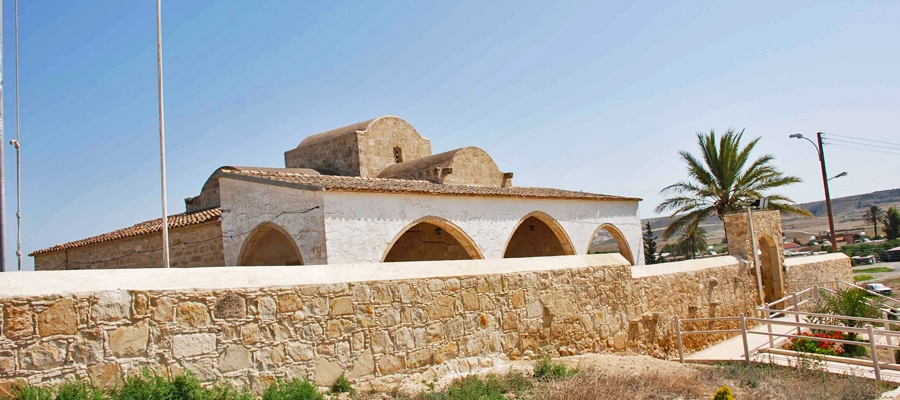
Located in the village of Geroskipou, this interesting 9th century Byzantine church is a five-domed, three-aisled, barrel-vaulted basilica, making it one of only two such churches on the whole island, and a significant example of Byzantine architecture.

The beautiful interior wall paintings date to various periods, from the 8th-15th centuries. A monochrome reddish cross, painted directly on the stone, is of an earlier type and was revealed during restoration works. This type of cross is usually dated to the Early Christian period, up until the 8th-9th century.

Apart from its frescoes, the church also contains a rather significant portable, double-sided icon, dating to the 15th century. The Virgin Mary is depicted on one side, and the scene of the Crucifixion on the other.

According to tradition, the name Geroskipou (‘sacred garden’ in Greek) derives from the sacred gardens of the Goddess Aphrodite, which were located to the south of the village towards the sea, at the point where the ancient pilgrims began their journey to the sanctuary of Palaipafos (old Pafos). As such, the church may stand on the ruins of an ancient temple dedicated to Aphrodite, although it could also originally have been dedicated to Timios Stavros (the Holy Cross). Today, it is dedicated to the Christian martyr Agia Paraskevi.

Region: Pafos (Paphos)
Address: Geroskipou village, 3km east of Pafos
GPS coordinates: Lat: 34.759486 Lon: 32.452944
Contact No: Tel: +357 26 821 000
Operating Hours: Monday – Saturday: 08:30 – 13:00 / 14:00 – 16:30
Sunday visits can be arranged upon request.
Operating Period: All year round.
Entrance Fee: Free
Website: www.mcw.gov.cy/da
  Opening and closing times as well as entrance fees, are subject to alterations without notice. Visitors are advised to check before visiting.
 

Agios Georgios Pegeia Archaeological Site

The archaeological site of Agios Georgios at the Pafos (Paphos) village of Pegeia is a famous place of pilgrimage for the region. Excavations that began in the 1950’s uncovered significant evidence of an Early Christian settlement.

The excavations unearthed three Early Christian Basilicas and a bath from the 6th century, whilst later excavations (in the nineties) revealed an extensive unwalled settlement that occupied the neck and the south slope of the cape in the Roman and early Christian periods.

The settlement flourished under Justinian I (527 – 565 AD), and its advantageous position suggests that it was probably a port of call for ships transporting grain from Egypt to Constantinople.

The necropolis lies at the brow of the cliff with tombs carved into the rock. Located at the centre of the settlement – on the neck of the cape – is the large three-aisled ‘Basilica A’ with a baptistery adjacent on its west side. A smaller three-aisled basilica with a transept is annexed to the north side of the baptistery.

The three-aisled ‘Basilica B’ lies at the foot of the southern slope of the cape, whilst the remains of the small three-aisled ‘Basilica C’ lie to the northeast of the settlement, with adjacent structures along the north side of a sacristy, oil press, well, guest-house, and courtyard.

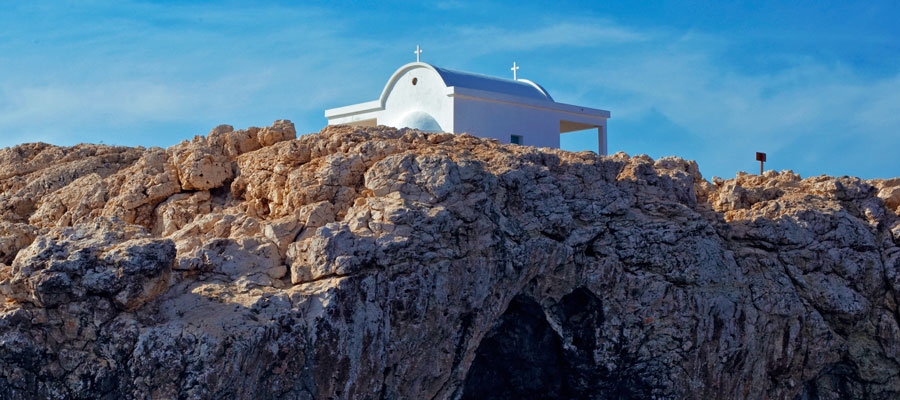
The place of pilgrimage of Agios Georgios is located between the site of the basilicas and the necropolis. There is also a small chapel founded in the late 13th – early 14th century also named after Agios Georgios. The stone built church of Agios Georgios was built more recently.

Region: Pafos
Address: Pegeia village, 11km north of Pafos
Contact No: Tel: +357 26 812 301
Operating Hours: April 16 – September 15, daily: 08:30 – 16:00
September 16 – April 15, daily: 09:30 – 17:00
Operating Period: All year round.
Closed on Public Holidays.
Entrance Fee: €2,50
For organised groups consisting of more than 10 persons there is a 20% reduction on the entry fees.
The Department of Antiquities can issue special entry cards for all its museums and ancient monuments: One (1) day entry cards – €8,50, three (3) day entry cards – €17,00, seven (7) day entry cards – €25,00.
Disabled Access: Partly accessible.
Website: http://www.mcw.gov.cy/mcw/da 
  Opening and closing times as well as entrance fees, are subject to alterations without notice. Visitors are advised to check before visiting.
 

Agios Neophytos Monastery

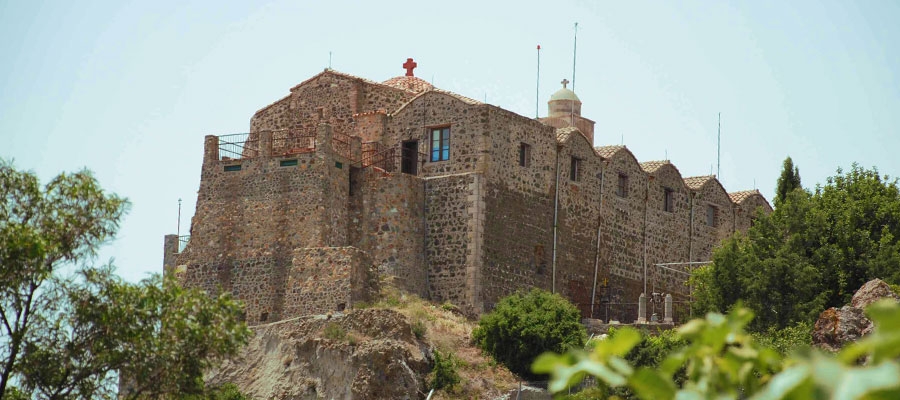
Located about 9km north of Pafos (Paphos), the monastery of Agios Neophytos was founded by the Cypriot recluse and writer Neophytos in the second half of the 12th century, in what used to be a secluded location at the head of the picturesque valley.

The hermit carved a cave out of the mountains called the ‘Enkleistra’, which is covered with some of the finest examples of Byzantine frescoes that date back from the 12th to the  15th centuries. The monastery has a noteworthy ecclesiastical museum and its later church also contains some of the finest Post-Byzantine icons dating to the 16th century.

Monastery of Agios Neophytos – Audio Guide 

Region: Pafos
Address: Near Tala village, 9km north of Pafos.
GPS coordinates: Lat: 34.846749 Lon: 32.445679
Contact No: Tel: +357 26 652 481, Fax: +357 26 653 709
Operating Hours: Museum and Enkleistra:
April – October, daily: 09:00 – 13:00 / 14:00 – 18:00
November – March, daily: 09:00 – 16:00
Operating Period: Museum and Enkleistra:
All year round.
Closed on Christmas Day, New Year’s Day, Green Monday, Easter Sunday (Greek Orthodox) and August 15.
Entrance Fee: Museum and Enkleistra: €2,00
Website: www.stneophytos.org.cy
  Opening and closing times as well as entrance fees, are subject to alterations without notice. Visitors are advised to check before visiting.
 

Baths of Aphrodite

The natural grotto of the Baths of Aphrodite, and its botanical garden, can be found past the fishing harbour of Latsi, and towards the tip of the Akamas Peninsula.

Shaded by an old fig tree, amidst lush greenery, legend tells that the Ancient Greek Goddess Aphrodite used to bathe in the waters. According to Greek mythology, Aphrodite met her lover Adonis at this beautiful spot when he stopped for a drink whilst hunting, and fell in love with her the moment when he drank the water.

The site is linked to the Aphrodite Cultural Route.

Baths of Aphrodite – Audio Guide 

GPS coordinates: Lat: 35.056078 Lon: 32.346242

Chrysorrogiatissa Monastery

Set in beautiful natural surroundings, the Monastery of Chrysorrogiatissa is dedicated to ‘Our Lady of the Golden Pomegranate’ and was established in 1152 by monk Ignatios.

Legend tells that the monk found a miraculous icon of the Virgin Mary off the shore of Pafos (Paphos). The icon had been thrown into the sea in Asia Minor during the iconoclastic period and drifted to Pafos on the waves.

The present structure – a single-aisle church built on the foundations of an older one – dates to 1770. Fine frescoes are found above the three entrances, whilst a gold and silver-plated icon of Christ and the Virgin Mary in the monastery is believed to have been painted by Apostle Luke the Evangelist. The Icons and Utensil Treasury of the monastery is also home to a collection of important icons, religious objects and other artefacts.

The occasion of the Dormition of the Mother of God is celebrated at the monastery every August 15 with a grand religious ceremony, whilst the monastery’s old winery produces some of the best vintage wines on the island.

Region: Pafos
Address: 37km northeast of Pafos
GPS coordinates: Lat: 34.910043 Lon: 32.618889
Contact No: Tel: +357 26 722 457
Operating Hours: May – August: Daily: 09:30 – 12:30 / 13:30 – 18:30
September – April: Daily: 10:00 – 12:30 / 13:30 – 16:00
Icons and Utensil Treasury open only upon request.
Operating Period: All year round.
Icons and Utensil Treasury: Closed on Public Holidays.
Entrance Fee: Free (donations accepted).
  Opening and closing times as well as entrance fees, are subject to alterations without notice. Visitors are advised to check before visiting.
 

Lempa Prehistoric Settlement

Excavations in the village of Lempa, 4km north of Pafos (Paphos), have brought to light an important settlement of the Chalcolithic Age (3900-2500 BC). Replicas of five houses from this era have been reconstructed using the same materials and building methods as used in Chalcolithic times.

The site links with the Aphrodite Cultural Route.


Maa – Palaeokastro Archaeological Site and Museum

Located close to Coral Bay resort, the settlement of Maa-Paleokastro is where the first ancient (Mycenaean) Greeks settled in 1200 BC after emigrating to the island following the fall of the Mycenaean Kingdoms in mainland Greece. As such, it is a very important site for Cyprus – as this is where the Hellenisation of the island started – and offers great insight on the end of the Late Bronze Age on the island.

Its name of ‘Paleokastro’ (‘old castle’ in Greek) comes from its imposing defensive walls that were always exposed. The fortifications of the settlement consist of two separate Cyclopean-style walls; the first wall protected the settlement from the land, and the second offered protection from the sea.

The little museum with its unusual architecture is the work of the Italian architect-conservator and professor Andrea Bruno. The Museum depicts the colonisation of Cyprus by the Mycenaean Greeks.

Region: Pafos (Paphos)
Address: Coral Bay, 9km northwest of Pafos
GPS coordinates: Lat: 34.85611 Lon: 32.36685
Operating Hours: April 16 – September 15, Monday – Friday: 09:30 – 17:00
September 16 – April 15, Monday – Friday: 08:30 – 16:00
Closed on weekend.
Operating Period: All year round.
Closed on Public Holidays.
Entrance Fee: €2,50
For organised groups consisting of more than 10 persons there is a 20% reduction on the entry fees.
The Department of Antiquities can issue special entry cards for all its museums and ancient monuments: One (1) day entry cards – €8,50, three (3) day entry cards – €17,00, seven (7) day entry cards – €25,00.
Website: www.mcw.gov.cy/da
  Opening and closing times as well as entrance fees, are subject to alterations without notice. Visitors are advised to check before visiting.
 

Palaipafos – Kouklia Archaeological Site

The archaeological site of Palaipafos (‘old Pafos’ in Greek) is located in Kouklia Village and was one of the most important city-kingdoms of Cyprus, as well as the first Cypriot site to be included in the World Heritage List of UNESCO in 1980.

There are two versions of how Palaipafos was founded; one story tells that Agapenor, the King of Tegea (Peloponesus), founded the city-kingdom on his way back from the Trojan War. A second legend tells that Kinyras, the local legendary king (12th century) was the founder and first High Priest of The Sanctuary of Aphrodite, which is one of the most significant monuments at the site and the most famous of the Goddess’ sanctuaries. Its ancient remains date back to the 12th century BC, whilst it remained a place of worship until the 3rd – 4th centuries AD.

The other significant monuments of Palaipafos are: The House of Leda; the northeast gate of the defensive wall; the city wall and the Palace of Hadji Abdulla; the Church of Panagia Katholiki; the Lusignan Manor House; the cemeteries and the Lusignan sugar-cane refinery in the coastal plain.

The museum, housed in a Lusignan Manor, exhibits many interesting finds from the area and portrays how the Cult of the Goddess of Fertility developed into the Cult of Aphrodite, whilst the sugar-cane refinery is also open to visitors.

The site is linked to the Aphrodite Cultural Route.

Kouklia Palaipafos – Audio Guide 

Region: Pafos (Paphos)
Address: Kouklia village, 14km east of Pafos
Contact No: Tel: +357 26 432 155
Operating Hours: Tuesday-Sunday : 08:30 – 17.00
Closed on Monday
Operating Period: All year round.
Closed on Christmas Day, New Year’s Day and Easter Sunday (Greek Orthodox).
Entrance Fee: €4,50
For organisedgroups consisting of more than 10 persons there is a 20% reduction on the entry fees.
The Department of Antiquities can issue special entry cards for all its museums and ancient monuments: One (1) day entry cards – €8,50, three (3) day entry cards – €17,00, seven (7) day entry cards – €25,00.
Website: www.mcw.gov.cy/da
  Opening and closing times as well as entrance fees, are subject to alterations without notice. Visitors are advised to check before visiting.
 

Panagia Chryseleousa Church

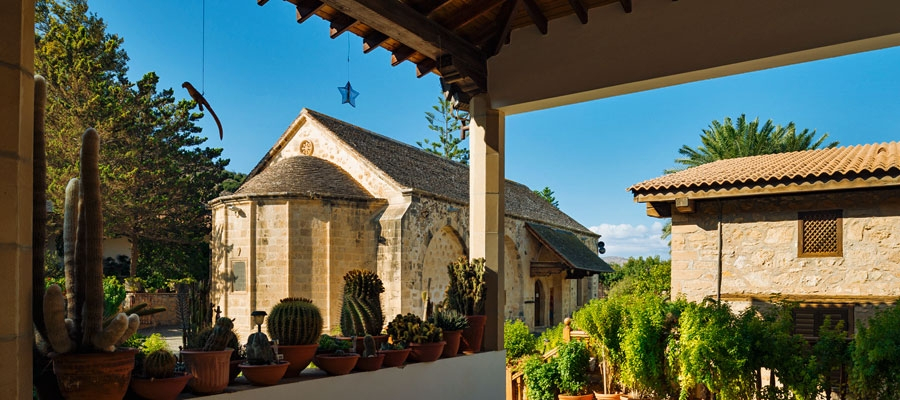
Located in Empa village, 3km north of Pafos (Paphos), the Church of Panagia Chryseleousa is actually a combination of two churches and is a stone-built structure with three aisles and two domes.

The eastern section was first built as a cruciform church with a dome in the 12th century, possibly on the ruins of an earlier Christian basilica. An extension was made to the west with a domed building of the cross-in-square type later on in the 13th century.

The church retains its rare wall paintings of the 12th, 13th, 15th and 16th centuries, with one of the most interesting depicting the miracle of fishing. Other ecclesiastical treasures include 15th and 16th century portable icons. Among them is a noteworthy icon of Jesus Christ holding a Gospel with his left hand, and a fine icon painted on two panels with six of the Apostles on each panel.