Panagia Asinou Church

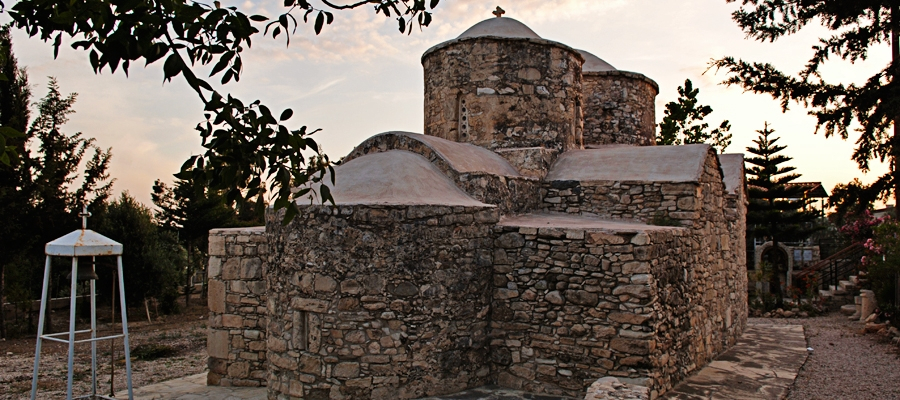
Located on the east bank of a stream, 3km from the mountainous village of Nikitari, Panagia Asinou Church is a small church dedicated to the Virgin of ‘Phorbia’. It is a UNESCO World Heritage Site and contains some of the finest Byzantine wall paintings on the island, dating from the 12th to the 17th century.

The church used to be a monastery church that was built in 1099 with the donation of Magistros Nikephoros Ischyrios, who subsequently became a monk with the name Nikolaos. It functioned until the end of the 18th century, when it was abandoned.

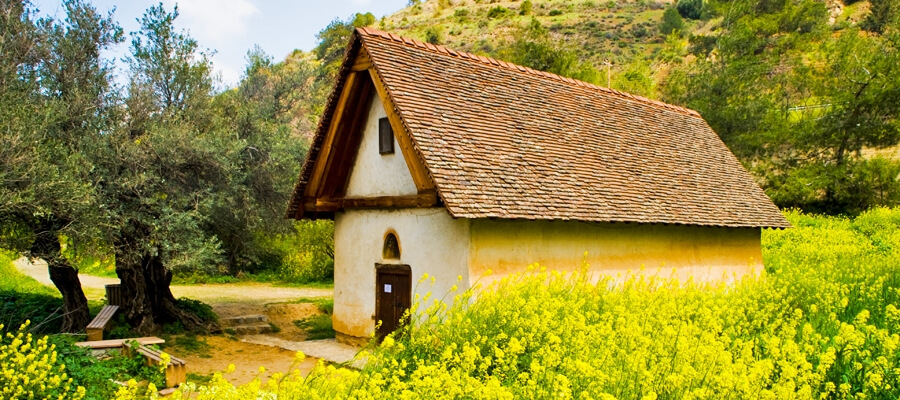
The church consists of two parts – the vaulted single-aisled nave and the narthex – which is a later addition belonging to the second half of the 12th century. The 12th century steep-pitched timber roof, covered with flat tiles, sheltered the church. Today, there are no traces of the rest of the monastic buildings.

The murals inside the church date from the 12th century to the 17th century and reflect the art of Constantinople, which is thought to be the artist’s birthplace.

Church of Panagia tis Asinou or Panagia Phorviotissa – Audio Guide 

Region: Troodos area [Lefkosia (Nicosia) district]
Address: 3km from Nikitari village
Contact No: Father Kyriacos +357 99 830329 or +357 22 852534 (municipality)
Operating Hours: Monday – Saturday: 10:00 – 16:00 or upon request
Sunday: 11:00 – 16:00
Operating Period: All year round.
Closed on Christmas Day, New Year’s Day (Greek Orthodox).
Entrance Fee: Free
Disabled Access: Wheelchair accessible.
Website: www.mcw.gov.cy/da
Opening and closing times as well as entrance fees, are subject to alterations without notice. Visitors are advised to check before visiting.

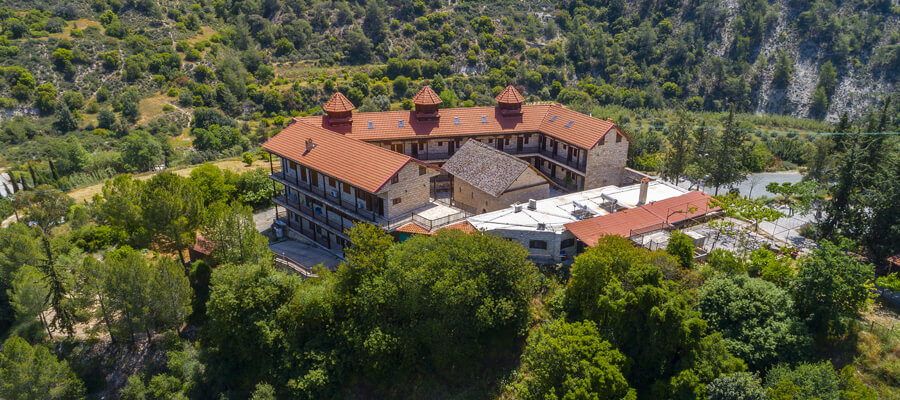
Panagia Chrysokourdaliotissa Church

Located in the Solea Valley, in the village of Kourdali, the church of Panagia Chrysokourdaliotissa was built in the 16th century as a monastery church dedicated to Panagia (the Virgin Mary), and according to the foundation stone, was established by deacon Leone Kourdalis.

The preserved church is three-aisled, with a steep-pitched roof and flat roof tiles. The aisles of the church are divided from the nave by wooden arcades. The church contains wall paintings and icons of the 16th century in the Italo-Byzantine style, and the iconostasis is a fine example of wood sculpture of the 16th -17th centuries.

In 2006, the Holy Synod decided to re-establish the Monastery.

Region: Troodos area [Lefkosia (Nicosia) district]
Address: Kourdali village
Contact No: Tel: +357 99 770 592
Operating Hours: Daily: 08:00 – 13:00 / 16:00 – 19:00
Operating Period: All year round.
Closed on Public Holidays.
Entrance Fee: Free
  Opening and closing times as well as entrance fees, are subject to alterations without notice. Visitors are advised to check before visiting.
 

Panagia tou Araka Church

Located in the mountainous area of Pitsilia, between the villages of Lagoudera and Saranti, the 12th century church of Panagia tou Araka is a listed UNESCO World Heritage site and is considered to be of the most important Byzantine period churches on the island.

The church used to be a monastery church, built during the second half of the 12th century, when monastic life was flourishing in Cyprus. It survived until the first decades of the 19th century and its remains include a two-storey monastery building to the north, along with the church.

The church is a single-aisled domed structure with a cross-shaped, steep-pitched roof that extends to form a latticed-woodwork portico. During the 18th century, the west wall was demolished and the church was extended.

The frescos inside the church are comparable to those prevailing throughout Greece, the Balkans and Russia, and were painted by the artist Theodoros Apsevdis in the late Comnenian style (1192). Those in the apse of the bema are of a different style to those in the rest of the church, and it is believed that they were painted by another artist before 1192.

Panagia tou Araka – Audio Guide 

Region: Troodos area [Lefkosia (Nicosia) district]
Address: Lagoudera village
GPS coordinates: Lat: 34.965394 Lon: 33.011166
Contact No: Tel: +357 99 557 369
Operating Hours: Monday – Saturday: 9:00 – 13:00 & 15:00 – 17:30 (Winter)
9:00 – 13:00 & 15:00 – 18:00 (Summer)

Sunday: 10:00 – 13:00 & 15:00 – 17:30

Operating Period: All year round.
Closed on Public Holidays.
Entrance Fee: Free
Website: www.mcw.gov.cy/da
Opening and closing times as well as entrance fees, are subject to alterations without notice. Visitors are advised to check before visiting.

Church of Timiou Stavrou (Holy Cross) – Anogyra

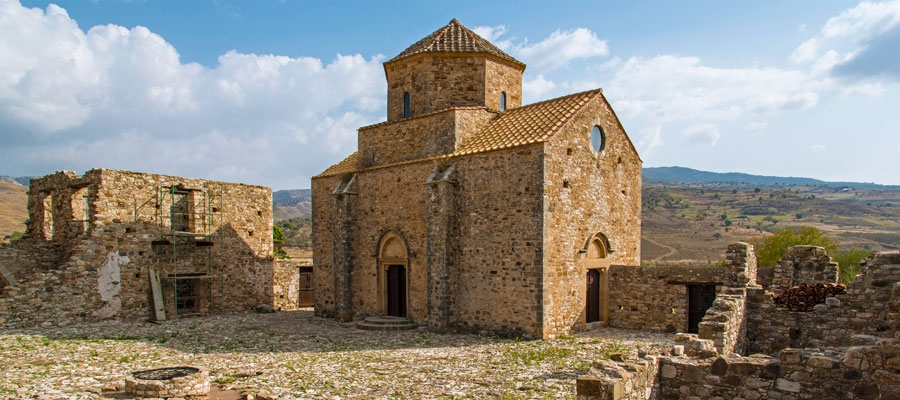
Situated southwest of the village of Anogyra, the Church of Timiou Stavrou is built over the foundations of an early Christian basilica. At the end of the 15th century, the present church was built overthe foundations of older churches.

In its present form, the monastery is an intricate architectural complex. Its barrel-vaulted church with a single nave and dome is decorated with wall-paintings in the Palaiologan style which, despite marked wear and tear, remain exceptional examples of Palaiologan painting in Cyprus.

The village itself is located halfway between Lemesos (Limassol) and Pafos (Paphos), 400 metres above sea level, and retains its traditional character and local customs. Surrounded by carob orchards, the ‘black gold’ of the island and the traditional sweet made from it – ‘pasteli’ – are an important part of the village’s history.

Region: Lemesos
Address: Anogyra village, 39km west of Lemesos
Contact No: Tel: +357 25 222 679 / +357 25 221 496
Operating Hours: Daylight hours.
Operating Period: All year round.
Entrance Fee: Free
  Opening and closing times as well as entrance fees, are subject to alterations without notice. Visitors are advised to check before visiting.
 

The Museum of Shoemaker Christos Chrysanthou

The museum of shoemaker Christos Chrysanthou is located in the mountainous village of Spilia and was founded in 2007 by Andreas Chrysanthou in honour of his father Christos – who lived to the ripe old age of 101, and was a shoemaker by trade, among other talents.

Exhibits include the shoemaker’s bench – built in 1920 – with all associated tools for shoemaking, along with Singer machines and a ledger that dates back to 1933. Hanging on the wall are various shoe moulds, leathers and footwear.

The museum is built in the basement of the family home and has been declared a national treasure.

Region: Troodos area [Lefkosia (Nicosia) district]
Address: Spilia village
Contact No: Tel: +357 99 176 839, Fax: +357 22 313 521
Operating Hours: By appointment.
Operating Period: All year round.
Closed on Public Holidays.
Entrance Fee: Free
  Opening and closing times as well as entrance fees, are subject to alterations without notice. Visitors are advised to check before visiting.
 

Local Archaeological Kourion Museum, Episkopi

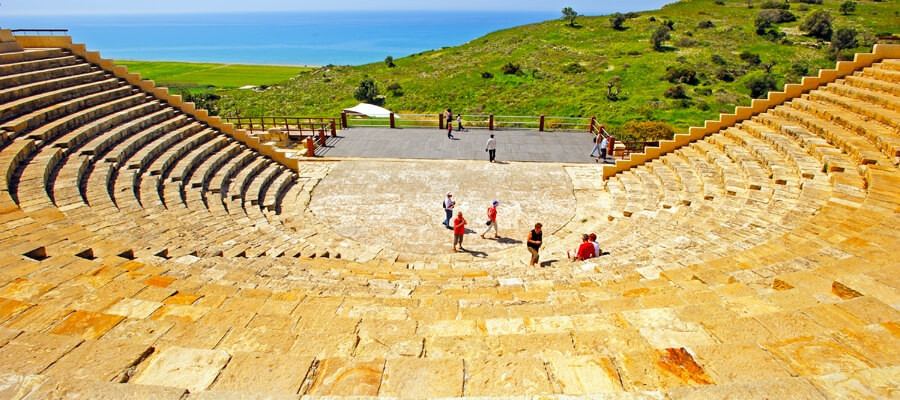
Kourion Archaeological Museum is housed in a traditional building that was once the private residence of the late George McFadden, Assistant Director of the University of Pennsylvania, who led extensive archaeological research at the ancient city of Kourion and its environs from 1934 -1953.

The museum opened in 1969 and consists of two exhibition halls that showcase finds from the nearby archaeological sites, including red polished ware of the Early Bronze age, pottery and golden jewellery of the Mycenaean era, and a large number of offerings from the nearby Sanctuary of Apollon Hylates.

The skeletal remains of inhabitants of the city who lost their lives in the 4th century earthquakes constitute one of the most impressive exhibits of the museum, and were found in situ in a Roman house.

Region: Lemesos (Limassol)
Address: Episkopi village, 14km west of Lemesos on the road towards Pafos (Paphos)
GPS coordinates: Lat: 34.669656 Lon: 32.901015
Contact No: Tel: +357 25 932 453
Operating Hours: Monday – Friday: 08:00 – 15:30
Closed on weekends.
Operating Period: All year round.
Closed on Public Holidays.
Entrance Fee: FREE
Website: www.mcw.gov.cy/da
  Opening and closing times as well as entrance fees, are subject to alterations without notice. Visitors are advised to check before visiting.
 

Agios Neophytos Monastery Museum

Located about 9km north of Pafos (Paphos), the ecclesiastical museum at the monastery of Agios Neophytos exhibits a variety of valuable relics, including important icons and other religious artefacts.

The monastery itself was founded by the Cypriot recluse and writer Neofytos around 1200, in what used to be a secluded location at the head of the picturesque valley.

The hermit carved a cave out of the mountains called the ‘Enkleistra’, which is covered with some of the finest examples of Byzantine frescoes that date back from the 12th to the 15th centuries, whilst the later church also contains some of the finest Post-Byzantine icons dating to the 16th century.

Region: Pafos
Address: About 9km north of Pafos, near the village of Tala
GPS coordinates: Lat: 34.846679 Lon: 32.445835
Contact No: Tel: +357 26 652 481, Fax: +357 26 653 709
Operating Hours: April – October, daily: 09:00 – 13:00 / 14:00 – 18:00
November – March, daily: 09:00 – 16:00
Operating Period: All year round
Closed on Christmas Day, New Year’s Day, Green Monday, Easter Sunday (Greek Orthodox) and August 15.
Entrance Fee: €2,00
Ticket valid for both the Monastery and the Enkleistra
Website: www.stneophytos.org.cy
  Opening and closing times as well as entrance fees, are subject to alterations without notice. Visitors are advised to check before visiting.
 

Byzantine Museum of Arsinoe

Situated at the Holy Bishopric in the picturesque village of Peristerona, the Byzantine Museum of Arsinoe has one of the largest collections of icons dating from the 13th to the 19th centuries. It also exhibits wood carved artefacts associated with the ceremonial needs of the church; local and imported silver and metal artefacts; textiles (such as 18th and 19th century priests’ vestments and Episcopal robes), and rare books and manuscripts.

Region: Pafos (Paphos)
Address: Peristerona village, 9km south of Polis
Contact No: Tel: +357 26 352 515
Operating Hours: September 01 – April 01: Monday – Friday: 10:00 – 16:00
April 02 – August 31: Monday – Friday: 10:00 – 13:00 / 15:00 – 18:00
Closed on weekends
Operating Period: All year round
Closed on Public Holidays
Entrance Fee: €2,00
Website: www.mcw.gov.cy/da
www.impaphou.org
  Opening and closing times as well as entrance fees, are subject to alterations without notice. Visitors are advised to check before visiting.
 

Fyti Weaving Museum

The Fyti Weaving Museum exhibits examples of the village’s famous woven textiles, and demonstrates how the craft has been practised in the village since Medieval Times using the old-style loom.

The unique style of weaving is known locally as ‘Fythkiotika’ and is characterised by a variety of designs and rich colours.

Region: Pafos (Paphos)
Address: Fyti village, 25km northeast of Pafos
Contact No: Tel: +357 99 372966 (Diamanto Diomidous)
Operating Hours: November – April: Monday – Saturday: 09:00 – 12:00 / 13:00 – 16:00
May – October: Monday – Saturday: 08:00 – 12:00 / 14:00 – 17:00
Sunday visits can be arranged upon request.
Operating Period: All year round.
Closed on Public Holidays.
Entrance Fee: Free
Opening and closing times as well as entrance fees, are subject to alterations without notice. Visitors are advised to check before visiting.

Local Ethnographic Museum of Geroskipou

The Local Ethnographic Museum of Geroskipou is housed in a traditional 18th century building known as the ‘House of Hadjismith’, and was founded in 1978.

The museum’s large and diverse collection of exhibits originate from all over Cyprus and represent the daily life, crafts, activities and different expressions of Cypriot folk art during the 19th and early 20th centuries. The rural crafts include pottery, scarf making, rug weaving and rope making, as well as the manufacture of silk, for which the island was famous for.

The building itself is a grand house by the standards of its time, and was originally part of a larger complex of buildings. It is listed as an Ancient Monument and once belonged to Andreas Zimboulakis, a rich and educated man who was appointed British Consular Agent for western Cyprus, and was responsible for the provisioning of the British troops. The British Admiral Sir Sydney Smith would visit the house regularly, giving it the nickname of ‘the Smith’s house’.

The name of Geroskipou village comes from the Greek words for ‘sacred garden’ – ‘Ieros Kipos’ – as it was once the site of Aphrodite’s sacred garden.  

Region: Pafos (Paphos)
Address: Geroskipou village, 3km east of Pafos
Contact No: Tel: +357 26 306 216
Operating Hours: September 16 – April 15, daily: 08:30 – 16:00
April 16 – September 16, daily: 09:30 – 17:00
Operating Period: All year round.
Closed on Public Holidays.
Entrance Fee: FREE
Website: www.mcw.gov.cy/da
  Opening and closing times as well as entrance fees, are subject to alterations without notice. Visitors are advised to check before visiting.