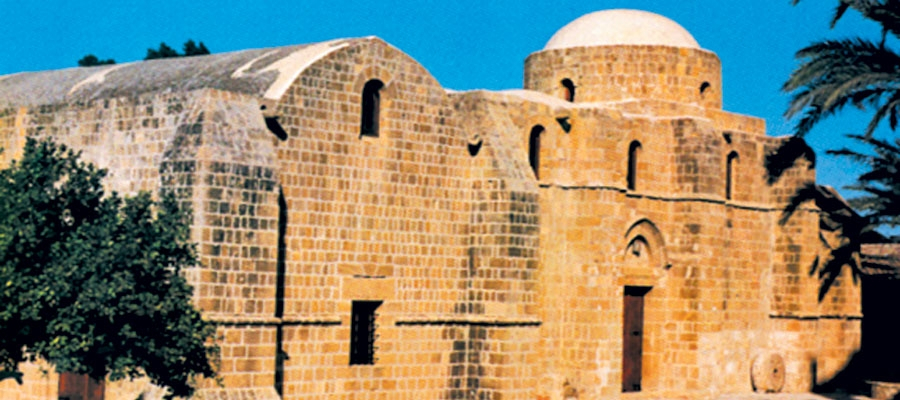
Pafos (Paphos) Gate

Pafos (Paphos) Gate was one of the three entrances into old Lefkosia (Nicosia) through the Venetian walls that completely encircled the old city, and were designed by famous engineer Giulio Savorgnano in 1567.

The road beginning immediately outside the gate led southwest to the town of Pafos, hence the gate’s name. It was also known as ‘Gate of San Domenico’ as it replaced an earlier gate of the Frankish walls called ‘Porta di San Domenico’, named after the nearby abbey of San Domenico.

The gate is a simple affair; an opening in the wall, roofed by a barrel vault. During British occupation in 1878, part of the walls between the gate and the Roccas Bastion was demolished to create a new opening. Pafos Gate Police Station is just above the original gate.

GPS coordinates: Lat: 35.17385 Lon: 33.35667

Omeriye Mosque

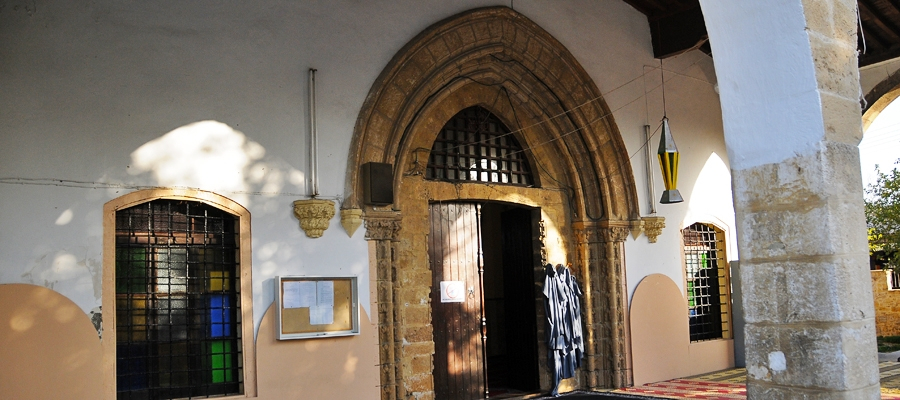
The Omeriye Mosque was once the medieval Augustinian monastery of St. Marie, built in the 14th century, and one of the three largest monasteries in the city during the Lusignan era. It originally covered an area of six acres, which included gardens, orchards, a field of wheat and barley, and a sugar plantation.

In 1571, the monastery was converted to a mosque by Lala Mustafa Pasha – the Ottoman conqueror of the island – who believed that the original church was built on the spot where the Caliph Omer rested when visiting Lefkosia. Most of the original building was destroyed by Turkish artillery in 1570, and inscribed tombstones from the Lusignan period were used to install a new floor for the mosque.

Visitors can also see the remains of a late Venetian building near the eastern side of the mosque.

Omeriye Mosque – Audio Guide 

Region: Lefkosia (Nicosia)
Address: Trikoupi & Plateia Tyllirias
GPS coordinates: Lat: 35.172071 Lon: 33.365536
Operating Hours: Any reasonable hour providing there is no prayer.
Operating Period: All year round.
Closed on Public Holidays.
Entrance Fee: Free
  Opening and closing times as well as entrance fees, are subject to alterations without notice. Visitors are advised to check before visiting.
 

Saint George’s Church – Lazanias village

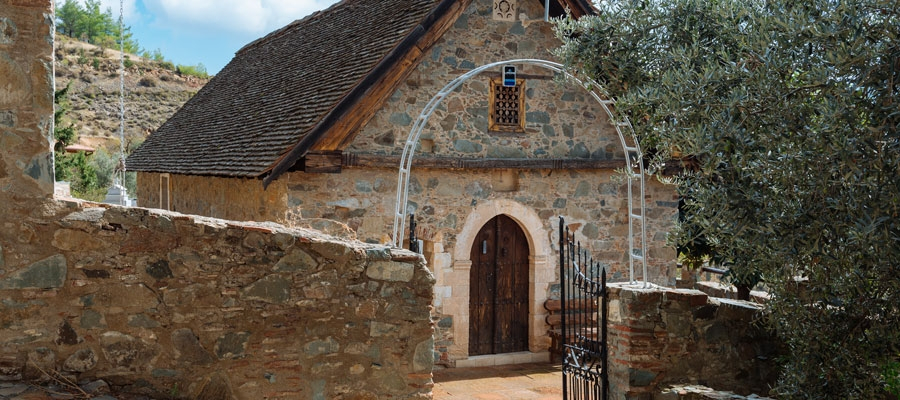
The wood-carved church of Saint George is located in the historic village of Lazanias and was built in 1855.

An inscription inside the church gives testimony that on April 27, 1865, a priestmonk gilded the iconostasis at his own expense. Also of interest are the artfully carved ‘gynaeconitis’ (area reserved for women), and the three earthenware jars that are planted on the floor of the church, and were used for better acoustics during Mass. An unusual vegetal decoration trails over the roof and decorates it.

The village itself takes its name from the word ‘Lusignan’ thanks to a farm of the Lusignan Crusaders that formed the basis of the village.

Region: Lefkosia (Nicosia)
Address: Lazanias village
Contact No: Tel: +357 99 374 944 (Mrs Fryni Papadopoulou)
Operating Hours: Church service one Sunday per month.
Operating Period: All year round.
Closed on Public Holidays.
Entrance Fee: Free
  Opening and closing times as well as entrance fees, are subject to alterations without notice. Visitors are advised to check before visiting.
 

Ancient Idalion Archaeological Site

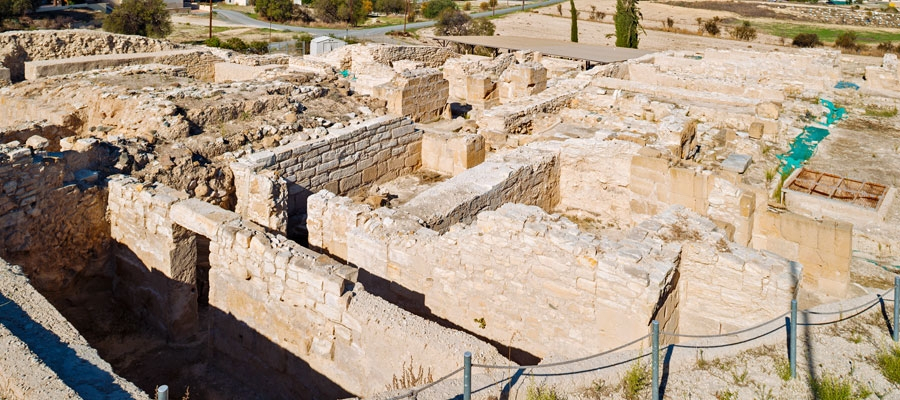
The archaeological site of Idalion, in the Dali Village area, is one of the most important sites in Cyprus, with many of its rich findings now exhibited in some of the most renown museums of the world.

The ancient city was founded by the Achaean hero of the Trojan war, Chalcanor – descendant of Teucer, the founder of Salamis. According to legend, Ancient Idalion is where Adonis – Aphrodite’s lover – was killed by her jealous lover Aris, the Olympian God of War.

The kingdom flourished until the middle of the 5th century BC, when its capital was besieged and captured by the Phoenician kings of Kition. Finds have been unearthed from both settlements and cemeteries in the region, with the earliest remains of human occupation found at the locality of Agridi, dating back to the 7th and 5th centuries BC.

The site houses a museum and Visitor Centre, which showcase its finds, and is also linked with the Aphrodite Cultural Route.

Region: Lefkosia (Nicosia)
Address: Dali village
Contact No: Tel: +357 22 444 818
Operating Hours: Monday – Friday: 08:30 – 16:00
Closed on weekends.
Operating Period: All year round.
Closed on Public Holidays.
Entrance Fee: €2,50
For organised groups consisting of more than 10 persons there is a 20% reduction on the entry fees.
The Department of Antiquities can issue special entry cards for all its museums and ancient monuments: One (1) day entry cards – €8,50, three (3) day entry cards – €17,00, seven (7) day entry cards – €25,00.
Disabled Access: Wheelchair accessible.
Website: www.mcw.gov.cy/da
  Opening and closing times as well as entrance fees, are subject to alterations without notice. Visitors are advised to check before visiting.
 

Holy Cross Catholic Church

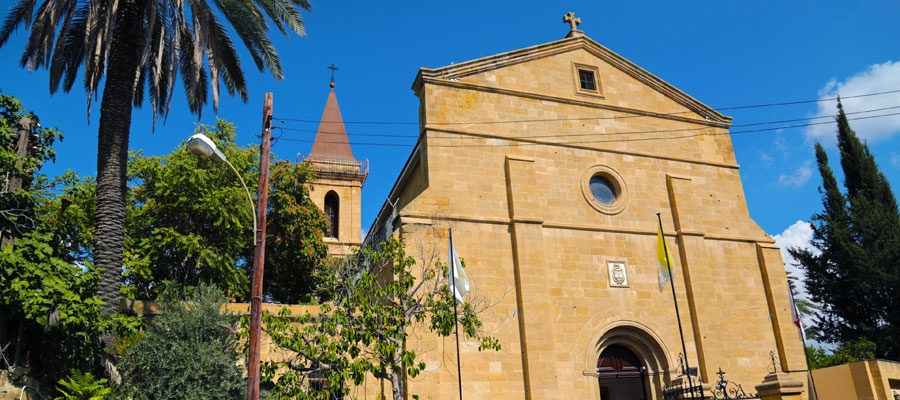
The Church of the Holy Cross, built in 1902, is situated near Pafos Gate, one of the three entrances into the town through the Venetian walls surrounding Lefkosia (Nicosia). The church does not belong to any definite architectural style, and its features are austere. A rose window (decorated circular window) with the cross of Jerusalem in stained glass can be seen in the façade, whilst below the rose window, there is the coat-of-arms of the Custody of the Holy Land.

Region: Lefkosia
Address: Pafos (Paphos) Gate
Contact No: Tel: +357 22 662 132, Fax: +357 22 660 767
Website: www.cypruscatholicchurch.org
  Opening and closing times as well as entrance fees, are subject to alterations without notice. Visitors are advised to check before visiting.
 

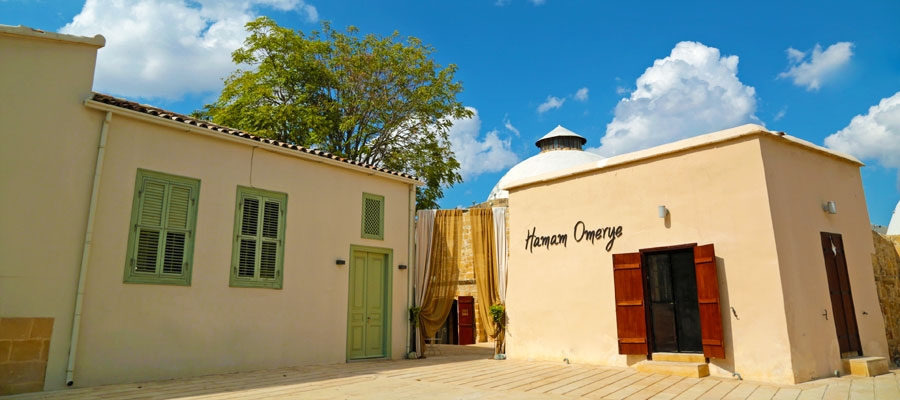
Hamam Omeriye

The Hamam Omeriye (Turkish) baths were built in the 16th century by Lala Mustafa Pasha as a gift to the city, with the bath complex dedicated to the Caliph Omer, giving the area its name of ‘Omeriye’.

After a long period of closure, the baths were once again restored to their original glory, earning them the ‘Europa Nostra’ award in 2005, and are open to the public for steam baths and other treatments.

As is typical with Ottoman baths, there are three main areas: the changing and resting room that leads to the warm and hot chambers via an intermediate tepid area. In ancient times, exposure to hot and humid conditions was a prized remedy for general health and formed part of a cleansing ritual.

Region: Lefkosia (Nicosia)
Address: Plateia Tyllirias 8
GPS coordinates: Lat: 35.172466 Lon: 33.365443
Contact No: Tel: +357 22 460 006
Operating Hours: Tuesday – Sunday: 10:30 – 21:30 (sessions for men, women and both sexes at different times).
Closed on Monday.
Operating Period: All year round.
Closed on Public Holidays.
Entrance Fee: Dependant on services used, please check with venue.
Website: www.hamamomerye.com
  Opening and closing times as well as entrance fees, are subject to alterations without notice. Visitors are advised to check before visiting.
 

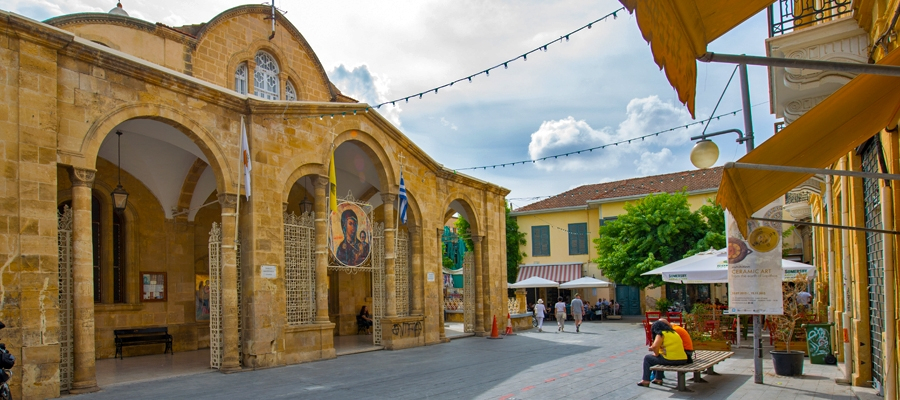
Faneromeni Church

Located within the walled city of Lefkosia (Nicosia) on Onasagorou Street, Faneromeni Church is one of the largest churches of the capital, and was built in 1872. The marble mausoleum to the east of the church contains the relics of the bishops and priests executed by the Ottomans on July 09, 1821. Opposite the church is Faneromeni School, one of the most historic academic institutions on the island.


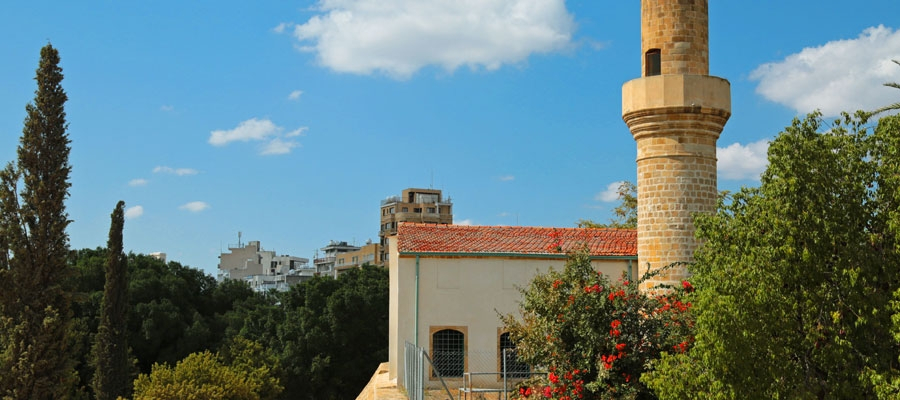
Bayraktar Mosque

Located next to OCHI Market, this Ottoman mosque is built on the western end of Constanza Bastion, in honour of the flag carrier who first climbed on to the walls of Lefkosia (Nicosia) during the siege of the city by the Ottoman troops in 1570.

Its name derives from the Turkish word ‘bayrak’, meaning ‘flag’ or ‘military trophy’, with the flag carrier’s grave built on the spot later in 1764. The mosque itself dates back to 1820, and was restored and opened for worship in late 2003.

Region: Lefkosia
Address: Constantinou Paleologou (next to OCHI Market)
GPS coordinates: Lat: 35.169118 Lon: 33.365441
Operating Period: Only during important Muslim religious holidays.  
Entrance Fee: Free
  Opening and closing times as well as entrance fees, are subject to alterations without notice. Visitors are advised to check before visiting.
 

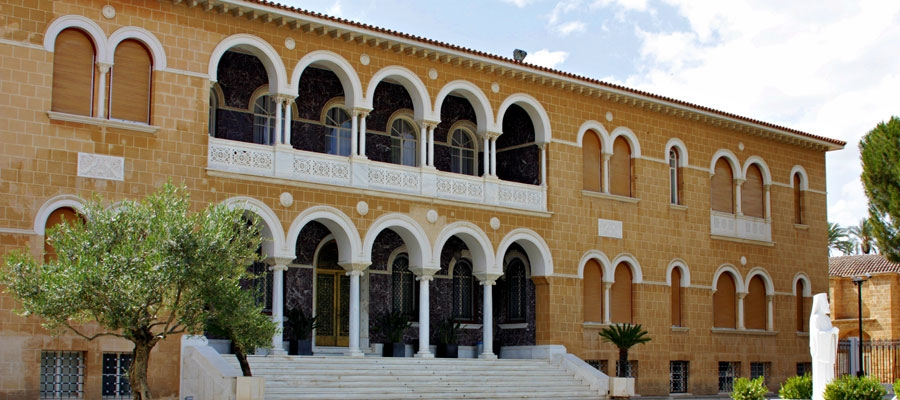
Archbishop’s Palace

The New Archbishopric – the seat of the Cyprus Orthodox Church – was built in 1960 in a Neo-Byzantine style and contains the private suite of the late Archbishop Makarios III. The Old Archbishopric that stands alongside it was built in 1730 and houses the Ethnographic Museum of Cyprus on its ground floor.

GPS coordinates: Lat: 35.172821 Lon: 33.36815

Archangelos Michael Convent

Located along the Lefkosia (Nicosia) – Anthoupolis Road, the church of the convent dates back to the Byzantine period and was founded by Archbishop Nikiforos, whose tomb can be seen in the narthex of the church. It was rebuilt in 1636 and was ceded to Kykkos Monastery in 1713.

The iconostasis dates back to 1650, whilst the convent has a 1785 fresco depicting the Archangel Michael (Archangelos Michael) whom it is dedicated to. Today the convent houses the Kykkos Monastery Research Centre.

GPS coordinates: Lat: 35.131723 Lon: 33.310905