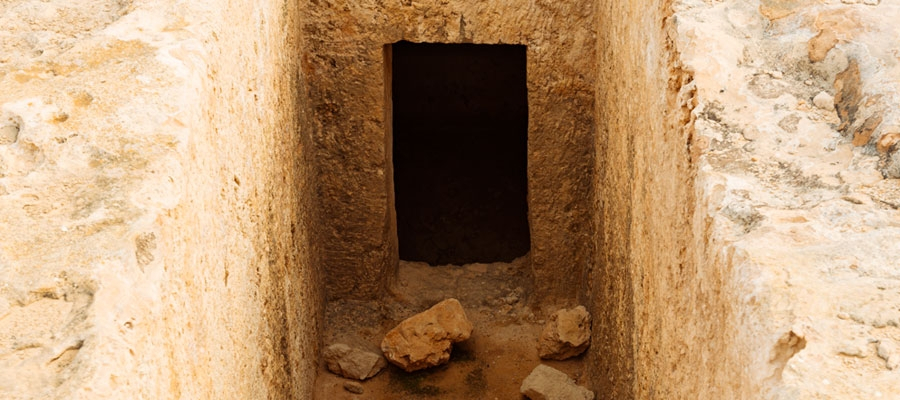
Makronissos Tombs

The Tombs of Makronissos are situated west of Agia Napa and consist of 19 rock-cut tombs, a small sanctuary and an ancient quarry.

The sanctuary is a simple rectangular enclosure, made of large irregular blocks. The tombs were used during the Hellenistic and Roman periods, and although they were subject to severe looting over the years (from 1872), archaeologists believe that the deceased were placed in clay sarcophagus that were originally covered with three flat tiles.

The tomb’s rectangular entrance originally closed with one or two slabs, and Pyres were found on the surface, characteristic of Greek burial customs. Most of the chambers are almost identical with a rectangular trench in the middle and three benches at the side.

Region: Ammochostos (Famagusta)
Address: Makronissos, west of Agia Napa
Contact No: Tel: +357 23 816 300, Fax: +357 23 722 607
Operating Hours: Daily: 09:00 – 17:00
Operating Period: All year round.
Closed on Public Holidays.
Entrance Fee: Free
  Opening and closing times as well as entrance fees, are subject to alterations without notice. Visitors are advised to check before visiting.
 

Agia Napa Monastery

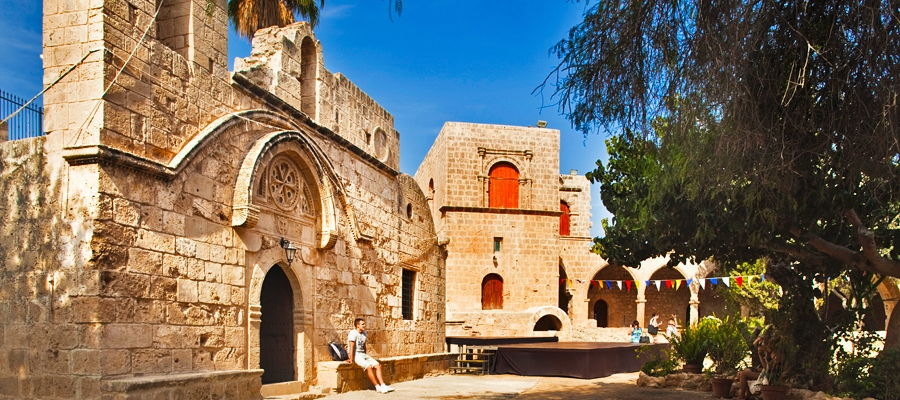
The charming Medieval Monastery of Agia Napa stands in the middle of the village and was built in the form of a Medieval Castle around 1500 AD.

The monastery is partially built underground and cut into the rock, surrounded by a high wall. It is dedicated to ‘Our Lady of the Forests’, with the name coming from the Ancient Greek word for wooded valley (‘Napa’) as a result of the area’s past topography.

The monastery was restored in 1950 and in 1978 became an Ecumenical Conference Centre, serving churches in Cyprus and the Middle East. After the re-establishment of the Holy Metropolis Constantia Ammochostos (Famagusta) in 2007, the monastery came under the administration of the Metropolis.

A new church – also dedicated to the Virgin Mary – was built in 1994, south west of the monastery.

The ancient sycamore tree in front of the south gate is believed to be over 600 years old.

Agia Napa Monastery – Audio Guide

Region: Ammochostos
Address: Agia Napa
GPS coordinates: Lat: 34.989202 Lon: 33.999746
Contact No: Tel: +357 23 722 584, Fax: +357 23 721 284
Operating Hours: Winter, daily: 09:00 – 15:00
Summer, daily: 09:00 – 20:00
Operating Period: All year round.
Closed on Public Holidays.
Entrance Fee: Free (donations accepted).
Opening and closing times as well as entrance fees, are subject to alterations without notice. Visitors are advised to check before visiting.

The Museum of Shoemaker Christos Chrysanthou

The museum of shoemaker Christos Chrysanthou is located in the mountainous village of Spilia and was founded in 2007 by Andreas Chrysanthou in honour of his father Christos – who lived to the ripe old age of 101, and was a shoemaker by trade, among other talents.

Exhibits include the shoemaker’s bench – built in 1920 – with all associated tools for shoemaking, along with Singer machines and a ledger that dates back to 1933. Hanging on the wall are various shoe moulds, leathers and footwear.

The museum is built in the basement of the family home and has been declared a national treasure.

Region: Troodos area [Lefkosia (Nicosia) district]
Address: Spilia village
Contact No: Tel: +357 99 176 839, Fax: +357 22 313 521
Operating Hours: By appointment.
Operating Period: All year round.
Closed on Public Holidays.
Entrance Fee: Free
  Opening and closing times as well as entrance fees, are subject to alterations without notice. Visitors are advised to check before visiting.
 

Museum of Kykkos Monastery

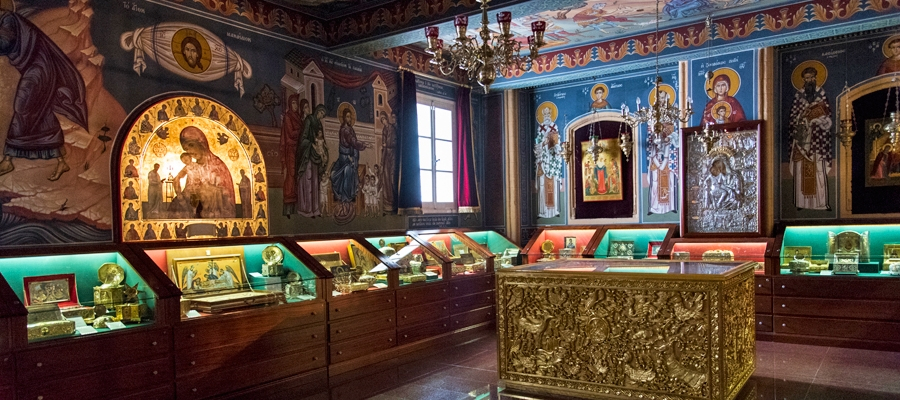
The Museum of Kykkos Monastery is an integral part of the monastery and houses a priceless collection of icons, consecrated vessels, manuscripts and Cypriot antiquities.

The Monastery itself is the richest and most lavish of Cyprus’ monasteries and sits on a mountain peak, at an altitude of 1.318 metres northwest of Troodos.

Dedicated to Panagia (the Virgin Mary), the monastery possesses one of three icons attributed to Agios Loukas (Apostle Luke) the Evangelist. The icon, covered in silver gilt, is in a shrine made of tortoise shell and mother-of-pearl that stands in front of the iconostasis.

Monastery of Kykkos – Audio Guide 

Region: Troodos area [Lefkosia (Nicosia) district]
Address: Kykkos Monastery, Marathasa Valley, 13km from Pedoulas village
GPS coordinates: Lat: 34.98334 Lon: 32.741299
Contact No: Tel: +357 22 942 736
Operating Hours: November – May, daily: 10:00 – 16:00
June – October, daily: 10:00 – 18:00
Operating Period: All year round.
Closed on Public Holidays.
Entrance Fee: €5,00 / Groups €3,00
Website: www.kykkos.org.cy
  Opening and closing times as well as entrance fees, are subject to alterations without notice. Visitors are advised to check before visiting.
 

Museum of Byzantine Heritage – Palaichori Village

Located in the mountainous village of Palaichori, the museum is housed in an old restored building and exhibits the Byzantine art wealth of several churches and chapels of the village.

The exhibits date from the Frankish period to the present day, and portray a wide range of ecclesiastical art, such as icon painting, woodcarving, silverwork, weaving and printing – mainly of the post-Byzantine period.

A multimedia info-kiosk provides information about the area in four different languages.

Region: Troodos area [Lefkosia (Nicosia) district]
Address: Palaichori village
Contact No: Tel: +357 99 82 87 00 & 97 79 08 30
Operating Hours: Tuesday – Friday: 10:00 – 13:00 (After 13h all visitors are requested to pre-book)
Operating Period: All year round. Closed on Public Holidays.
Entrance Fee: €2 (Price includes a mini tour to other points of interest located at the square of the village)
  Opening and closing times as well as entrance fees, are subject to alterations without notice. Visitors are advised to check before visiting.
 

Ecclesiastical and Viticulture Museums – Koilani village

Located in the mountainous village of Koilani, the Ecclesiastical Museum was created by Lemesos Bishopric to house the ecclesiastical art of the parish, and as a district branch of the larger Byzantine Museum of Lemesos (Limassol).

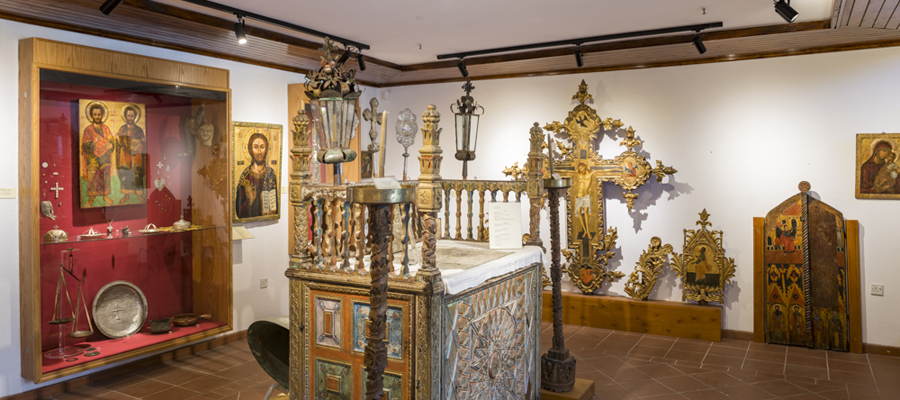
The museum is housed in the church of Monogenis, and showcases exhibits that span a period of around seven centuries. Included are pieces of an iconostasis from 1735, a 19th century pulpit and altar, old icons (from the 13th – 19th centuries), holy utensils, old books (from the 16th – 19th centuries), a 15th – 16th century ‘epitaphios’ (richly embroidered cloth icon used in special religious services), and other relics.

Nearby to the church is the Viticulture Museum, which is housed in a traditional village house and exhibits viticultural equipment and folk art pieces.

Region: Troodos Area (Lemesos district)
Address: Koilani village
Contact No: Ecclesiastical Museum: +357 25 471 008 / +357 99 213 682
Viticulture Museum: +357 25 471 008 / +357 99 198 789
Operating Hours: By appointment.
Operating Period: All year round.
Closed on Public Holidays.
Entrance Fee: Free
  Opening and closing times as well as entrance fees, are subject to alterations without notice. Visitors are advised to check before visiting.
 

Fikardou Ethnological Museum: The Houses of Katsinioros and Achilleas Dimitri

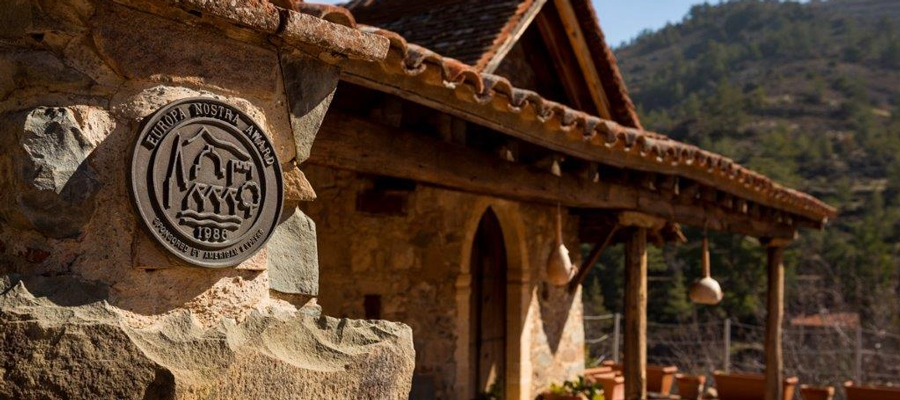
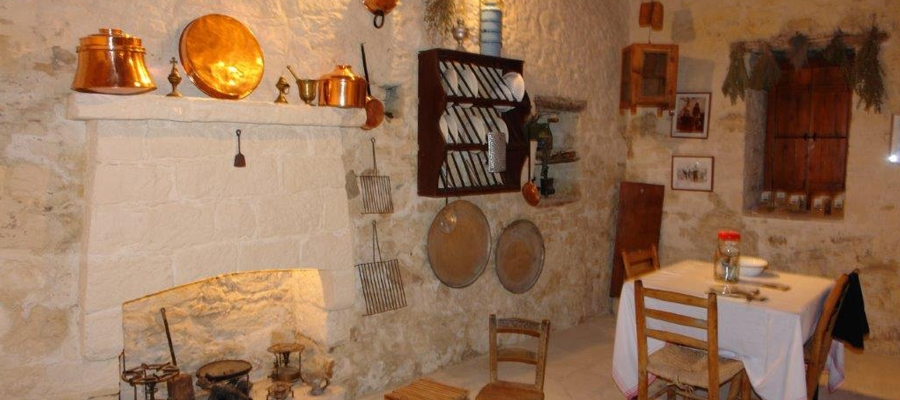
Deserted at the beginning of the 19th century, the entire village of Fikardou has been declared an Ancient Monument, and carefully restored to preserve the 18th century houses with their remarkable woodwork and folk architecture. Two of these houses have been turned into museums, exhibiting rural items and depicting rural life in years past.

The House of Katsinioros – which was named after its last owner – is a two-storey stone-built manor house with a steep-pitched wooden roof and many architectural features of the 16th century. Following the traditional arrangement of homes of this period, the upper floor functioned as the living area of the house, while the ground floor was used for the pressing of grapes, as well as for storing other agricultural produce and tools – all of which can be seen at the museum.

There is also an exhibition of photographs, drawings and texts on how the houses were restored, earning them – and the village – the Europa Nostra Award in 1987.

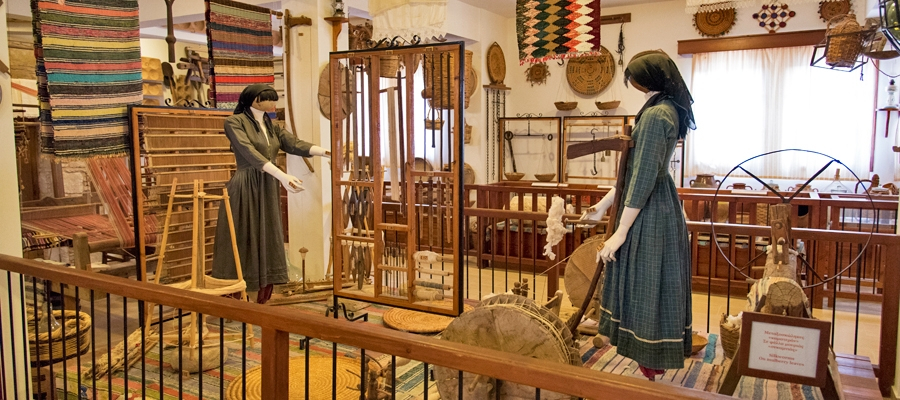
The second house – that of Achilleas Dimitri – has been turned into a weaver’s workshop and scholar’s guest house.

Region: Troodos area [Lefkosia (Nicosia) district]
Address: Fikardou village
Contact No: Tel: +357 22 634 731
Operating Hours: April 15 – October 30, daily: 09:30 – 17:00
November 1 – April 15, daily: 08:30 – 16:00
Operating Period: All year round.
Closed on Mondays and on Public Holidays.
Entrance Fee: FREE
Disabled Access: Partially accessible.
Website: www.mcw.gov.cy/da
  Opening and closing times as well as entrance fees, are subject to alterations without notice. Visitors are advised to check before visiting.
 

Arsos Folk Art Museum

The Folk Art Museum of the mountainous village of Arsos was founded in 1997 and is housed in a restored 18th century residence, which is a listed Ancient Monument.

The museum showcases the daily life and traditions of the inhabitants of the area, which is primarily a wine-producing region. The many exhibits include tools, furniture and utensils from days past that are related to viticulture and other local occupations.

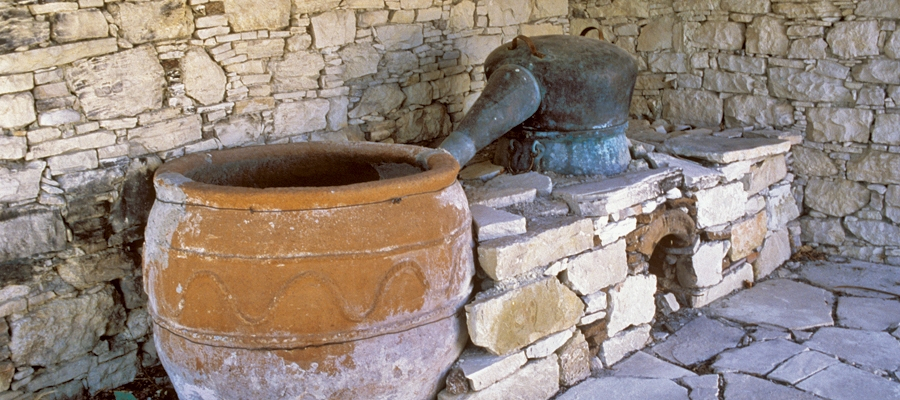
Notable exhibits include a boiler used for the production of the alcoholic drink of ‘zivania’, and a winemaking presentation in the cellar, where the traditional ‘linos’ is preserved with large clay jars, presser and other traditional winery tools.

There is also a permanent exhibition of old photos taken during significant past events and occasions, whilst the building periodically hosts temporary exhibitions of photography and art, as well as hosting other events.

Region: Troodos area [Lemesos (Limassol) district]
Address: Arsos village
GPS coordinates: Lat: 34.841552 Lon: 32.768822
Contact No: Tel: +357 25 943 223 / +357 25 243 347
Operating Hours: By prior appointment
Operating Period: All year round
Closed on Public Holidays
Entrance Fee: Free
Website: www.arsos.org
  Opening and closing times as well as entrance fees, are subject to alterations without notice. Visitors are advised to check before visiting.
 

The Steni Museum of Village Life

The Steni Museum of Village Life is a tribute to all the villagers who lived in Steni during the challenging years, from its founding to the end of the Second World War (1800 -1945).

Its exhibits include scenes of loom weaving and ploughing, and presentations of tools and equipment, handicrafts, kitchenware, pots and jars and traditional clothing.

Region: Pafos (Paphos)
Address: Steni village, 5km from Polis Chrysochous
GPS coordinates: Lat: 34.997084 Lon: 32.472351
Contact No: Tel: +357 99 625 004 / +357 26 352 410, Fax: +357 26 352 020
Operating Hours: Daily: 10:00 – 16:00
Operating Period: All year round.
Closed on Public Holidays.
Entrance Fee: Free
Website: www.steni.org.cy
  Opening and closing times as well as entrance fees, are subject to alterations without notice. Visitors are advised to check before visiting.
 

Archaeological Museum of the Pafos (Paphos) District

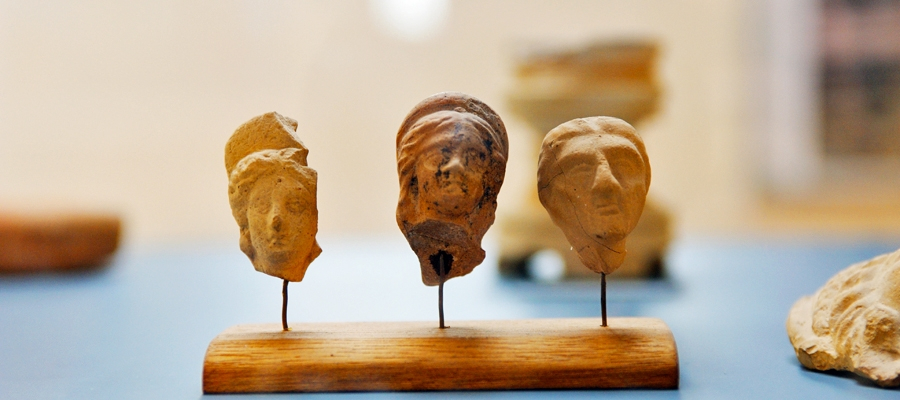
The Pafos District Archaeological Museum houses a collection of finds from the Pafos (Paphos) region dating from the Neolithic Age to 1700 AD.

The exhibits are set across five rooms and originate mainly from Palaipafos (Kouklia), Nea Pafos (present­ day Pafos) and Marion-Arsinoe (Polis). They are supplemented by finds from Pegeia, Kissonerga, Lempa, Pano Arodes, Salamiou, Akourdalia, Pomos, Kidasi and Geroskipou.

The first room covers the Neolithic, Chalcolithic and Bronze Age, including coins cut from the mint of Pafos. The second room houses exhibits from the Iron Age and Classical period, including a tombstone from Marion with the Cyprosyllabic script. The third room presents the Hellenistic and Roman periods, with a rare marble bust of Aphrodite and a marble statue of Asklepios. The fourth room hosts exhibits from the late Roman and early Christian periods, while the newer fifth room showcases pieces from the Byzantine Period and the Middle Ages in general.

The museum is linked to the Aphrodite Cultural Route.

Region: Pafos
Address: Griva Digeni Avenue, 43
GPS coordinates: Lat: 34.771652 Lon: 32.430317
Contact No: Tel: +357 26 955 801
Operating Hours: Tuseday-Sunday: 09:00-16:30
Closed on Mondays
Operating Period: All year round
Closed on Public Holidays
Entrance Fee: FREE
Disabled Access: Chairlift (entrance)
Website: www.mcw.gov.cy/da
  Opening and closing times as well as entrance fees, are subject to alterations without notice. Visitors are advised to check before visiting.