Folklore Museum ‘Kostas Kaimakliotis’ – Aradippou

The Folklore Museum in the village of Aradippou was founded in 2007 as a centre for preserving, researching and promoting Cypriot Folklore Tradition.

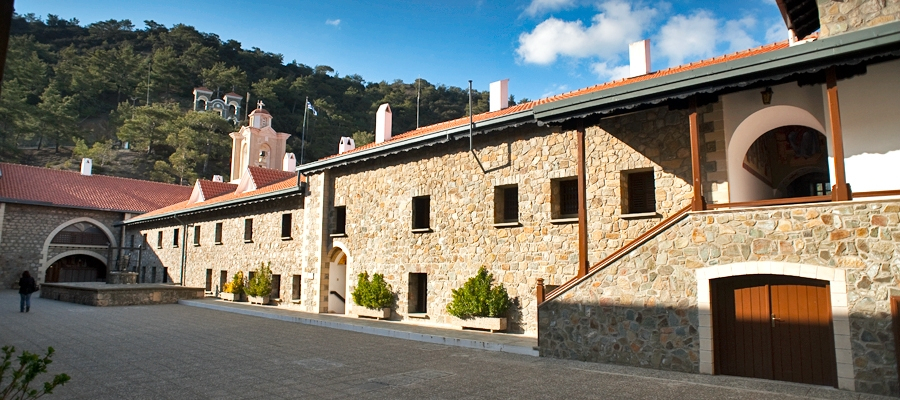
Housed in a 1901 mansion, the museum uses the basement and upper storey of the building for exhibits, whilst the small amphitheatre in the yard is used for cultural and artistic performances and exhibitions during the summer.

The museum basement consists of a Sun Room, Family Chamber, Weaving Hall,Domestic Appliances Hall, Farming and Animal Raising Hall, and Traditional Jobs Hall. From March – May, visitors can watch the seasonal process of breeding silkworms as they make their cocoons and then hatch as silk moths.

There are two rooms contained in the upper storey; a single room and the Hall of the Social and Cultural Traditions of Aradippou, where a re-enactment of the traditional wedding ritual ‘the dressing of the bride’ takes place.

The building of the museum originally belonged to the Kostas Xatzikakou family. It was later bought by the Pavlos Konstantinides family and then the Kaimakliotis family, who in turn donated it to Aradippou Municipality in memory of Kostas Kaimakliotis.

Region: Larnaka (Larnaca)
Address: Thermopilon, 12, Aradippou village
GPS coordinates: Lat: 34.95182 Lon: 33.588538
Contact No: Tel: +357 24 531 218, Fax: +357 24 530 690
Operating Hours: Monday – Friday: 07:30 – 15:00
Closed on weekends.
Operating Period: All year round.
Closed on Public Holidays.
Entrance Fee: €1,00
Website: www.aradippou.org.cy
  Opening and closing times as well as entrance fees, are subject to alterations without notice. Visitors are advised to check before visiting.


Kallinikeio Municipal Museum of Athienou

The Kallinikeio Municipal Museum of Athienou is housed in the Kallinikeio Municipal Hall and exhibits collections that showcase aspects of the history of the area from the Late Bronze Age (1600-1050 BC) until today.

The Museum consists of the Archaeological Collection, the Collection of Ecclesiastical Art and the Ethnographic Collection.

The Collection of Ecclesiastical Art includes priceless icons painted by the monk Kallinikos Stavrovouniotis and other icons from his personal collection. The monk was an excellent icon painter and a great benefactor to Athienou, and thus the museum is named in his honour. In the Icon Painting and Mosaic Workshop, icons and mosaics by the brothers George and Alkis Kepola are on display.

The Ethnographic Collection presents the daily life of the people of the 20th century through photographic material and other objects.

The museum also organises tours, periodic exhibitions, educational programmes, presentations and conferences.

As part of the Larnaka Virtual Museums project, you can tour the museum virtually below or in full screen here, with enriched and bonus material from home, or whilst at the museum for a hybrid experience.


Region: Larnaka (Larnaca)
Address: Archbishop Makarios III Avenue, 2, 7600 Athienou village
Contact No: Tel: +357 24 524 002 / +357 24 811 370, Fax: +357 24 522 333
Operating Hours: Monday – Friday: 08:00 – 15:00
Weekends: by appointment only.
Operating Period: All year round.
Closed on Public Holidays.
Entrance Fee: Adults €2,00 / Children free (under 12 years)
Groups of 10 or more €1,00 per person.
Website: https://athienoumuseum.org.cy/
  Opening and closing times as well as entrance fees, are subject to alterations without notice. Visitors are advised to check before visiting.


Local Archaeological Museum of Ancient Idalion

The Local Museum of Ancient Idalion was founded in 2007 with the aim to promote the rich finds of the region of Idalion (Dali), and later to function as a Visitor Centre for the archaeological site in which it is located.

The exhibits of the museum represent all the chronological phases of the history of Idalion and come from both the old and the more recent excavations of the area of the ancient city, from both settlements and cemeteries.

The first exhibition hall includes information on the history of the site and its excavation, along with photographs of the most important finds that are now housed in museums abroad. It also showcases various other exhibits. The second gallery exhibits inscriptions that bear witness to the conquest of the kingdom, as well as a part of the archive of the Phoenician administration of the city. Funerary monuments, pottery types and objects of daily use of all periods, imported pottery types and typical examples of clay and stone statuary are also showcased.

According to legend, Dali is where Adonis – Aphrodite’s lover – was killed by her jealous lover Aris, the Olympian God of War.

The region is linked with the Aphrodite Cultural Route.

Region: Lefkosia (Nicosia)
Address: Dali village
GPS coordinates: Lat: 35.019373 Lon: 33.423336
Contact No: Tel: +357 22 444 818
Operating Hours: Monday – Friday: 08:30 – 16:00
Closed on weekends.
Operating Period: All year round.
Closed on Public Holidays.
Entrance Fee: FREE
Disabled Access: Wheelchair accessible
Website: www.mcw.gov.cy/da
  Opening and closing times as well as entrance fees, are subject to alterations without notice. Visitors are advised to check before visiting.
 

Early (Proto) – Industrial Museum – Agia Varvara village

The early industrial workshop of Agia Varvara combines a traditional house with the place of work to form an interesting museum that showcases daily life on the island in years past.

The workshop uses the primitive equipment of the 1920s; flour mill, crushed wheat mill, barley mill and oil mill, which all worked with a single engine that distributed motion to the machines according to the owner’s needs through a combination of transmission shafts, wheels and belts. A wine press and loom were also used by the owner’s wife.

Region: Lefkosia (Nicosia)
Address: Agia Varvara village, 22km south of Lefkosia
Contact No: Tel: +357 22 521 715 / +357 99 888 070,  Fax +357 22 441 150
Operating Hours: Wednesday and Saturday: 08:00 – 13:00
Saturday: 15:00 – 18:00
Closed on Sunday.
Other visiting times can be arranged by prior appointment by contacting mobile number.
Operating Period: All year round.
Closed on Public Holidays.
  Opening and closing times as well as entrance fees, are subject to alterations without notice. Visitors are advised to check before visiting.


The Cyprus Wine Museum

Situated at the edge of the wine-producing countryside – in the village of Erimi – the Cyprus Wine Museum will take you on a journey through the history of the island’s long winemaking tradition.

The various stages of wine production and consumption – along with the various uses of wine – are shown through different presentations. Ancient jars and canisters, medieval drinking vessels, old documents and instruments illustrate the social, economic and symbolic aspects of wine production, whilst wine tasting is also available.

Region: Lemesos (Limassol)
Address: Pafos Street, 42, Erimi village, 13km west of Lemesos on the road towards Pafos (Paphos)
GPS coordinates: Lat: 34.67504 Lon: 32.91658
Contact No: Tel: +357 25 873 808 / 9, Fax: +357 25 821 718
Operating Hours: Daily: 09:00 – 17:00
Operating Period: All year round.
Closed on Public Holidays.
Entrance Fee: Adults €4,00 or €5,00 with tasting / Children free (under 12).
Website: www.cypruswinemuseum.com
  Opening and closing times as well as entrance fees, are subject to alterations without notice. Visitors are advised to check before visiting.
 

Fassoula Agricultural Museum

The Fassoula Agricultural Museum is housed in a traditional residence in the village of Fassoula, and contains agricultural tools, such as a plough, yoke, scythe and earthenware jars that were used for daily chores or for storing wine or olive oil in bygone times.

The village itself dates back to the Middle Ages and is depicted on old maps of Cyprus with the name ‘Fasula’ or ‘Phasula’. The most likely origin of its name is from the Frankish word ‘fasoula’, meaning scythe – the tool for harvesting.

Region: Lemesos (Limassol)
Address: Fassoula village, 10,5km north of Lemesos
GPS coordinates: Lat: 34.764077 Lon: 33.027374
Contact No: Tel: +357 25 452 245
Operating Hours: By prior appointment.
Operating Period: All year round.
Closed on Public Holidays.
Entrance Fee: Free
  Opening and closing times as well as entrance fees, are subject to alterations without notice. Visitors are advised to check before visiting.
 

Mountainous Larnaka (Larnaca) – Lefkosia (Nicosia) Wine Route (Rural)

Comprising the expanse of the mountainous areas of both Larnaka (Larnaca) and Lefkosia (Nicosia), this varied route is one that marries the old viticultural history of the island with the new, modern face of the winemaking industry.

Passing through 10 villages, the route takes in three wineries, quaint museums and workshops. Even though it is outside of the traditional wine regions, there are active winemakers here who have planted vineyards with the white varieties of  Assyrtiko, Malvasia Aromatica, Chardonnay Xynisteri and Sauvignon blanc, and the red varieties of Maratheftiko, Cabernet and Merlot – ensuring their fast integration into the island’s winemaking portfolio.

A love of wine is combined with other cultural aspects along this route, such as the inclusion of the village of Lefkara – famous for its handmade lace embroidered linens and delicate filigree silver – along with the village of Fikardou, which is home to one of the oldest traditional wine presses in Cyprus.

This enlightening route passes through: Lefkosia, Skarinou, Lefkara, Kato Drys, Vavla, Ora, Odou, Farmakas, Gourri, Fikardou and Kalo Chorio.

Pitsilia Wine Route

In a region where pines and vines grow freely into the mountainsides, neat villages exude rural charm and produce a range of fine wines that are yours to discover and savour.

A cluster of 11 villages and two of the most well-known wineries (in Pelendri) are included in the ‘Nom d’Origine’ Pitsilia – an area that spreads around the mountain peaks of Madari, Papoutsa, and the north-western part of Machairas. Here, the altitude secures a more slow and effortless grape maturity, whilst the arid and sloping earth forces the vines to huddle together and produce richer wines.

Classic local grape varieties continue to have a dominant presence amongst the vineyards of Pitsilia, with smatterings of the rare and ancient red variety of Maratheftiko. The grapes grown at these highest points are taken to two local winemakers for the production of excellent vintages.

This flourishing route passes through: Lemesos (Limassol), Trimiklini, Pelendri, Potamitissa, Dymes, Kyperounta, Chandria, Polystypos, Alona, Agros, Agios Ioannis and Agios Theodoros.


Commandaria Wine Route (Rural)

Take a trip back in time and discover the secrets of the island’s most ancient and famous wine – the sweet dessert wine of Commandaria – that has been praised and world-renowned for centuries.

The route through 14 Commandaria villages goes back to 1192 AD when the knights of St. John were perfecting the production of the world’s first named wine. The sweet wine took its identity from the place it was mainly produced –  ‘La Grande Commanderie’  – which is the area now known as Kolossi. So famed was Commandaria that it even won in the first recorded wine tasting competition  – the ‘Battle of the Wines’ – which took place in the 13th century, and was held by the French king Philip Augustus.

Indigenous Mavro (red) and Xynisteri (white) grapes are picked late in the season and dried in the sun to intensify their natural sweet flavours, giving the drink its distinctive taste. The dried grapes are then pressed, with the run-off collected and fermented in tanks or huge earthenware jars – much like those used in bygone times.

There are four wineries on this route, and a visit to the region is not complete without stopping by the refurbished wine press of Laneia, which has been maintained throughout the centuries, and serves as a reminder of the land’s glorious winemaking past. A further popular site is also the Medieval Castle of Kolossi – or ‘La Grande Commanderie’ as it was once known.

The villages themselves can all be found at an altitude of 500 to 900 metres. Their vines share the landscape with thick, bushy wild growth and sparse woods, whilst the rich flora and fauna are quite impressive – as are the historic and archaeological monuments of the vicinity. The area is also home to the Kouris Dam, the biggest in Cyprus, and an important wetland.

This historic route passes through: Lemesos (Limassol), Kolossi, Erimi, Monagri, Agios Georgios, Silikou, Doros, Laneia, Trimilkini, Agios Mamas, Kapileio, Zoopigi, Kalo Chorio, Agios Pavlos, Agios Konstantinos, Louvaras, Gerasa and Apsiou.

Krasochoria of Lemesos (Limassol) Wine Route – Rural

The Lemesos (Limassol) winemaking villages are renowned for their deep-rooted history of viticulture, as well as their excellent local wines and the stunning scenery of the area that produces them.

Located on the southern slopes of the Troodos mountain range, nowhere else in Cyprus can such a great presence of wineries be found! Collectively, the villages are known as ‘Krasochoria’, which is comprised of the two Greek words for ‘wine’ and ‘villages’ – a name that tells the story of its rich winemaking history in itself.

The route is outstanding; a dry climate combined with a unique geology results in first-rate wines, made mostly from the local grape varieties Xynisteri (white) and Mavro (red), as well as some imported varieties, including Cabernet Sauvignon, Mataro, Grenache and Syrah among a total of 23 different varieties.

A total of 20 charming, unspoilt villages comprise this route with 16 wineries between them. The villages are well worth visiting, not only for their wineries, but also their traditional architecture, cobblestoned narrow passages and delightful surroundings. They are also home to some of the best-known tavernas on the island.

This scenic route passes through: Lemesos, Kolossi, Erimi (Cyprus Wine Museum), Kantou, Souni-Zanakia, Pano Kivides, Agios Amvrosios, Lofou, Vouni, Koilani, Pera Pedi, Mandria, Kato Platres, Omodos, Vasa, Mallia, Arsos, Pachna, Anogyra and Avdimou.